akai-mpc-sample-review
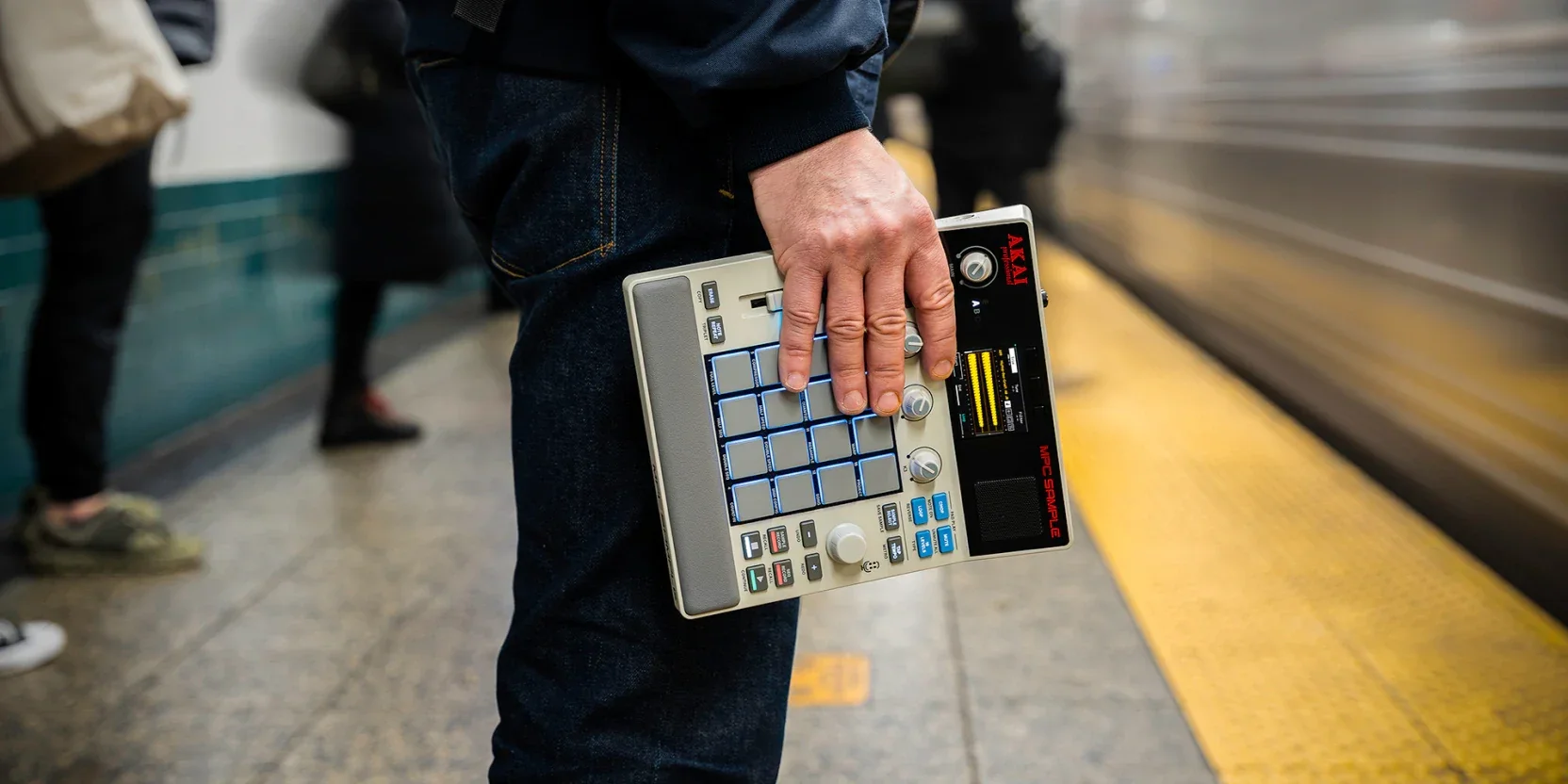
The Akai MPC Sample is one of the more interesting releases Akai has put out in a while, and not because it adds anything. It's interesting because it subtracts. Where recent MPCs have pushed toward full standalone production centers — touchscreens, plugin support, DAW-like depth — this one walks back to something tighter and more focused: a compact hardware sampler built around chopping, sequencing, and getting ideas down fast. The design openly references the MPC60 and MPC3000 era, both visually and in terms of intent, prioritizing a tactile pad-driven workflow over the kind of deep menu-based production the larger units invite.
Under the hood, the MPC Sample offers 32-voice polyphony, stereo sampling, 2GB of RAM, and 8GB of internal storage with microSD expansion. Patterns stretch up to 128 bars, and there's automation recording and song mode for building out arrangements. It also includes a set of performance and processing tools — Pad FX, Flex Beat, and a master Color Compressor — alongside practical portability features: a built-in microphone, a built-in speaker, battery power, and USB-C audio. At $399 / £349 / €399, it lands well below Akai's flagship units and sits in direct conversation with other compact modern samplers rather than trying to compete with its bigger siblings.
What makes it worth paying attention to is that Akai seems to have actually committed to the concept rather than hedging. This isn't a stripped-down MPC One with features removed to hit a price point. It reads more like a deliberate design choice — a machine built for sketching beats quickly, whether you're at a desk, on a couch, or away from the studio entirely.
TL;DR
The Akai MPC Sample is a compact standalone sampler built around fast chopping, beatmaking, and portable use rather than deep workstation-style production. Its headline appeal is the combination of classic MPC pad workflow with modern conveniences like battery power, USB-C audio, microSD storage, and a built-in speaker and mic. On paper it gives you a lot for the size: 32-voice polyphony, stereo sampling, 128-bar sequences, automation, and a set of onboard performance and processing tools. Pricing is a significant part of the story at $399 / £349 / €399 — one of the more accessible entries in Akai's current ecosystem. Early impressions point to a machine that feels fast and immediate, though not as deep as larger MPCs in every area.
What it is
The Akai MPC Sample is a standalone hardware sampler built around the core ideas that made classic MPCs influential: sampling, chopping, sequencing, and building beats directly from pads. Rather than functioning as a full production workstation like the MPC Live or MPC One+, this device focuses on the immediate part of the process — grabbing sounds, slicing them up, and turning them into patterns quickly. The design draws a clear line back to the MPC60 and MPC3000, both visually and conceptually, emphasizing a pad-driven workflow that values speed over depth.
The specs support that intention. You get 32-voice polyphony, stereo sampling, and 2GB of RAM, alongside 8GB of internal storage expandable via microSD. Patterns run up to 128 bars, with automation recording and song mode available for taking ideas beyond the loop stage. Onboard processing includes Pad FX, Flex Beat, and a master Color Compressor. And the portability features are genuinely useful rather than token additions: a built-in mic and speaker, battery power, and USB-C audio mean the unit can function as a completely self-contained sketchpad without a studio around it.
How it sounds
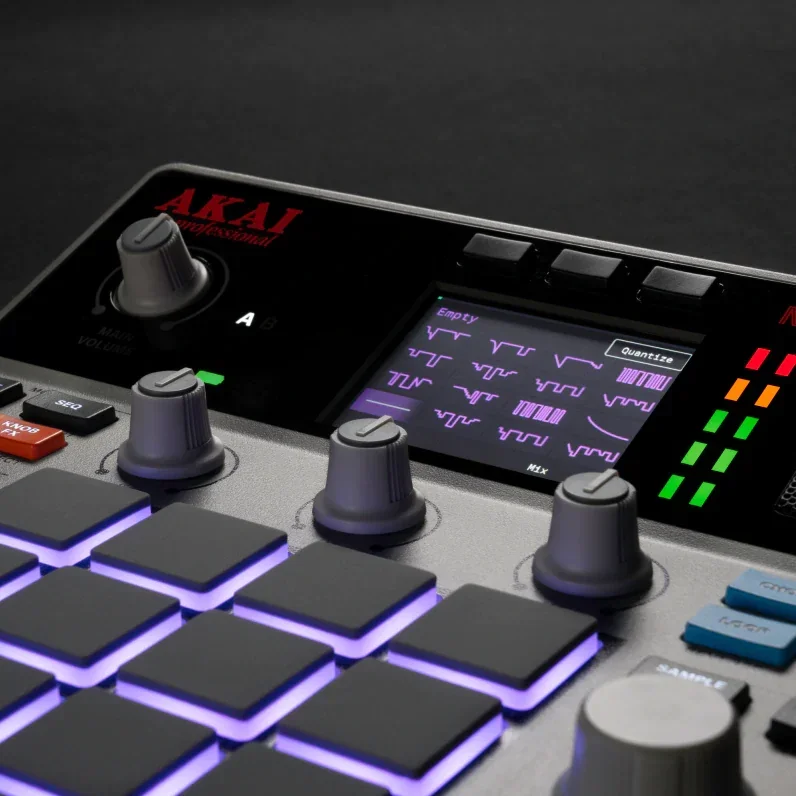
The MPC Sample doesn't attempt to recreate the converter character or lo-fi coloration of vintage MPCs, but the overall sonic direction still leans toward the punchy, drum-forward tone people associate with that lineage. The pads respond well to dynamic playing, and chopped samples hold their transient definition cleanly — particularly useful for drums, percussion loops, and the kind of sample-based hip-hop structures the machine is clearly built for. Playback sounds clean and modern, with enough headroom to handle stacked samples and layered drum kits without losing clarity.
The built-in processing tools are where the machine develops more character. The Color Compressor can add density and weight across the mix bus, while Pad FX and Flex Beat open up rhythmic manipulation and glitch-style transformations during performance. None of these tools radically recolor the source material, but they give you enough to make loops feel animated rather than static. The overall sound profile is deliberately neutral at its core — a clean, modern playback engine — with character coming from how you chop, sequence, and process rather than from anything baked into the signal path.
Workflow and real-world use
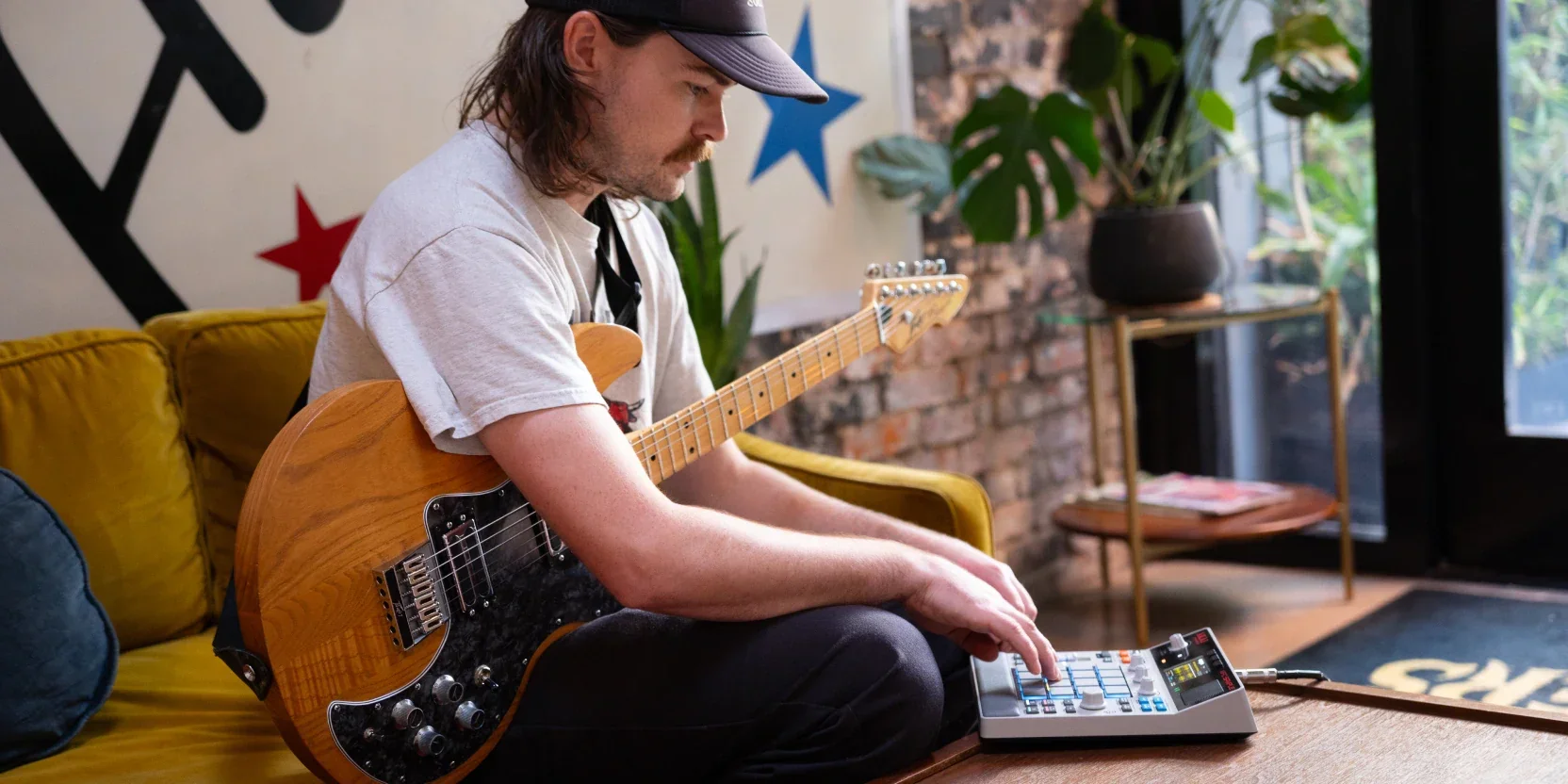
In practice, the MPC Sample is designed to move fast from idea to pattern. Audio can come in through the built-in mic, external inputs, or USB-C, making it easy to pull material from nearby gear, a phone, or a laptop. Once a sound is in, the workflow centers on chopping it into slices, assigning those slices to the velocity-sensitive pads, and building them into sequences. Automation and song mode are there when you want to develop something further, but the core loop is short and tactile — capture, chop, play.
That focus makes the unit feel especially well-suited to quick beat sketches and music-making away from the studio. Battery power, a built-in speaker, and onboard storage mean it can work anywhere without needing anything else around it. Performance tools like Pad FX and Flex Beat also push the workflow toward live manipulation — treating the machine more like an instrument you perform with than a sequencer you program. Compared with larger MPC units that invite deeper editing and layering, the MPC Sample consistently favors immediacy: less time in menus, more time building grooves.
Alternatives to consider
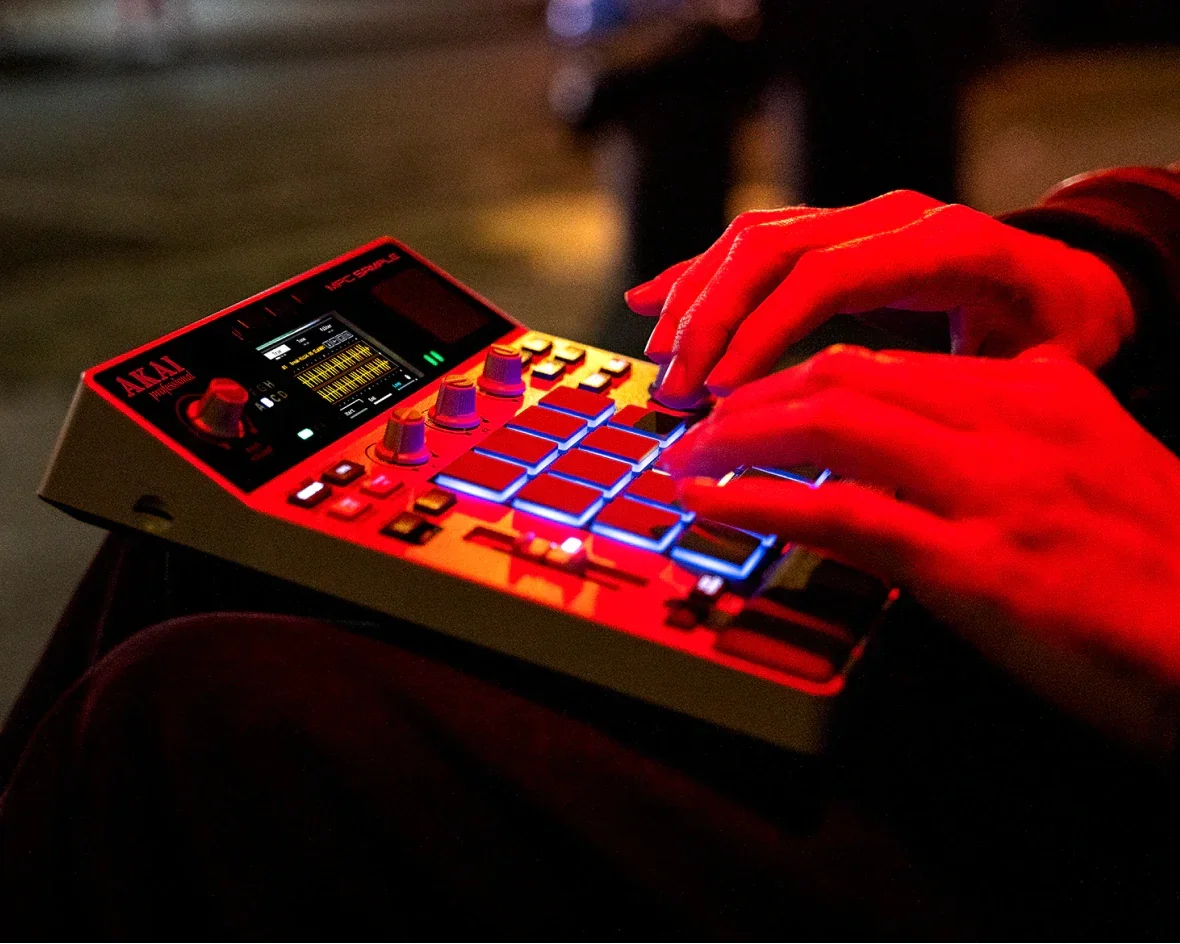
The MPC Sample sits in a specific category of compact modern samplers, and a few alternatives are worth considering depending on what you're after.
The Roland SP-404MKII is the closest philosophical competitor. It leans heavily into performance sampling, resampling, and real-time effects manipulation, and has become a go-to for live beat sets and DJ-style sample flipping. Where the SP-404MKII emphasizes spontaneous effects and resampling chains, the MPC Sample offers a more structured sequencing workflow rooted in the classic MPC approach — a meaningful difference depending on how you like to work.
The Teenage Engineering EP-133 K.O. II offers a similarly portable beatmaking experience but with a very different philosophy. It trades sequencing depth for an almost calculator-like immediacy, prioritizing speed of input above everything else. Meanwhile, producers who want a more complete MPC environment would likely be better served by the MPC One+, which offers significantly more production depth at the cost of size and portability.
Pros
Fast MPC-style sampling workflow built around velocity-sensitive pads and pattern sequencing
Highly portable design with battery power, built-in speaker, and built-in microphone
Onboard tools like Pad FX, Flex Beat, and the Color Compressor add real creative range
Accessible pricing for an MPC device at $399
Cons
Less production depth than larger units like the MPC One+ or MPC Live
Compact form factor means fewer physical controls than full-size MPC hardware
Built-in speaker is useful for sketching but not accurate enough for mixing decisions
Producers who favor resampling-heavy, effects-forward workflows may prefer the SP-404MKII
Final thoughts
The Akai MPC Sample feels like a deliberate course correction — a machine that trades depth for speed and portability, and is better for it. By focusing on sampling, pads, sequencing, and the ability to work anywhere, it lands closer to the spirit of the original MPC beat machines than anything Akai has released in recent memory.
It will appeal most to producers looking for a compact, standalone sketchpad that can live on a desk, in a bag, or next to a record collection. Those who need a full studio-in-a-box MPC experience will find more to work with in the MPC One+ or MPC Live — but that's not the machine this is trying to be, and that's precisely the point.
The Akai MPC Sample is one of the more interesting MPC releases in a long time because it trims the platform back down to something tighter, more immediate, and more obviously performance-oriented. Rather than chasing the full standalone-production-center ambition of larger modern MPCs, this one leans into sampling, chopping, sequencing, onboard effects, battery power, and portability in a compact box that openly nods to the MPC60/MPC3000 era in both look and intent. It is a standalone hardware sampler with 32-voice polyphony, stereo sampling, 2GB of RAM, 8GB of internal storage, microSD expansion, a built-in speaker, and a built-in mic. What makes it worth reviewing is that Akai seems to have aimed for a very specific lane here: not a mini workstation, but a sketchpad that recaptures some of the speed and tactile appeal people still associate with older MPCs. The MPC Sample supports up to 128-bar patterns, automation, song mode, multiple sampling inputs including USB-C audio, and a set of performance-focused processing tools such as Pad FX, Flex Beat, and a master Color Compressor. At $399 / £349 / €399, it also lands in a more approachable part of the market, which puts it in direct conversation with other compact modern samplers rather than Akai’s bigger flagship units.
TL;DR
The Akai MPC Sample is a compact standalone sampler built around fast chopping, beatmaking, and portable use rather than deep workstation-style production.
Its headline appeal is the mix of classic MPC-inspired pad workflow with modern conveniences like battery power, USB-C audio, microSD storage, and a built-in speaker/mic.
On paper, it gives you a lot for the size: 32-voice polyphony, stereo sampling, 128-bar sequences, automation, and multiple onboard effects/performance tools.
Pricing is a big part of the story: it launched at $399 / £349 / €399, making it one of the more accessible entries in Akai’s current MPC ecosystem.
Early review coverage points to a machine that feels fast, fun, and immediate, though not as deep as larger MPCs in every area.
What It Is
The Akai MPC Sample is a compact standalone hardware sampler built around the core ideas that made classic MPCs influential: sampling, chopping, sequencing, and building beats directly from pads. Instead of functioning as a full production workstation like the MPC Live or MPC One+, this device focuses on the immediate part of the process — grabbing sounds, slicing them up, and turning them into patterns quickly. The design intentionally nods to the lineage of machines like the MPC60 and MPC3000, both visually and conceptually, emphasizing a tactile pad-driven workflow that prioritizes speed over deep menu-based production.
Under the hood, the unit offers 32-voice polyphony, stereo sampling, and 2GB of RAM, alongside 8GB of internal storage that can be expanded via microSD card. Patterns can extend up to 128 bars, with automation recording, song mode, and a selection of onboard processing tools including Pad FX, Flex Beat, and a master Color Compressor. It also includes practical modern features aimed at portability and sketching ideas anywhere: a built-in microphone, built-in speaker, USB-C audio connectivity, and battery-powered operation, positioning it as a sampler you can use away from the studio just as easily as inside it.
How It Sounds
The Akai MPC Sample doesn’t try to simulate the exact converters or coloration of vintage MPCs, but the overall sonic character still leans toward the punchy, drum-forward tone people associate with that lineage. The pads respond well to dynamic playing, and chopped samples retain a tight transient response that works particularly well for drums, percussion loops, and classic sample-based hip-hop structures. From listening impressions reported in early reviews, the playback engine sounds clean and modern, with enough headroom to handle stacked samples and layered drum kits without collapsing into muddiness.
Where the machine develops more personality is through its built-in processing tools. The Color Compressor can add density and weight across the mix bus, while performance-oriented effects like Pad FX and Flex Beat allow for rhythmic manipulation and glitch-style transformations. These tools don’t radically redefine the raw tone of the sampler, but they do make it easier to shape loops into something more animated. Overall, the sound profile feels deliberately neutral at its core — a straightforward sampler playback engine — with character coming from the way samples are chopped, sequenced, and processed rather than from heavy coloration in the signal path itself.
Workflow and Real-World Use
In practice, the Akai MPC Sample is designed to move quickly from idea to pattern. Sampling can happen through several paths — the built-in microphone, external inputs, or USB-C audio — which makes it easy to grab material from nearby gear, a phone, or a laptop. Once a sound is captured, the workflow revolves around chopping and assigning slices to the velocity-sensitive pads, then sequencing them into patterns that can run up to 128 bars. Automation recording and song mode allow those patterns to evolve into full arrangements, but the core interaction remains focused on short loop-based creation rather than long linear production sessions.
That approach makes the unit feel especially suited to quick beat sketches and portable music-making. The presence of a built-in speaker, battery power, and onboard storage means it can function as a self-contained sketchpad without needing a studio setup around it. Performance-oriented tools like Pad FX and Flex Beat also encourage live manipulation while patterns are playing, which can make the workflow feel closer to performing with loops than programming them. Compared with larger MPC units that invite deeper editing and layering, the MPC Sample’s workflow favors immediacy — capturing sounds, flipping them into pads, and building grooves with minimal friction.
Alternatives to Consider
If the Akai MPC Sample catches your attention, it sits in a category of compact modern samplers that all approach beatmaking slightly differently. The Roland SP-404MKII is probably the closest philosophical competitor. It focuses heavily on performance sampling, resampling, and effects manipulation, and it has become a favorite for live beat sets and DJ-style sample flipping. Compared with the MPC Sample, the SP-404MKII tends to emphasize real-time effects and resampling tricks, while the Akai machine leans more toward a structured MPC-style sequencing workflow.
Another strong alternative is the Teenage Engineering EP-133 K.O. II, which offers a similarly portable beatmaking experience with a very different interface philosophy. The EP-133 focuses on minimalism and immediacy, trading deeper sequencing features for a faster, almost calculator-like approach to building patterns. Meanwhile, producers who want a more complete MPC environment might still gravitate toward something like the MPC One+, which offers a much deeper production system but at the cost of size and portability. For a deeper breakdown of what to buy instead, check my post about the best hardware samplers for producers.
Pros
Fast MPC-style sampling workflow centered around velocity-sensitive pads and pattern sequencing
Highly portable design with battery power, built-in speaker, and built-in microphone
Strong creative tools like Pad FX, Flex Beat, and the Color Compressor for manipulating samples
Accessible pricing for an MPC device at around $399
Cons
Less deep production environment than larger MPC units like the MPC One+ or MPC Live
Small form factor means limited physical controls compared with full-size MPC hardware
Built-in speaker is practical for sketching ideas but not suitable for accurate monitoring
Some users may prefer the more performance-focused resampling workflow of devices like the SP-404MKII
Final Words
The Akai MPC Sample feels like a deliberate shift toward immediacy in the MPC lineup. By stripping things down to sampling, pads, sequencing, and portable creativity, it lands closer to the spirit of early MPC beat machines than the full production centers the brand has focused on in recent years.
It will appeal most to producers who want a compact, standalone sampling sketchpad that can live on a desk, in a backpack, or next to a turntable setup. Producers looking for a full studio-in-a-box MPC experience, however, will probably find the deeper capabilities of the MPC One+ or MPC Live a better fit.