
AlphaTheta DJM-A7: A Four-Channel Club Mixer Built for Small Booths
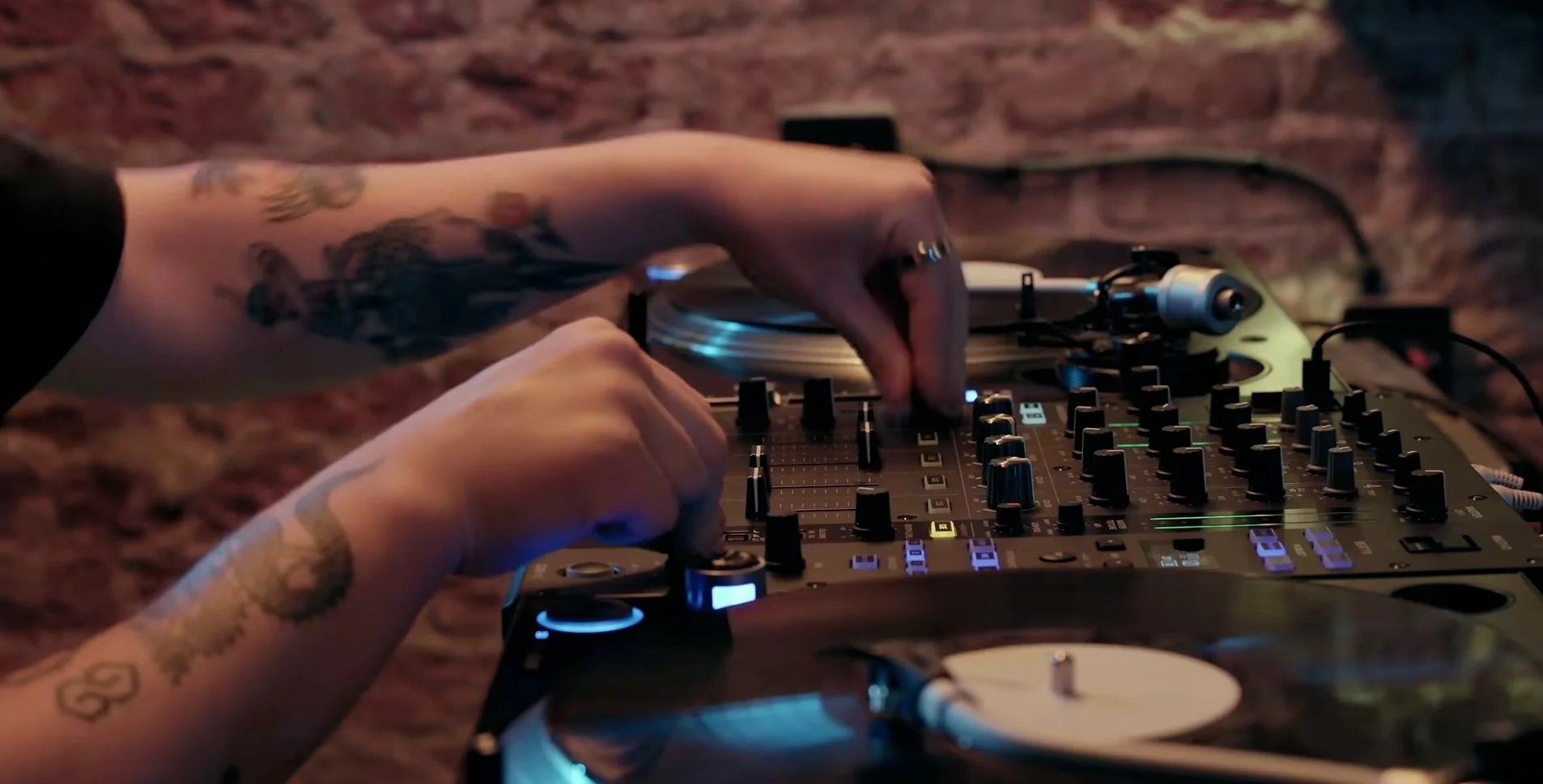
Most DJs don't play main rooms. They play bars, lounges, small clubs, hotel lobbies and their own living rooms, and for years the mixer in those booths was the DJM-750MK2: a proper four-channel Pioneer layout in a size that fits a real-world booth. Its replacement, the AlphaTheta DJM-A7, launched on November 10 and is aimed squarely at those rooms. The A7 keeps that compact footprint and borrows its channel strip and audio path from AlphaTheta's flagship, then adds a few new ideas for DJs playing rooms with no sound engineer in sight. Here's what it does well, what it leaves out and who it suits. This is a first look based on AlphaTheta's specs and early reviews, not a hands-on test.
Check the current price of the DJM-A7 here if you want a club layout in a booth-friendly size.
TL;DR – DJM-A7
Four channels with flagship-grade 32-bit ESS converters
Master Texture, two knobs for tuning the highs and lows to the room
Built-in SonicLink for wireless headphones
Dual USB-C for laptop changeovers, with rekordbox included at no subscription
A lean FX section, with no send/return or talkover
Disclosure: This site contains affiliate links. If you purchase through these links, I may earn a commission at no extra cost to you.
What the DJM-A7 Is
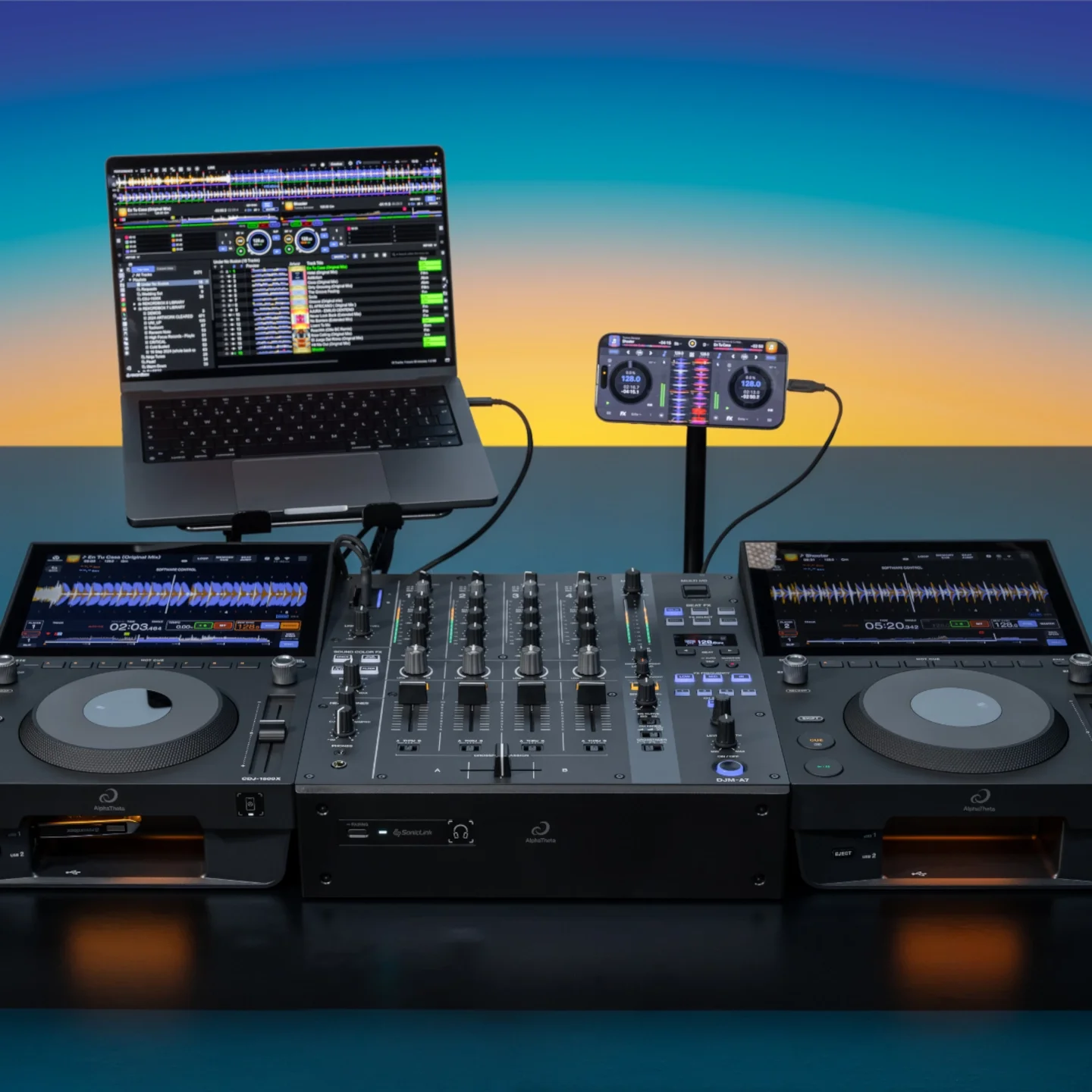
It's a four-channel digital mixer with four phono/line input pairs, one combo mic input, an XLR master, a booth out and an RCA rec out. It's almost exactly the size of the 750MK2, so it drops into an existing booth or between a pair of CDJs without moving any furniture. At 6.7 kg it's light enough to carry around without dread. The channel strip, including the 3-band EQ and 45 mm faders, follows the DJM-A9 layout, so anyone who's played a Pioneer club mixer will feel at home immediately.
The audio path is the headline. AlphaTheta uses ESS 32-bit converters on the inputs and on the master, booth and rec outputs, with a neutral tuning the company refined through listening tests in clubs, bars and lounges. Early reviewers agree it sounds great, and AlphaTheta says the phono stage has been improved too.
Connectivity is modern. There are two USB-C ports for laptops, so the next DJ can plug in mid-set for a clean changeover. A third USB-C port handles the Multi I/O link to the RMX-IGNITE effects unit, sending audio digitally between the two boxes. rekordbox is unlocked by the hardware with no subscription. Serato DJ Pro, djay Pro and djay for iOS all work but need their own subscriptions, and this is the first AlphaTheta mixer to support djay on an iPhone or iPad.
Standout Features
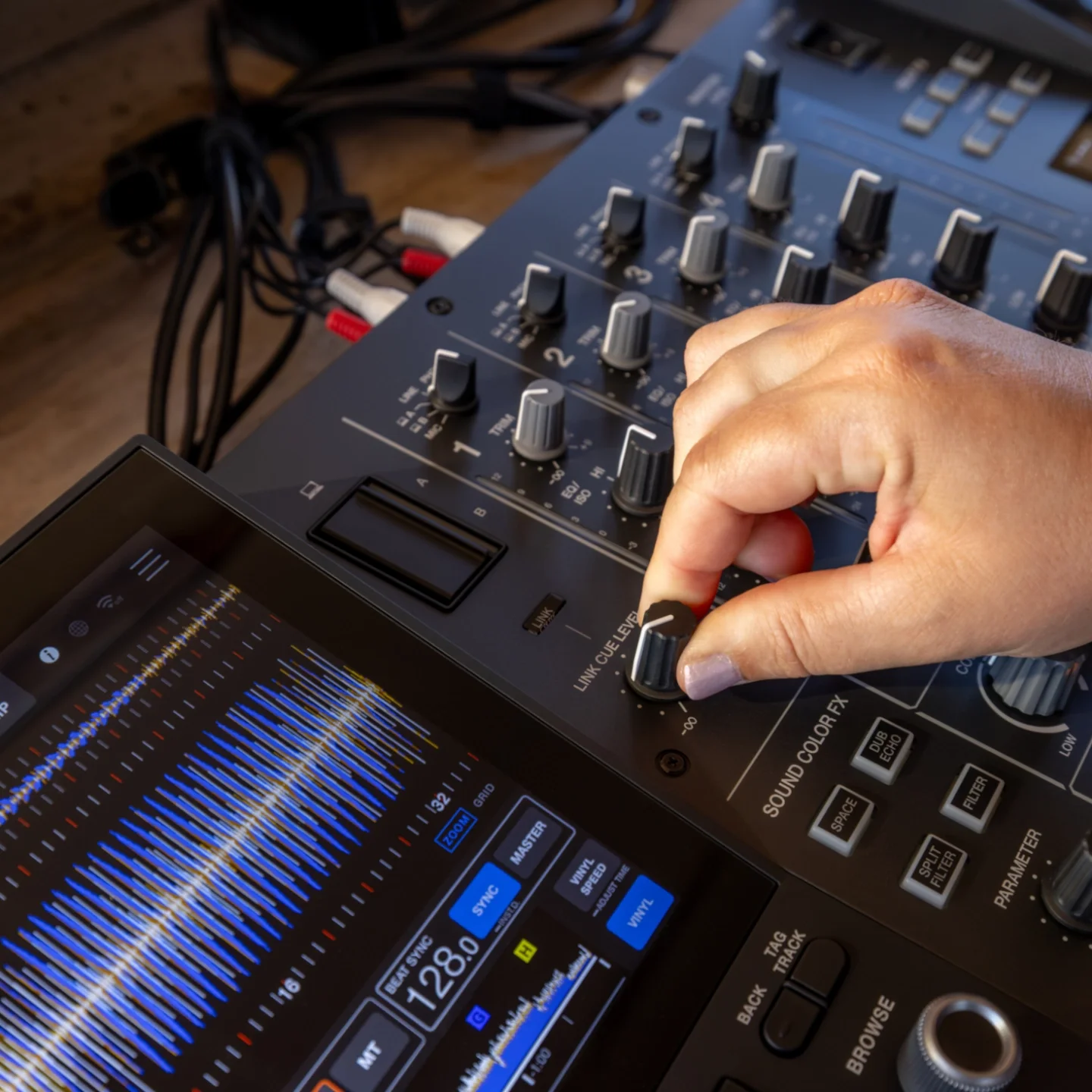
Master Texture is the feature AlphaTheta is pushing hardest. It's two knobs on the master section. Air sweeps the top end from Smoky to Bright, and Low End moves the kick from Smooth to Punchy. Reviewers describe it as subtle and say it does nothing when centered. It's clearly meant for venues with no sound tech: a bar owner can soften a harsh room or tighten a boomy one without touching the system EQ. For a home DJ it's essentially a gentle tone control for compensating for your monitors. It's useful, but it's not the reason to buy the mixer. One detail worth knowing: if you set the rear RCA output to record, it bypasses Master Texture, so your recordings stay flat.
Soft Mix Curve gradually rolls off the highs as you pull a channel fader down. On long blends that keeps two sets of hi-hats from stacking into a wall of hiss. It's a small touch house and disco DJs will appreciate.
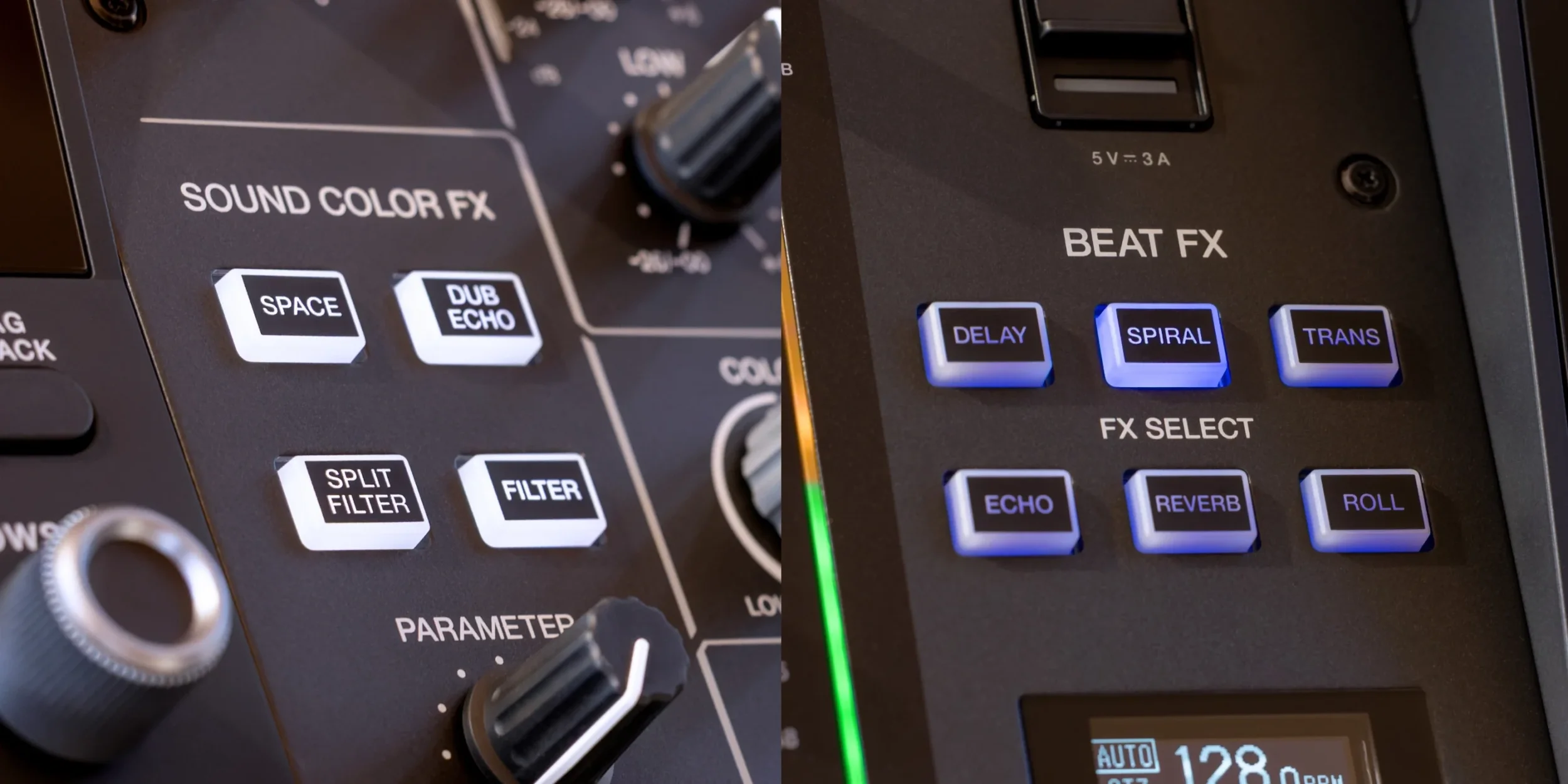
The Split Filter is a new Sound Color FX that mainly shapes the midrange while leaving the lows and highs alone. Think of it as a way to carve a vocal or a stab out of the way without thinning out the groove.
SonicLink is built in, so compatible AlphaTheta wireless headphones connect without a separate transmitter. Touch pairing with the HDJ-F9 needs the latest firmware.
Limitations
The A7 keeps all four channels and stays lean everywhere else, starting with effects. You get 6 Beat FX, picked with illuminated buttons that reviewers say are easy to hit in a dark booth. But there's no flanger or phaser, loops max out at eight beats, and Beat FX can't be assigned to one side of the crossfader. The 4 Sound Color FX are Filter, Dub Echo, Space and the Split Filter. That covers the basics but won't satisfy anyone who performs with effects.
Routing is basic too. There's no analog send/return, so external effects only connect over the Multi I/O port. The single mic input has no dedicated channel strip: you pick the mic as a source on a channel's input selector, and there's no talkover. The 1/4" and 3.5 mm headphone jacks share one cue mix and level, which makes back-to-back sets clumsier. There's also no Magvel crossfader and no digital inputs or outputs.
For most home and bar DJs, the only limitations that really matter are the FX if you perform with them, and the shared cue if you play back-to-back a lot. The rest is club-install stuff.
Who Should Buy the DJM-A7 (and Who Should Skip It)
The A7 makes the most sense for home DJs building a club-style booth who want the layout they'll find on a real gig in a size that fits a desk, and for bar, lounge and restaurant residents, the rooms AlphaTheta designed it for. Venues replacing a tired 750MK2 get a drop-in upgrade. rekordbox users who don't want another subscription, and laptop DJs on Serato or djay who want proper club ergonomics, are also in the sweet spot.
Skip it if your sets are built on Beat FX: techno DJs who ride effects all night will feel boxed in. MCs and hosts should note the missing talkover and the single mic input. If you run outboard effects through a send/return, a delay pedal or a dub siren for example, you'll want a different mixer. And if you already own a 750MK2 and depend on its send/return, mic channel and Magvel crossfader, the older mixer may suit you better unless you need the dual-laptop setup.
Alternatives to the DJM-A7
DJM-A9: AlphaTheta's flagship has the same layout with far more effects, more routing, two mics and talkover, in a much bigger and heavier box that costs a lot more. It's the right call for a main room or an FX-heavy performer.
DJM-750MK2: You keep the analog send/return, a proper mic channel, the Magvel crossfader and a deeper Beat FX bank, but you lose the twin USB-C changeovers, the newer converters and SonicLink. It makes sense if you can find a clean one and you live on outboard gear.
DJM-V5: AlphaTheta's other compact mixer this year goes a different way. It has three channels with the V10's flavour, no Beat FX and no crossfader, and it also has SonicLink. Choose it if you're a selector who blends on faders and never touches the crossfader.
Pros
Flagship-grade 32-bit ESS converters and a familiar club layout
Drop-in 750MK2 footprint, light enough to carry
Dual USB-C changeovers, built-in SonicLink, rekordbox with no subscription
Soft Mix Curve and Split Filter are genuinely useful for long blends
Cons
Only 6 Beat FX and 4 Sound Color FX, with no flanger or phaser
No analog send/return, no dedicated mic channel, no talkover
Shared headphone cue makes back-to-back sets clumsier
Master Texture is subtle, and more for venues than for DJs
Bottom Line
The DJM-A7 is the four-channel club mixer most home and bar DJs actually need. You get the sound and layout you'd find in a proper booth, at a size that fits the places most of us really play, and the only meaningful compromise is effects depth. If effects are central to how you play, or you need send/return and a proper mic channel, look elsewhere. Everyone else gets club muscle memory without a club-sized mixer.
Disclosure: This site contains affiliate links. If you purchase through these links, I may earn a commission at no extra cost to you.