
Cherry Audio DW-8K: Korg's DW-8000 Hybrid Synth, Reborn
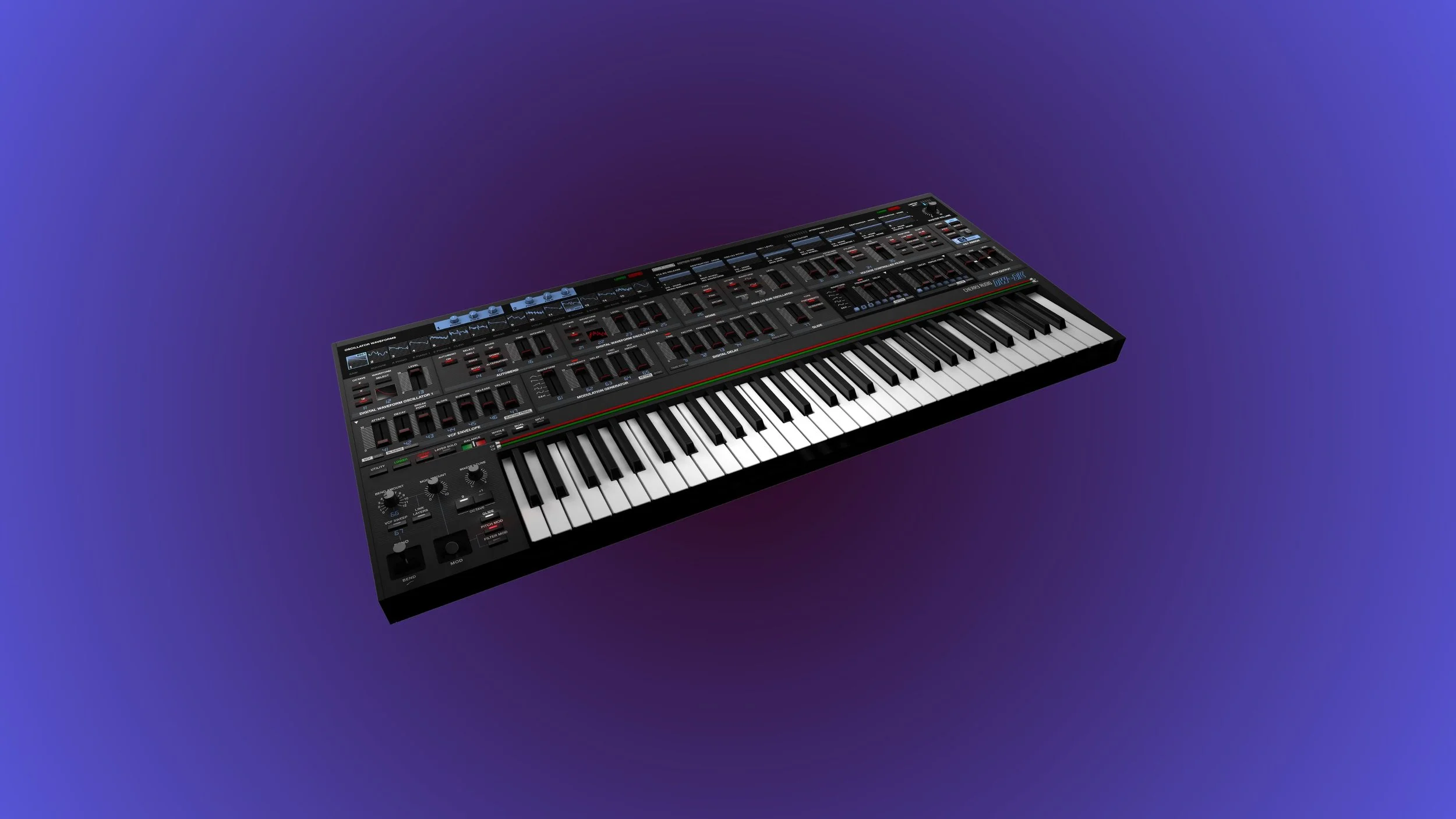
In the mid-'80s, synths sat in an awkward spot. Analog polys were expensive and digital was cold and hard to program, so a few hybrids split the difference. Korg's DW-8000 was one of the best of them. It paired small digital waveforms with a warm, resonant analog filter, and its glassy, slightly gritty sound still has a cult following among synthwave, synth-pop and '80s-leaning house producers. The Cherry Audio DW-8K is a new synth plugin that recreates the Korg DW-8000, then adds two layers, MPE, sequencers and a full effects rack. It's out now for macOS and Windows. This is a first look based on Cherry Audio's published specs and early reactions from reviewers and owners of the original hardware.
Check the current price of Cherry Audio DW-8K here
TL;DR – Cherry Audio DW-8K
A plugin recreation of Korg's DW-8000, the 1985 digital-analog hybrid known for glassy, slightly gritty tones, shimmering pads and punchy basses
Its sweet spot is synthwave, synth-pop, '80s-tinted house and soundtrack work, anywhere you want that era's sheen without the vintage hardware
Cleaner and much more flexible than the original: two 16-voice layers you can split or stack, extra filter models and MPE support
Built-in arpeggiators, sequencers and three effects chains make it a full modern instrument, not a museum piece
Loads all 128 original factory sounds, so the classic patches are there from the first click
Disclosure: This site contains affiliate links. If you purchase through these links, I may earn a commission at no extra cost to you.
What the Cherry Audio DW-8K Is
The original DW-8000 came out in 1985 as an eight-voice hybrid. Each voice had two oscillators drawing from Korg's Digital Waveform Generator System (DWGS), a set of 16 waveforms stored as 8-bit samples. Those fed a resonant 24 dB/octave analog low-pass filter and a built-in digital delay. Patches could be backed up to cassette tape, which tells you how long ago this was.
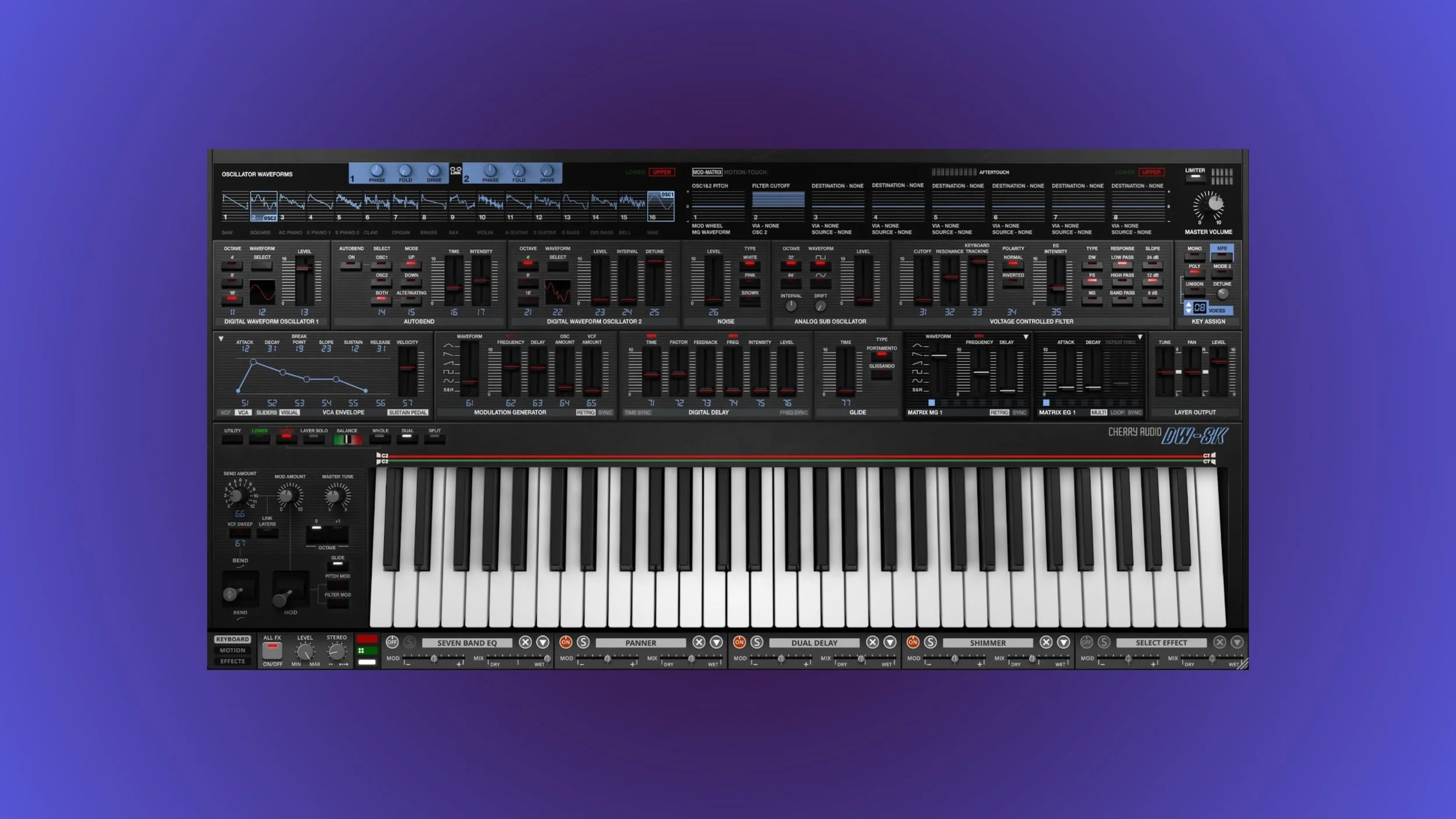
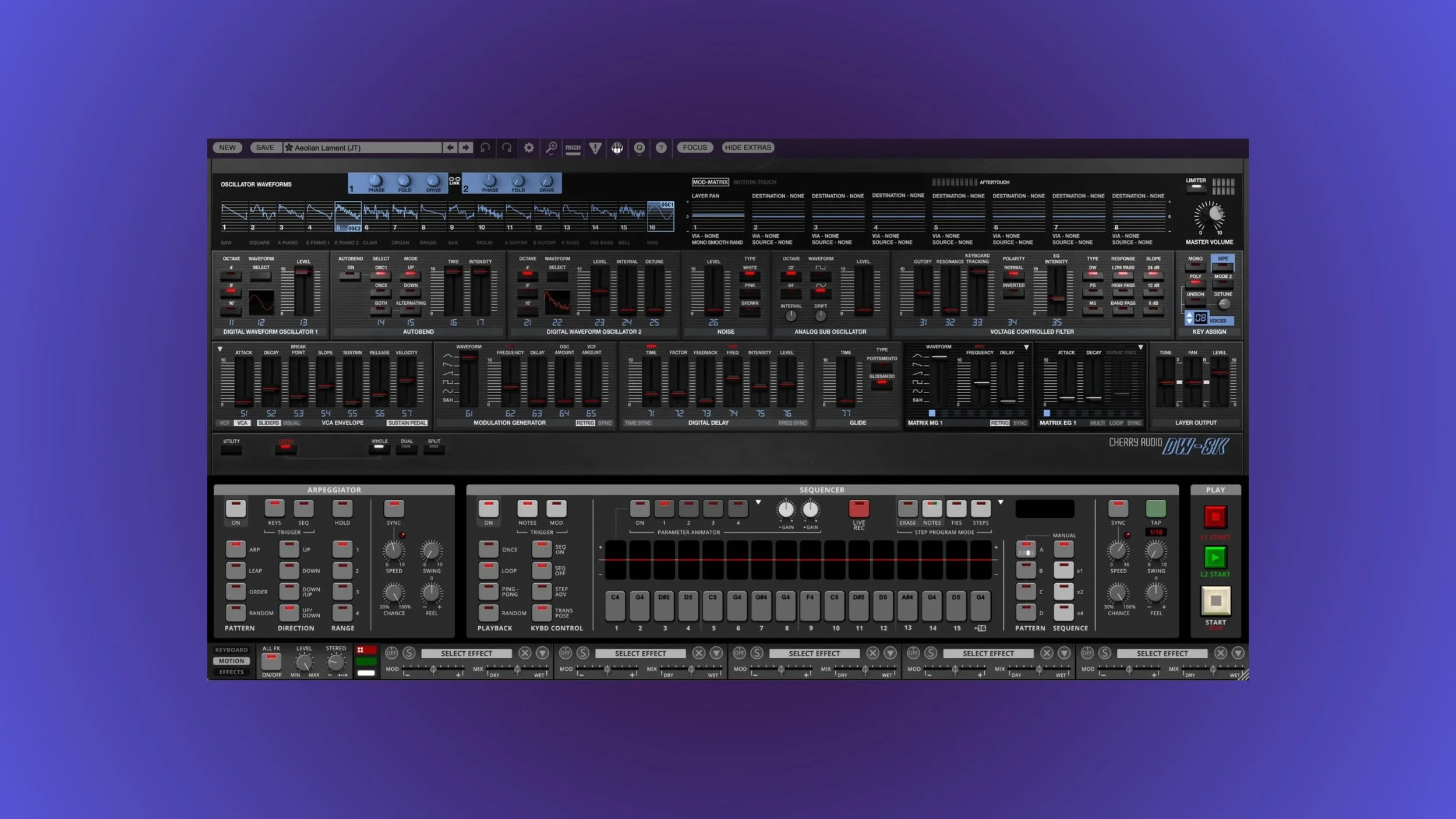
The DW-8K keeps that architecture: two digital oscillators per voice, the same 16 waveforms, and that filter at the center of the sound. The big change is under the hood. Cherry Audio rebuilt the waveforms as 64-bit versions using additive synthesis instead of copying the 8-bit originals. Everything else is expansion, spread across three pages: the synth engine, a performance page for arps and sequencers, and an effects page. Every parameter now sits on screen. That fixes the hardware's worst trait, a parameter-number-and-slider editing workflow that made programming a chore.
Standout Features
Two layers, 16 voices each. The DW-8K runs two independent stereo layers with up to 16 voices each, up from the original's eight. You can split them across the keyboard or stack them. In practice, that means a plucky bass under a pad on a split, or a bell stacked on a warm string patch for that late-'80s keyboard ballad sound.
A wider sound engine. Each oscillator gets waveshaping (phase, wavefolding and drive), its own tuning and the original's autobend pitch swoop. An analog-style sub-oscillator and white, pink and brown noise come with them. The sub gives basslines and leads in deep house or synth-pop more weight, and wavefolding pushes the DWGS waves somewhere the original never went. The filter section adds models inspired by the MS-20 and PS-3300 alongside the modeled DW-8000 low-pass, plus 6 and 12 dB slopes and high-pass and band-pass modes. The MS-20 flavor is the one to try for snarly electro and acid-adjacent lines.
Modern modulation and movement. Six-stage envelopes, expanded LFOs and an eight-slot bipolar mod matrix handle the sound design. Velocity, polyphonic aftertouch and MPE can be set separately per layer, and some presets are built specifically for MPE controllers. Each layer also gets its own arpeggiator and polyphonic step sequencer with chance and feel controls, plus a Motion Animator for parameter movement that can respond to touch pressure. Run a chord-stab sequence on one layer and an arp on the other for techno or Italo, or let slow motion lanes evolve a pad for ambient work.
Effects, presets and patch import. Three independent effects chains hold 25 processors, each chain with its own LFO. They include the original digital delay and three new effects: Crush, a Shimmer reverb and a Sculpt filter. You get over 400 presets plus all 128 original factory sounds, and hardware owners can import their own patches from SysEx files or cassette-tape backups. An optional preset pack from synthwave artist Michael Oakley covers '80s retrowave through '90s Eurodance.
Limitations
The waveform set is locked at the original 16. You can't load your own waves into either oscillator. That's faithful to the DW-8000, but anyone hoping for a wavetable playground will hit the walls quickly.
The bigger question is character. Rebuilding the waves at high resolution cuts aliasing, and several KVR users point out that this makes the DW-8K cleaner than the 8-bit hardware by design. Early owner reactions are mixed but mostly positive. One DW-8000 owner on Synthtopia calls it very close to the hardware but a touch less rich. In community A/B threads, some listeners could barely tell it from the real thing. A few forum regulars think the init patch sounds slightly veiled, a complaint that comes up with other Cherry Audio emulations too. Expect DW-8000 character with smoother edges, not a bit-for-bit copy of the grit.
Should You Buy It?
The DW-8K makes the most sense for producers who want that hybrid digital-meets-analog voice with modern conveniences: synthwave, synth-pop, '80s-flavored house, city pop and soundtrack work. It suits anyone who was put off by the original's programming or can't justify vintage hardware, and MPE players get more expressive control than the hardware ever offered. Layers, sequencers and effects make it a full instrument, not a museum piece.
Skip it if you want the raw, aliased 8-bit grit of the original exactly as it was. The free FB-7999 or the hardware will get you closer to the vintage experience. Skip it too if you want deep wavetable sound design, because the fixed 16-wave palette will feel narrow next to modern wavetable synths.
Alternatives
Korg modwave native is Korg's own modern descendant of the DW line. It isn't an emulation. It's a deep wavetable synth with 200+ wavetables, Serum-format import, Kaoss Physics and Motion Sequencing 2.0. Pick it for sound design depth, not '80s authenticity.
Arturia SQ80 V recreates Ensoniq's SQ-80 hybrid, with 8-bit oscillators and a modeled analog filter. It leans grittier and more lo-fi, so it's the better choice if crunch matters more to you than the DW's glassy sheen.
Full Bucket Music FB-7999 is a free emulation of both the DW-6000 and DW-8000. It supports SysEx and tape dump import, adds 16 extra waveforms and goes up to 64 voices. Community consensus puts it close to the hardware, but it has no layers, MPE or effects rack.
Pros
Faithful DW-8000 architecture with every parameter on screen
Two 16-voice layers with splits and stacks
Extra filter models, waveshaping and a sub-oscillator widen the palette
Per-layer arps, sequencers, MPE and polyphonic aftertouch
All 128 factory patches, plus hardware patch import
Cons
Fixed 16 waveforms, no custom wave loading
Cleaner than the 8-bit original, which purists may miss
A free alternative already covers the vintage basics
Bottom Line
The Cherry Audio DW-8K is the most complete take yet on the DW-8000. It keeps the hybrid voice that made the original a cult classic and fixes nearly everything that made it a pain to use. It won't fully replace the hardware's grimy edges, and FB-7999 is still the purist's free pick. But if you want DW-8000 character as a modern, layered, MPE-ready instrument for synthwave, synth-pop or '80s-tinted house, this is the one to get. There's a free 30-day demo, so you can A/B it against your own ears before committing.
Disclosure: This site contains affiliate links. If you purchase through these links, I may earn a commission at no extra cost to you.