
Which Fender Electric Guitar Should You Get? The Coolest Models Compared
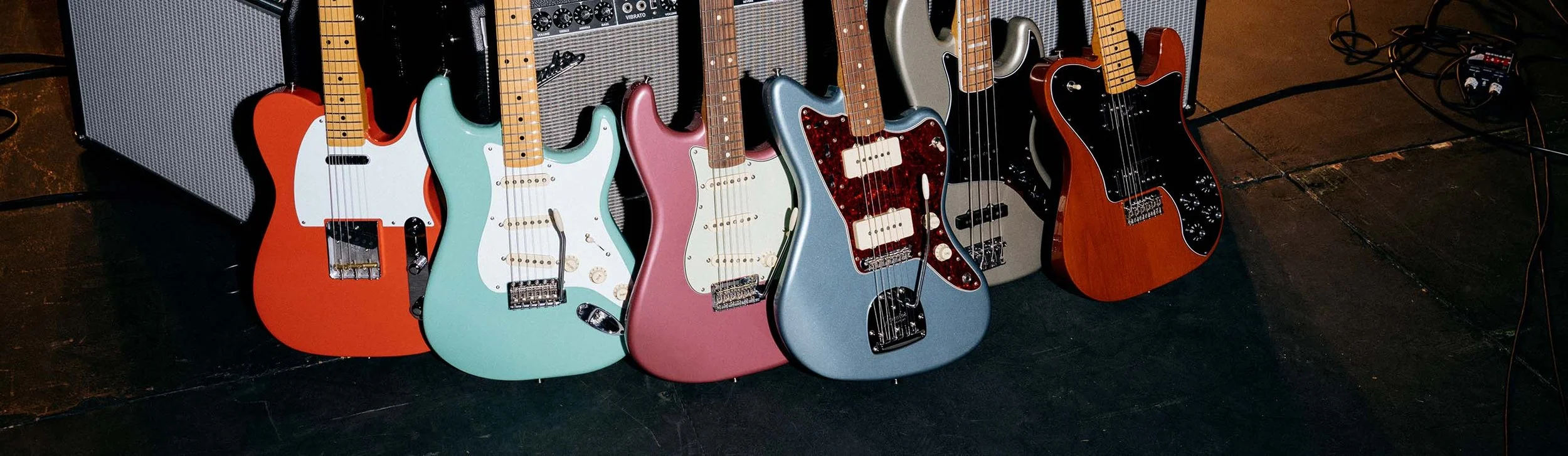
Fender’s electric guitar family is huge, and even seasoned players sometimes struggle to make sense of how everything fits together. You’ve got classic shapes that date back to the 1950s, modern riffs on those designs, short-scale offsets, long-scale workhorses, and multiple price tiers that span Mexico, the U.S., and Japan. On top of that, almost every model has its own sub-variants and signature twists, which makes the lineup feel bigger and more confusing than it actually is. The good news is that Fender’s range becomes easy to navigate once you understand the personality of each core model. This guide breaks down the Stratocaster, Telecaster, Jazzmaster, Jaguar, and Mustang—what defines each one, how they feel under your hands, and the kinds of sounds they naturally lean toward. The goal isn’t to crown a winner, but to help you understand the character of each guitar so you can choose the one that fits your playing style, tone goals, and musical identity.
Stratocaster
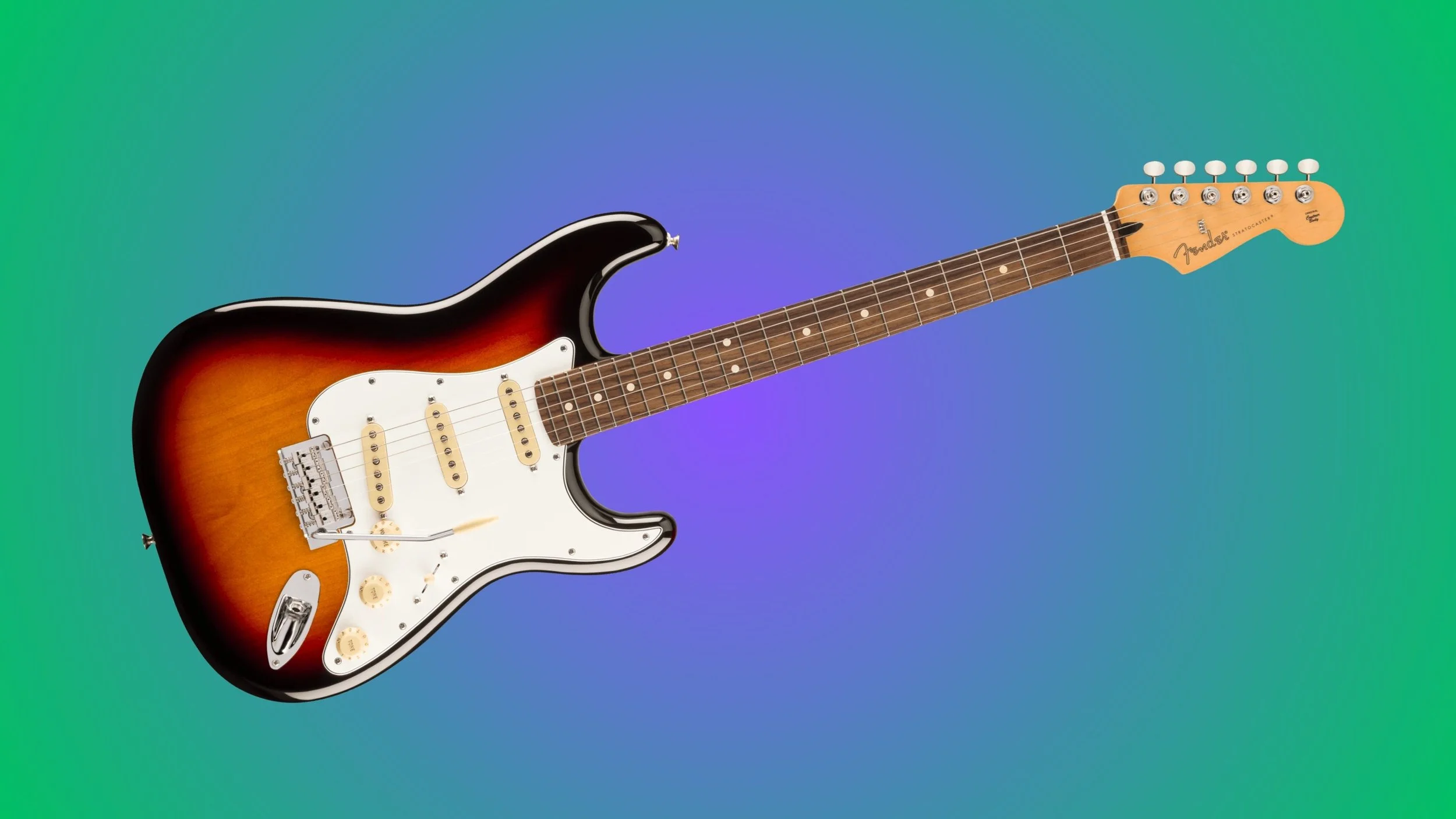
The Stratocaster is Fender’s most iconic shape for a reason. Its contoured body, three-pickup layout, and smooth vibrato system were cutting-edge innovations when it debuted in the 1950s, and those fundamentals still define the instrument today. The 5-way switch gives you access to bright single-coil sparkle, quacky in-between tones, and enough versatility to cover almost any genre. It’s an ergonomic design that feels balanced whether you’re standing or sitting, and its modern variants span everything from vintage-correct specs to more contemporary tweaks like noiseless pickups or hotter output.
Players gravitate toward the Strat because it can do a little bit of everything without losing its identity. If you need clean clarity, expressive bends, or glassy chime that sits perfectly in a mix, the Strat delivers. It’s a favorite for funk, pop, blues, indie, and modern production workflows because it layers well and responds beautifully to pedals. You pick up a Strat when you want a guitar that adapts to your ideas—one that feels instantly playable and encourages both subtlety and expression. If you want a “do-it-all” guitar with character, the Strat is the safest and most inspiring place to start.
Shop strats here
Telecaster
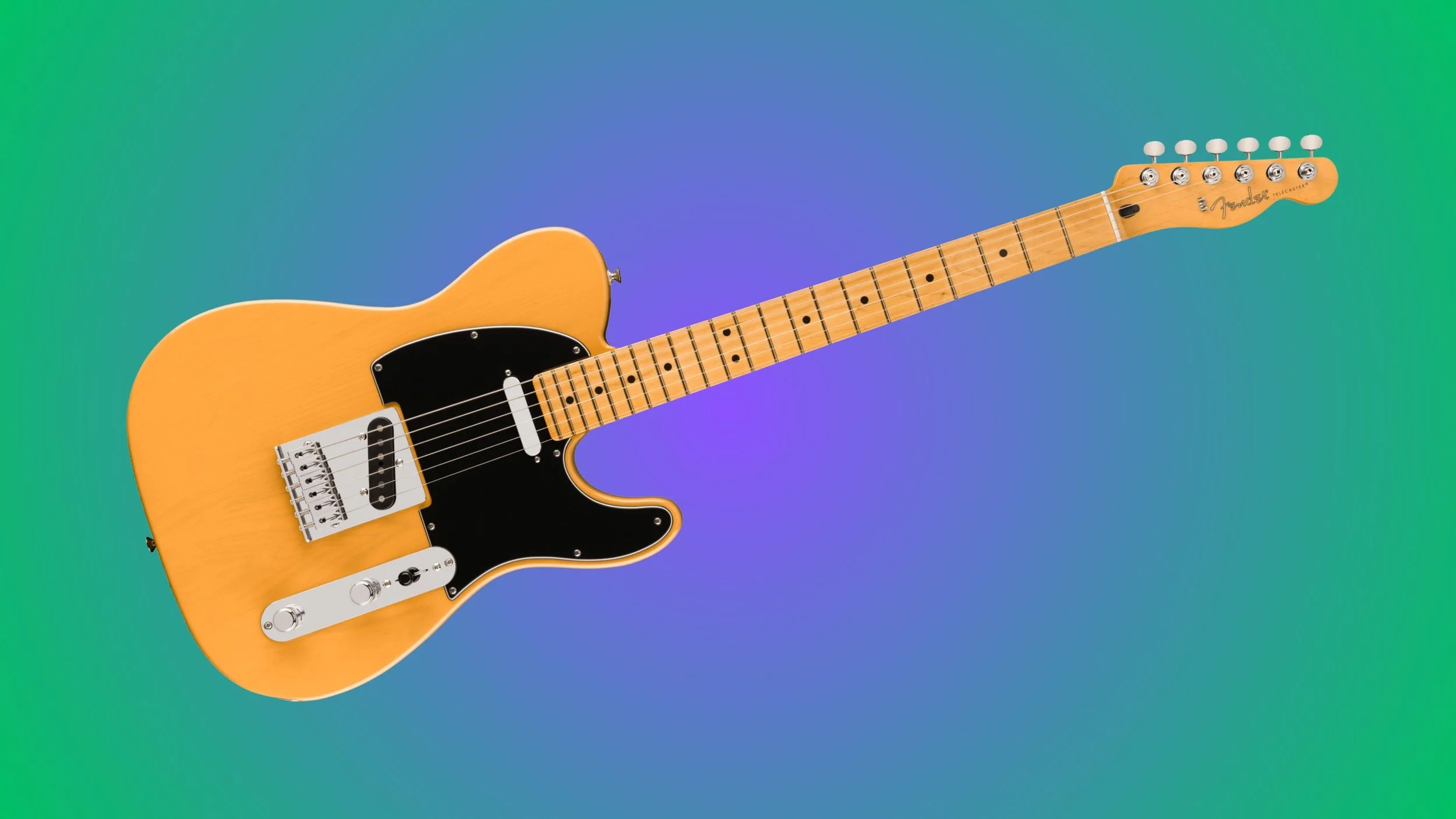
The Telecaster is the blueprint for the solidbody electric guitar: simple, direct, and unmistakably bold. Its slab body, metal control plate, and two-pickup configuration haven’t changed much since the early 1950s because the formula works. The bridge pickup delivers a tight, focused bite with plenty of upper-mid snap, while the neck pickup offers a warm, rounded contrast. There’s no fancy switching system or elaborate hardware—just pure, immediate response. That minimalism is part of the Tele’s charm: it’s rugged, reliable, and designed to get the job done without fuss.
Players choose the Telecaster when they want clarity, punch, and a sound that cuts through a mix without overpowering everything else. It’s a favorite for country, Americana, indie, punk, and even heavier styles thanks to its dynamic feel and naturally aggressive attack. The Tele rewards strong rhythm playing and expressive picking, making it a go-to for musicians who value honesty in their tone—what you play is what you get. If you’re drawn to guitars that feel sturdy, straightforward, and capable of delivering both twang and grit, the Telecaster offers a uniquely confident voice that stands apart from everything else Fender makes.
Shop teles here
Jazzmaster
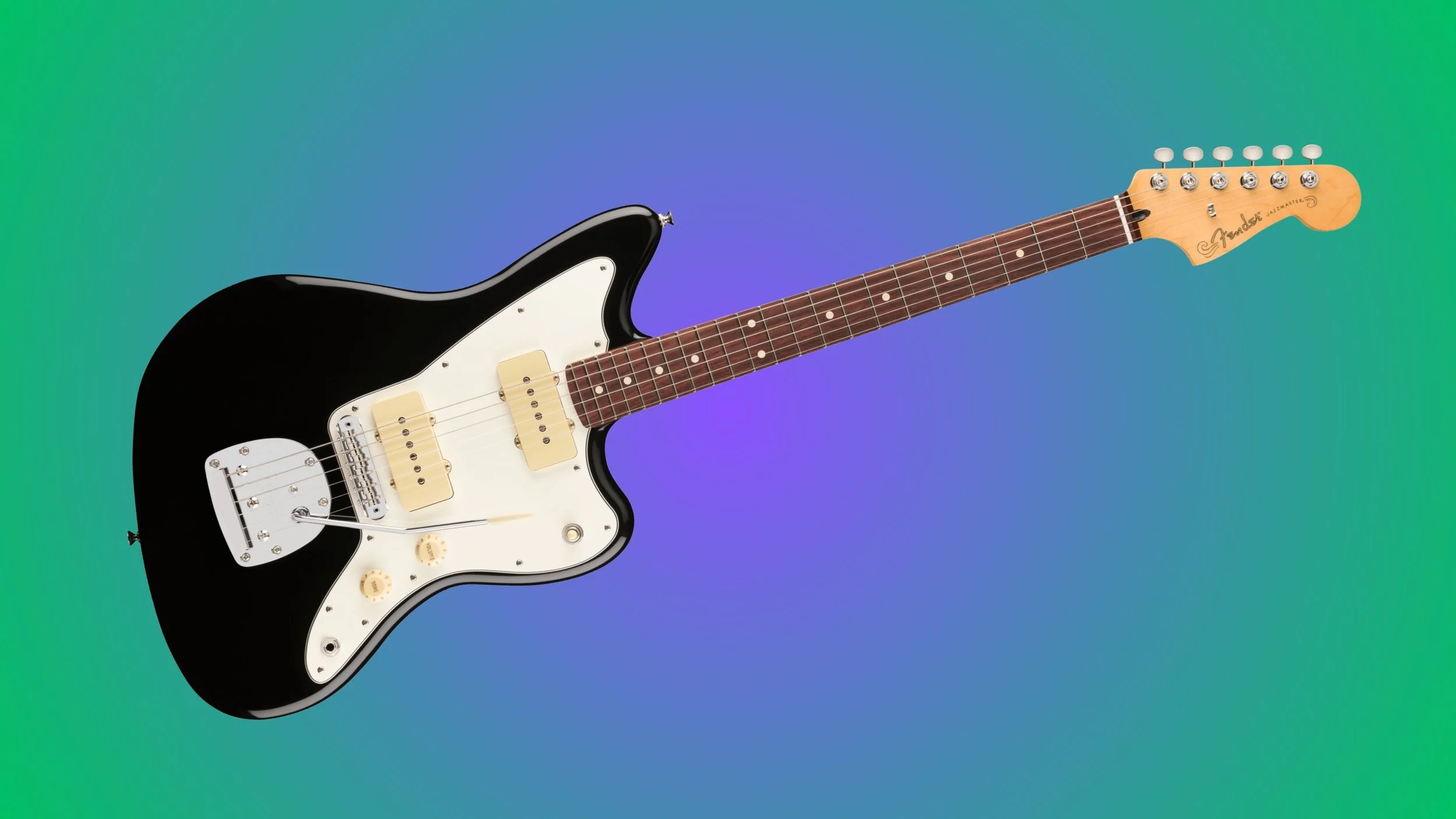
The Jazzmaster is Fender’s original offset experiment—designed in the late ’50s as a top-tier alternative to the Strat and Tele, but quickly adopted by players far outside of jazz. Its large body, floating tremolo, and wide single-coils give it a looser, more atmospheric sound than Fender’s other classics. Jazzmaster pickups aren’t traditional single-coils: they’re lower and wider, producing a warmer, more open tone with a bit of natural scoop. Combined with the tremolo system, you get a guitar that excels in textures, washes, and expressive phrasing.
Modern players love the Jazzmaster because it invites creativity and thrives in genres that reward mood and movement. It’s a staple in shoegaze, dream pop, indie rock, surf, ambient, and experimental music, partly because it handles pedals beautifully and partly because it feels different under your hands. The Jazzmaster encourages chord voicings, drones, and atmospheric playing without losing clarity. If you want a guitar that pushes you out of predictable patterns and into more expressive, spacious territory, the Jazzmaster is one of the most inspiring tools Fender has ever made.
Shop jazzmasters here
Jaguar
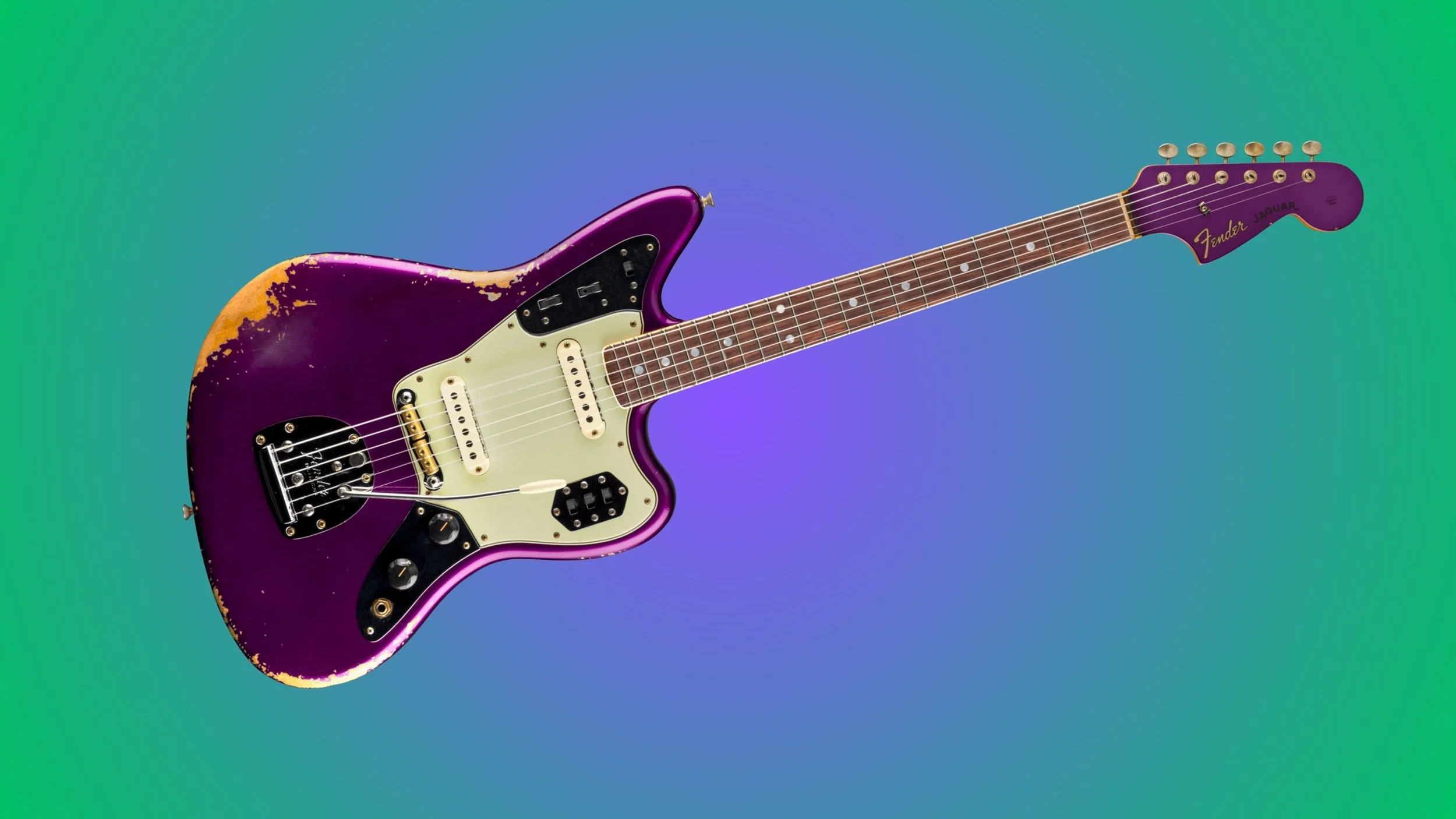
The Jaguar is Fender’s quirky short-scale offset—compact, bright, and full of character. Released in the early ’60s, it added a 24" scale length, a more complex switching system, and metal control plates that give it a visibly distinct look. The pickups are narrower and hotter than Jazzmaster pickups, producing more bite and treble presence. Combined with the shorter scale and unique bridge/trem setup, the Jaguar has a snappy, energetic sound that feels both immediate and slightly mischievous.
Today, players reach for the Jaguar when they want a guitar that stands out sonically and visually. Its brighter voice slices through dense mixes, making it popular in punk, garage rock, surf, and alternative music. The short scale adds a slinkier feel that’s great for fast riffs, jangly chords, and expressive bends. It’s not the most “neutral” Fender—it has a personality, and that’s the appeal. If you’re drawn to guitars with attitude, edge, and a slightly rebellious streak, the Jaguar offers a unique blend of charm and punch you won’t find anywhere else in the lineup.
Shop jaguar here
Mustang
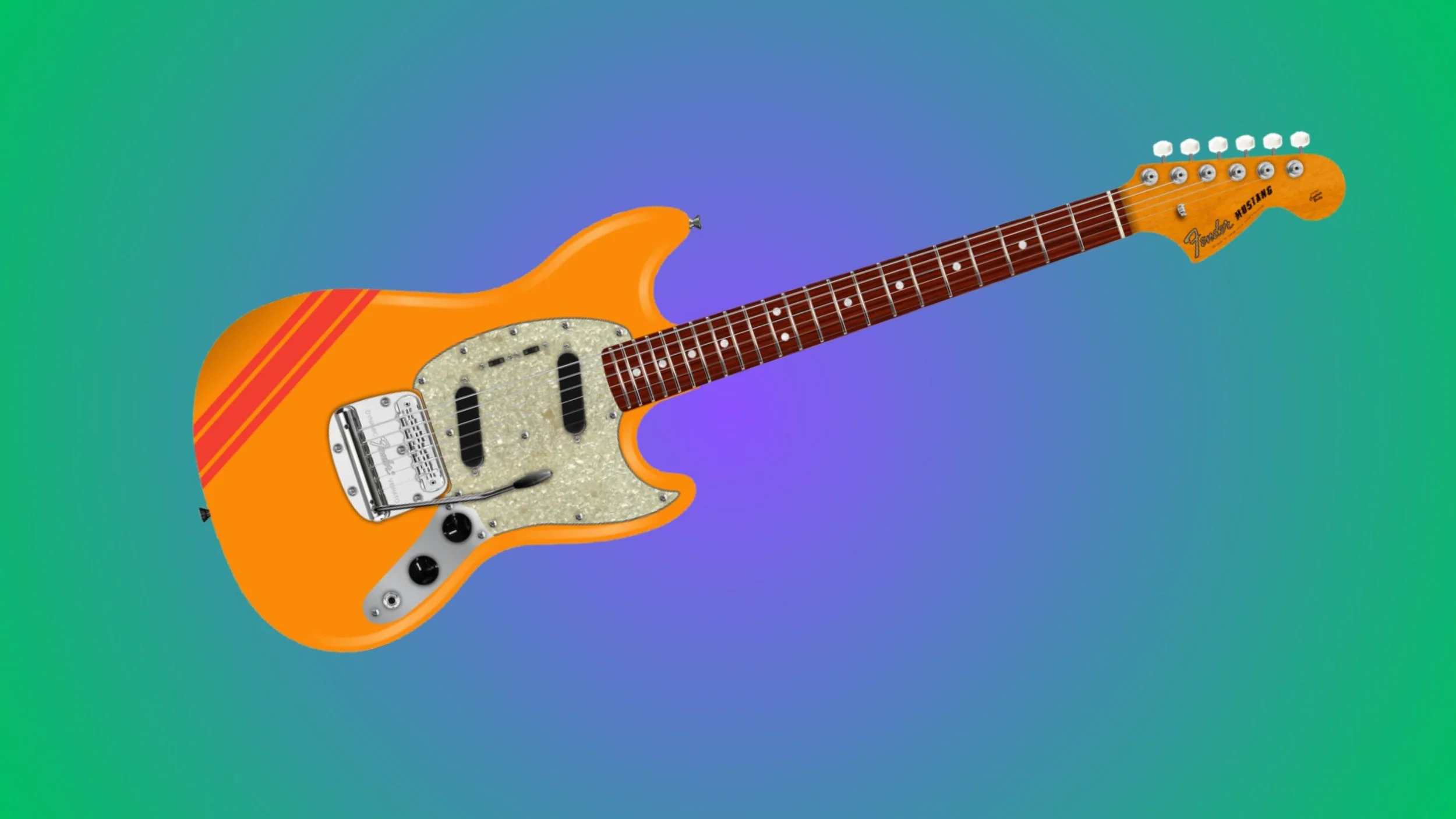
Originally introduced as a student model, the Mustang has long since outgrown that label. Its short 24" scale, compact offset body, and distinctive vibrato system give it a playful feel that players fall in love with. The pickups tend to be slightly rawer and more mid-forward than other Fender single-coils, which gives the Mustang a gritty, garage-ready voice. The simplicity of the controls and the slinky feel of the short scale make it approachable, lightweight, and surprisingly expressive.
Modern players gravitate toward the Mustang because it strikes a balance between character and accessibility. It’s comfortable to play for long sessions, easy to mod, and great for indie, punk, alternative, and bedroom production. The tone sits nicely between the brightness of a Jaguar and the warmth of a Jazzmaster, making it more versatile than people expect. If you want something compact, fun, and full of personality—something that inspires riffs rather than perfectionism—the Mustang might be the most charming Fender of all.
Shop mustang here
Price Tiers Explained
Fender’s pricing structure can seem chaotic at first, but it makes sense once you understand what’s actually changing as you move up the ladder. The Player II series (made in Mexico) gives you the core Fender experience with modern manufacturing consistency—clean fretwork, solid hardware, and classic tones that feel authentic without being precious. Vintera II leans into old-school specs: thicker necks, vintage-voiced pickups, period-correct colors, and a slightly more “classic” feel. From there, American Performer and American Professional II refine the formula with better hardware, upgraded electronics, and more durable finishes. American Ultra sits at the top of the production line, offering noiseless pickups, premium neck carves, advanced switching options, and high-end build quality.
Above all of this sits the Fender Custom Shop, which is less about mass production and more about artistry, individual craftsmanship, and historically accurate recreations. These guitars feel different in the hand—lighter, more resonant, and more nuanced—especially if you’re sensitive to neck shapes or pickup dynamics. Moving up the range isn’t just about price; it’s about feel, refinement, and the way the guitar reacts to you. If you like modern reliability, mid-range models are usually perfect. If you care about vintage sensibility or ultra-polished performance features, the higher tiers genuinely deliver.
Shop Fender deals here
Squier VS Fender? What’s the Difference?
Squier is Fender’s sister brand and the entry point into the Fender ecosystem. Instead of being a random budget line, Squier builds affordable versions of Fender’s classics — Strats, Teles, Jazzmasters, Mustangs — using simpler construction methods and more cost-effective components. You still get the familiar shapes, neck profiles, and overall feel of real Fender designs, which is why so many players start with Squier before upgrading. The lineup ranges from very basic beginner models to surprisingly high-quality instruments, especially in the Classic Vibe series, which aims to capture vintage styling and tone at a fraction of the price.
For many players, Squier isn’t just a stepping stone — it’s a platform. Because the guitars are affordable and easy to modify, they’re incredibly popular for people who want to experiment: swapping pickups, changing electronics, adding better hardware, or customizing colors and pickguards. And the truth is, a good Squier can easily hold its own in a studio or on stage with the right setup. If the Fender look and feel appeals to you but you’re not ready for the price jump, Squier is the most accessible and reliable way to get into that world without sacrificing playability or inspiration.
Check Squier deals here
How to Choose the Right Fender for You
Choosing between Fender models is really about understanding how you play and what inspires you. If you like bright clarity, expressive bends, and a guitar that adapts to almost any mix, a Strat feels like home. If you want directness, punch, and that unmistakable single-coil bite, the Tele rewards strong rhythm playing and cuts through dense arrangements. The offsets—Jazzmaster, Jaguar, Mustang—appeal to players who want something a little looser, moodier, or more experimental. Scale length, bridge feel, neck shape, and your preferred level of brightness or warmth will all subtly influence which one feels “right.”
It also comes down to how you envision using the guitar. Producers often love Strats and Jazzmasters for their recording versatility, while performers might lean toward Teles for their punch and simplicity. Short-scale players gravitate toward Jaguars and Mustangs; players who rely on vibrato systems may prefer Strats or Jazzmasters. There’s no wrong answer—only different flavors. Feeling connected to the guitar is what matters most, and Fender’s lineup is designed so every player can find a shape and sound that sparks ideas.
Check current deals & promos here
Disclosure: This site contains affiliate links. If you purchase through these links, I may earn a commission at no extra cost to you.