
Audio-Technica AT-LP7X: A Flexible, Audiophile-Focused Turntable
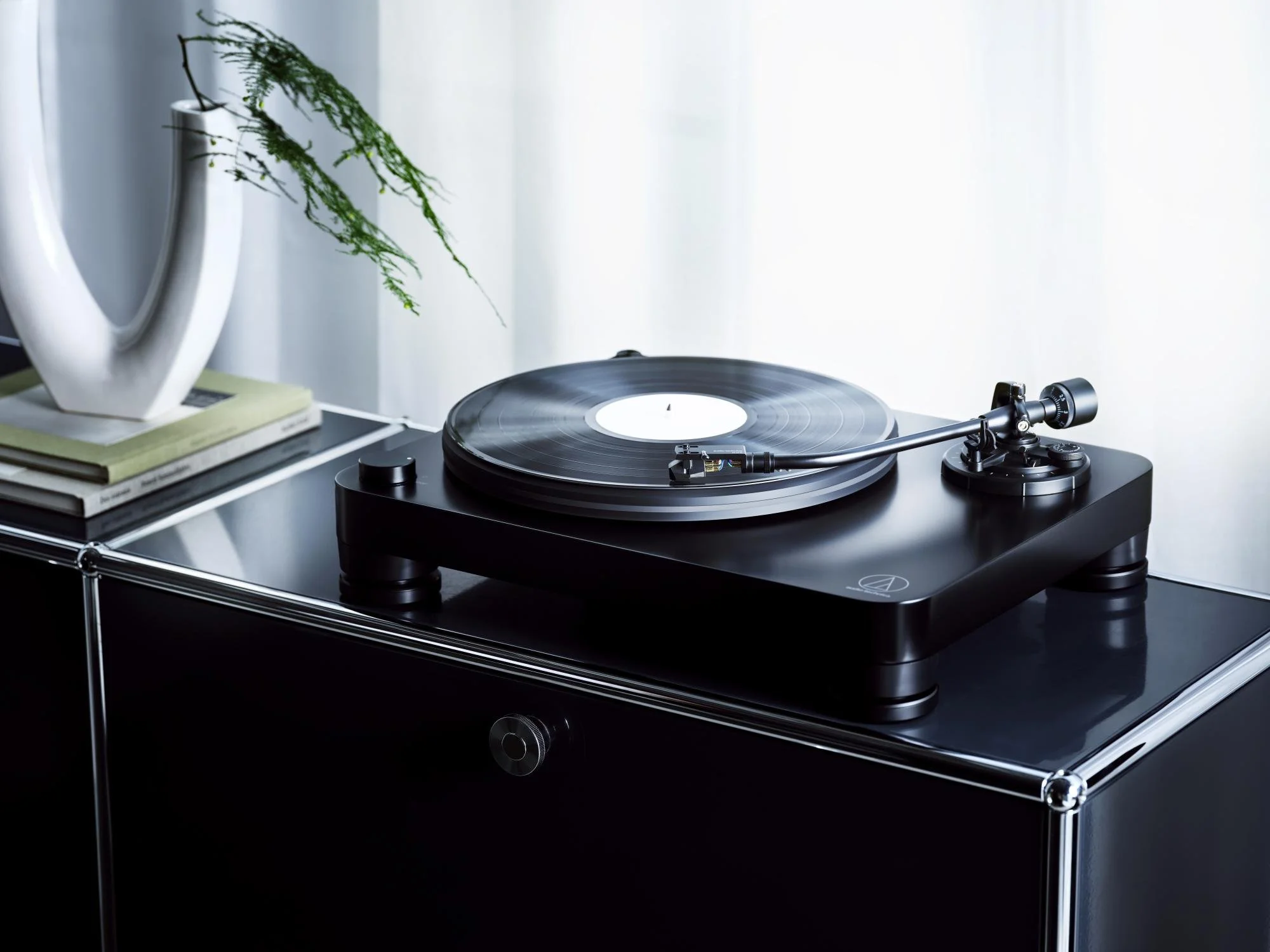
Audio-Technica has quietly become one of the most consistent brands in vinyl playback, offering everything from beginner-friendly USB turntables to serious audiophile decks. With the release of the AT-LP7X, the company is clearly aiming at listeners who want to move beyond entry-level convenience without jumping straight into boutique pricing or fragile hi-fi territory. Announced at CES 2026, the LP7X positions itself as a fully manual, belt-drive turntable built around precision, adjustability, and long-term upgrade potential. At first glance, the AT-LP7X looks like a refinement rather than a reinvention — and that’s very much the point. With a dense MDF plinth, acrylic platter, optical speed control, and a newly updated phono stage that supports both MM and MC cartridges, this turntable is designed to grow with your system rather than limit it. In this review, we’ll look at how the LP7X performs in real-world listening, how it compares to key competitors in its class, and who it actually makes sense for in today’s vinyl landscape.
Design & Build Quality
The Audio-Technica AT-LP7X immediately signals that it’s meant to be taken seriously. The turntable is built around a dense MDF plinth finished in a clean, understated matte black, with an emphasis on mass and rigidity rather than decorative flair. This weight-forward design isn’t just about looks — it’s there to minimize resonance and external vibration, giving the LP7X a solid, planted feel that’s closer to classic audiophile decks than consumer hi-fi turntables. The overall footprint is generous but purposeful, clearly designed for a dedicated listening setup rather than casual shelf placement.
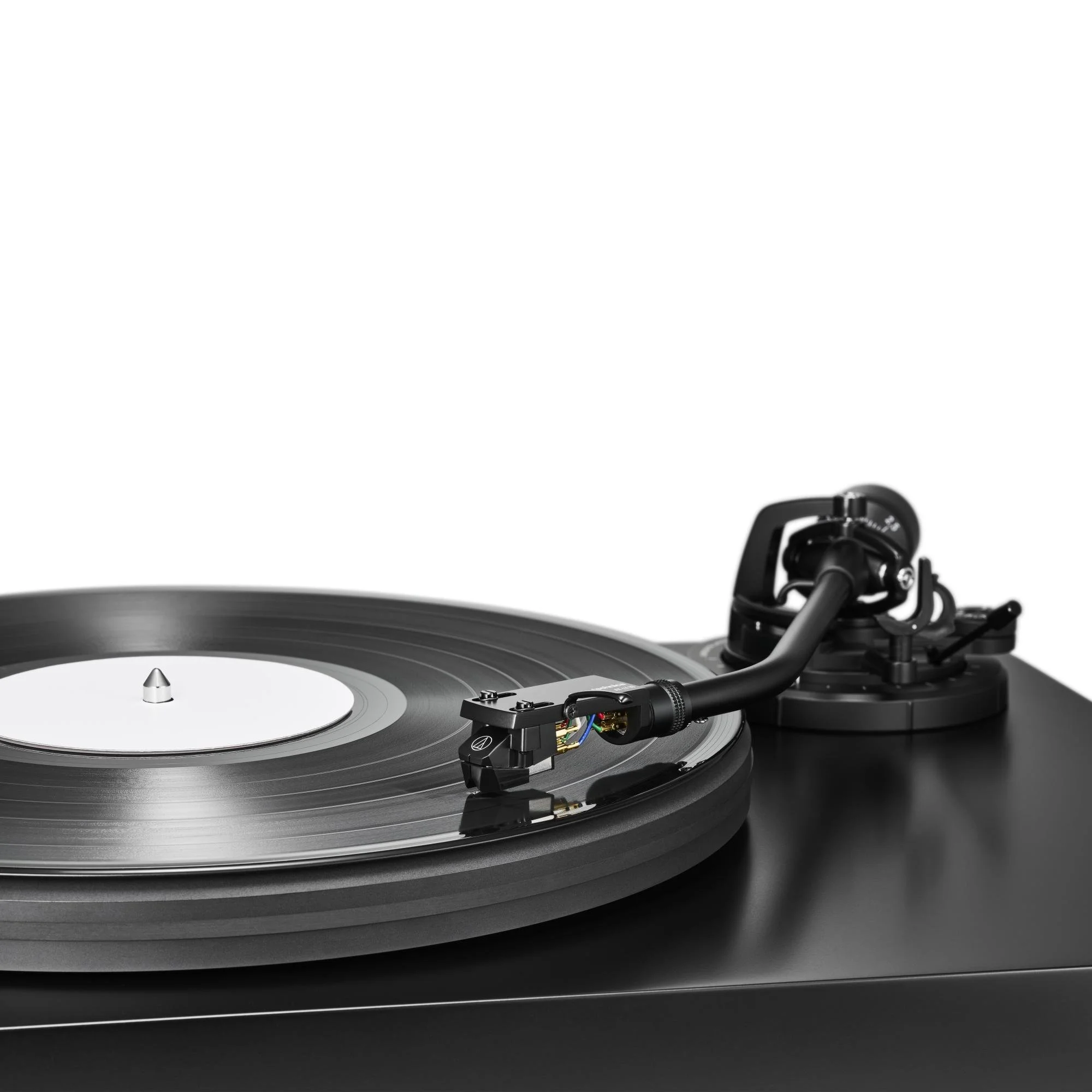
One of the standout elements here is the 20 mm acrylic platter. Acrylic platters are typically reserved for higher-end turntables because of how closely their acoustic properties match vinyl itself, helping reduce unwanted reflections and coloration during playback. Audio-Technica pairs this with a belt-drive motor system monitored by an optical sensor, which continuously checks rotational speed to maintain accurate 33⅓ and 45 RPM playback. In practical terms, this combination aims to deliver stable pitch, low noise, and a smoother presentation — benefits that become especially noticeable on sustained notes, ambient records, or piano-heavy material.
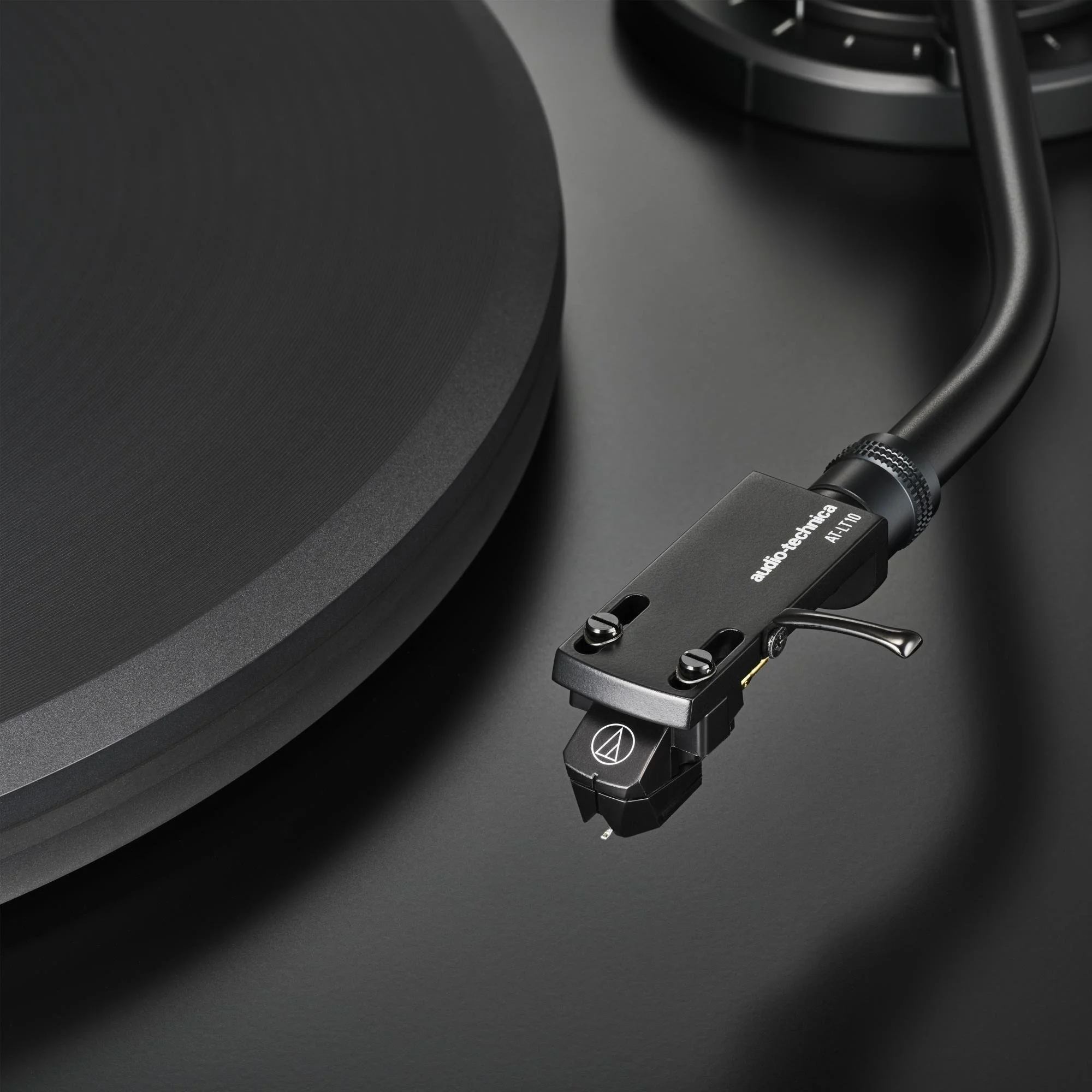
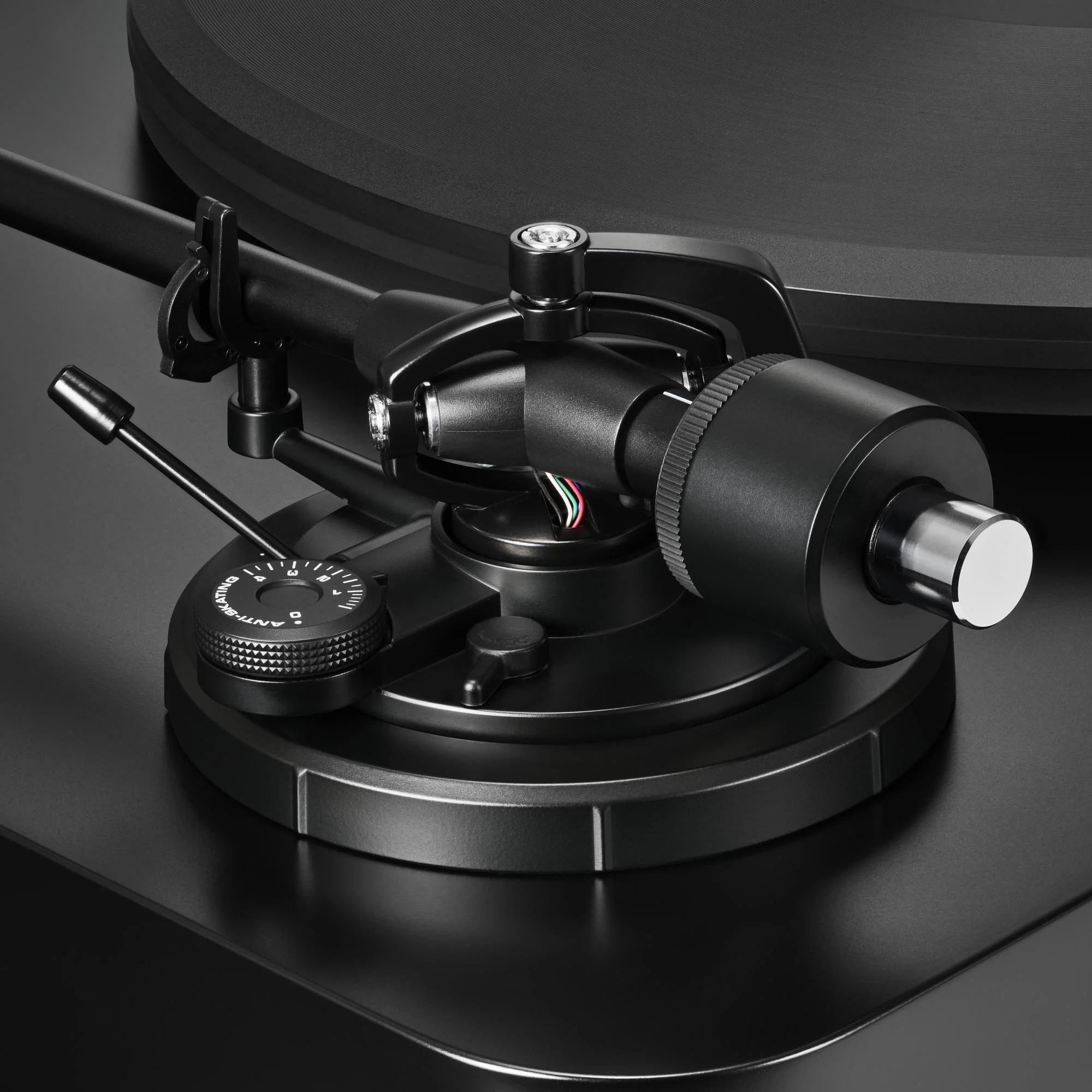
The tonearm design reinforces the LP7X’s audiophile intent. The J-shaped aluminum tonearm uses a precision dual-axis gimbal bearing system, allowing for smooth tracking with minimal friction. Crucially, Audio-Technica includes adjustments that many turntables at this level either simplify or omit: adjustable vertical tracking angle, anti-skate control, and a removable headshell for easy cartridge swaps. These features make the LP7X feel less like a fixed “plug-and-play” product and more like a platform you can refine over time, whether you’re dialing in the included cartridge or planning future upgrades.
Performance & Sound
From the first listen, the AT-LP7X presents a sound that leans toward control and balance rather than exaggerated warmth or hype. The combination of the dense plinth, acrylic platter, and optically monitored motor results in a notably low noise floor, with quiet passages staying clean and stable. Surface noise feels well-contained for a belt-drive design in this range, and pitch consistency holds up convincingly on sustained notes, pads, and long ambient passages — an area where lesser turntables often start to reveal subtle wavering.
The included AT-VM95E cartridge delivers a sound that’s honest and well-rounded rather than flashy. Bass is tight and defined without being overemphasized, mids come through clearly with good separation, and the top end stays articulate without turning sharp or brittle. It’s a cartridge that prioritizes musical balance, making it equally comfortable with electronic records, classic rock, jazz pressings, and modern reissues. Importantly, it doesn’t bottleneck the deck — the LP7X clearly has headroom for cartridge upgrades if you want to push resolution further.
Speed stability is one of the LP7X’s quiet strengths. Audio-Technica’s optical sensor system continuously monitors platter rotation, and in real-world use this translates to a sense of calm and consistency during playback. Records with sustained synth lines, drones, or piano chords retain their shape without audible drift, reinforcing the impression that this turntable is built for long, attentive listening sessions rather than casual background play. It doesn’t impose a strong sonic character of its own, which ultimately makes it easier to integrate into a wide range of systems and musical tastes.
Features & User Experience
One of the most practical additions to the AT-LP7X is its integrated, switchable phono stage. Unlike many turntables in this class that either omit a preamp entirely or lock you into moving-magnet only, the LP7X supports both MM and MC cartridges. That flexibility makes it far easier to integrate into different systems, whether you’re running straight into powered speakers, a minimalist hi-fi amp, or planning future cartridge upgrades. Crucially, the phono stage feels like a genuine convenience rather than a checkbox feature — clean, quiet, and transparent enough that it won’t immediately demand replacement.
Setup strikes a good balance between approachability and control. Out of the box, the turntable doesn’t feel intimidating, but it also doesn’t hide the mechanics from you. Counterweight adjustment, anti-skate, and vertical tracking angle are all accessible, and the removable headshell makes cartridge changes straightforward. This is the kind of turntable that encourages learning rather than discouraging it — you can start simple, then gradually refine alignment and tracking as your confidence (or curiosity) grows.
In daily use, the LP7X reinforces its identity as a focused, manual listening machine. There’s no automation, no auto-return, and no shortcuts — cueing records, flipping sides, and handling playback all feel intentional. For some listeners, that’s exactly the appeal. It slows the process down just enough to make listening feel deliberate, without crossing into fragility or fussiness. The controls are minimal, the feedback is tactile, and once everything is dialed in, the turntable largely disappears and lets the records take center stage.
Alternatives
If you’re considering the Audio-Technica AT-LP7X, it’s worth looking at a few current turntables that approach the same price and performance tier from slightly different philosophies. The most obvious comparison is the Rega Planar 3, which remains a benchmark for midrange audiophile decks. Rega’s design prioritizes rigidity, low mass, and musical immediacy, often resulting in a more energetic, forward presentation. The tradeoff is flexibility: there’s no built-in phono stage and far fewer adjustment options, so it’s best suited to listeners who value sound-first minimalism and are happy to build the rest of their system around it.
Another compelling alternative is the Pro-Ject Debut PRO, which leans harder into engineering precision and user adjustment. With its heavier metal construction and extensive setup options, it appeals to listeners who enjoy fine-tuning their turntable as much as listening to it. Compared to the LP7X, it often feels more overtly “hi-fi” and technical, but it typically assumes the use of an external phono preamp, making the total system cost and complexity slightly higher.
For those willing to step away from belt drive altogether, the Technics SL-100C offers a very different kind of appeal. Its direct-drive motor delivers exceptional speed accuracy, reliability, and low maintenance, making it a favorite among listeners who value consistency above all else. While it lacks the analog tweakability and built-in phono flexibility of the LP7X, it excels as a long-term, set-and-forget solution with a strong focus on precision.
Together, these alternatives help clarify where the AT-LP7X fits. It doesn’t chase the lightest chassis, the heaviest platter, or the most extreme sonic character. Instead, it balances adjustability, system flexibility, and controlled performance, making it one of the more adaptable turntables in its class.
Pros & Cons
Pros
Solid, resonance-controlled build with a dense MDF plinth and acrylic platter
Stable, accurate speed thanks to optical sensor monitoring
Built-in phono stage with support for both MM and MC cartridges
Adjustable tonearm with removable headshell, making upgrades and setup approachable
Balanced, low-noise sound that works well across genres
Cons
Fully manual operation won’t appeal to listeners looking for automation
No 78 RPM support
Size and weight make it less suitable for casual or compact setups
Stock cartridge is competent but doesn’t fully show the deck’s upgrade potential
Who Is the Audio-Technica AT-LP7X For?
The Audio-Technica AT-LP7X is best suited to listeners who want to treat vinyl playback as a long-term part of their system rather than a lifestyle accessory. It’s for people who enjoy the physical ritual of playing records, who don’t mind manual operation, and who appreciate having real control over setup and upgrades. If you’ve outgrown entry-level turntables but aren’t interested in boutique pricing or fragile, ultra-minimal designs, the LP7X lands in a very sensible middle ground.
It also makes a strong case for listeners who value flexibility. The built-in MM/MC phono stage means it can slot cleanly into a wide range of systems today, while still leaving room to grow tomorrow with cartridge swaps or an external preamp. It doesn’t impose a strong sonic personality, which makes it easier to pair with different speakers and amplifiers over time.
Where the LP7X may not be the best fit is for anyone chasing convenience above all else. There’s no automation, no wireless features, and no shortcuts — this turntable asks you to be present. But for listeners who see that as a feature rather than a drawback, the AT-LP7X delivers a thoughtful, well-balanced take on modern audiophile vinyl playback that should remain relevant for years to come.
Disclosure: This site contains affiliate links. If you purchase through these links, I may earn a commission at no extra cost to you.