
Best Free VST Plugins of Summer 2026 - Part 1
Summer tends to be when developers either go quiet or go big. This year it was the latter. Between late June and mid-July, a serious number of quality freebies dropped — instruments, effects, MIDI tools, and even a DAW update — and the range of what's available at zero cost keeps pushing in directions that would have seemed unlikely even a few years ago. As always, the point isn't to download everything and let it collect dust. It's to find the handful of tools that actually stick. Part 1 of this summer roundup covers 14 releases worth your attention.
Kobito ChordGenius
ChordGenius is a MIDI chord generator with a performance-focused approach that sets it apart from most tools in the category. Rather than building chord progressions that you drag into a clip, it is designed to be played in real time, letting you trigger full chord voicings from two simultaneous note inputs. It was available free until June 30th with a promo code, and while that window has closed, it's worth checking the developer's current pricing.
The plugin works through a Control Note and a Pivot system: the Control Note selects a chord quality from the interface, and the Pivot determines the actual chord generated based on which note sits at the top of the voicing. The setup rewards both theory knowledge and happy accidents — you can deliberately set up performance patches or simply hit notes and let the plugin surprise you. The chord vocabulary is extensive, covering complex extensions including minor-major seventh voicings, and there are humanization, velocity randomization, and voicing randomization options. Particularly useful for neo-soul and jazz-influenced production, where crunchy chromatic voicings tend to do a lot of the emotional work.
Download here
Orra Audio Orra Pump
Orra Pump is a tempo-synced modulation filter with a drawable LFO curve, available free on a pay-what-you-can basis for macOS and Windows. Instead of selecting from a fixed waveform menu, you draw the modulation shape by placing and dragging points on a curve editor, with adjustable segment curves between each point. The result is a looping modulation shape that you design from scratch, which gives it considerably more flexibility than a standard LFO filter.
The curve can be routed to a resonant low-pass, high-pass, band-pass, or notch filter, or redirected to volume for tremolo and gating, or to pan for auto-panning. A Channel selector targets the full stereo signal, the mid channel, or the side channel independently. Timing can run freely at a Hz rate, sync to host tempo at note divisions from 4 bars down to 1/32, or trigger from the track itself or a DAW sidechain bus. Three trigger modes — Loop, One-Shot, and Loop (Trig) — cover everything from continuous rhythmic sweeps to sidechain-reactive movement. The plugin includes a swing grid, live modulation trace, and zero-latency processing, so it's safe for monitoring in real time.
Download here
AngelicVibes AV Pitchshifter
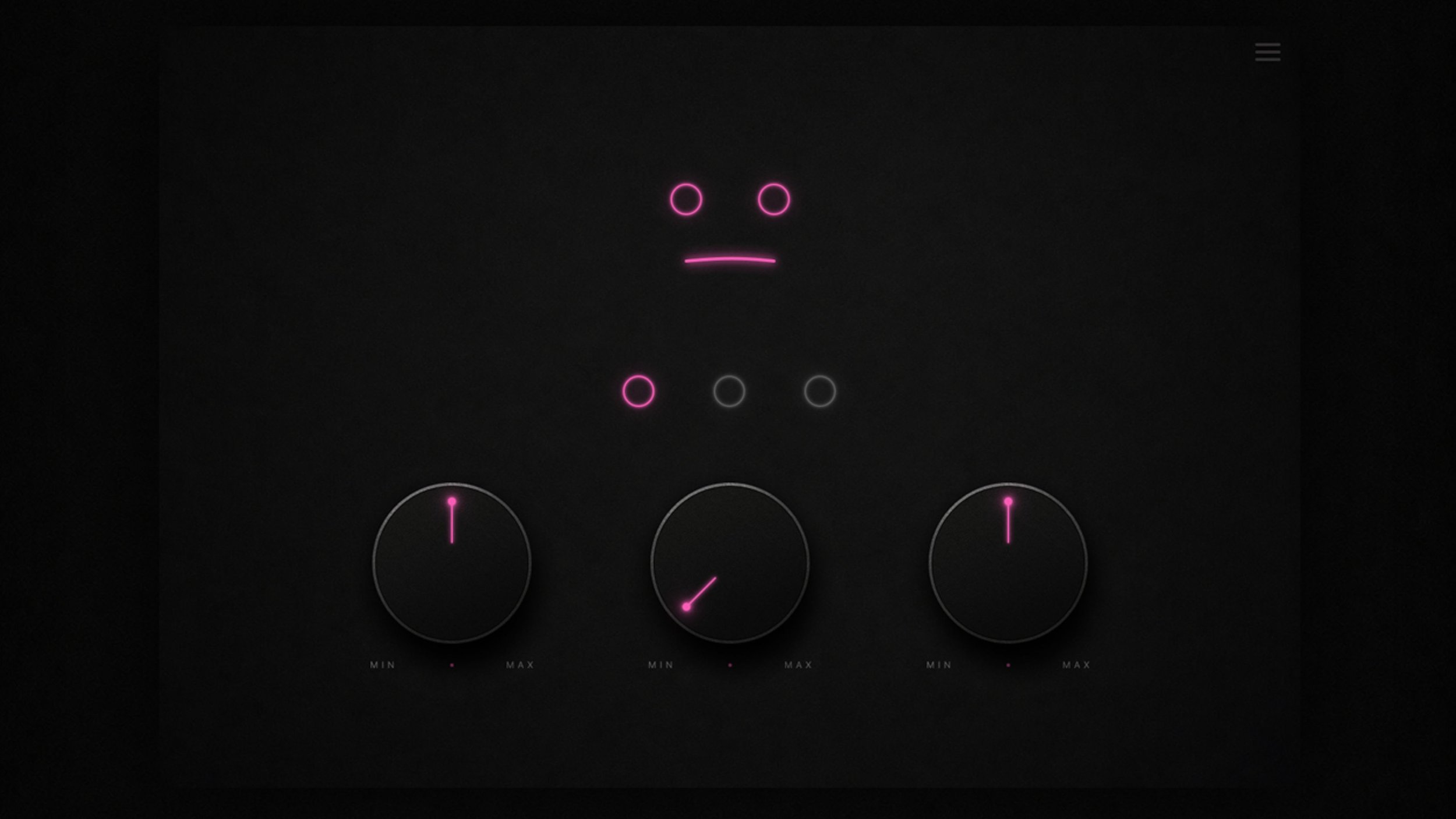
AV Pitchshifter is the first entry in AngelicVibes' AV Essentials FX series: a straightforward pitch-shifting plugin for macOS and Windows that covers the basics without trying to be a vocal correction or harmonization tool. The interface is minimalist to the point of having no visible labels on the controls — which takes a minute to get used to but is easy enough once you understand the three-knob layout: Semitones (±12), Cents (±100), and Mix.
Three pitch modes offer meaningfully different results depending on the source material. Type A is tuned for melodic material and loops, Type B delivers a smoother result suited to vocals and instruments, and Type C gives a more direct classic pitch-shift character. The developer describes these internally as Studio Shift, Spectral Shift, and Window Shift. The use case is quick, pragmatic pitch adjustment — tuning a loop into a project, shifting a vocal into a different range, the usual resampling setup. It requires a free AngelicVibes account to download, works in all major DAWs except Pro Tools, and requires OpenGL support. Version 1.0.1 at time of writing.
Download here
Hell Yes Loop Lab Burning Stones
Burning Stones is a free/pay-what-you-want guitar amp plugin from Hell Yes Loop Lab, described as a fictional high-gain desert amp rather than a clone of named hardware. That choice of framing is actually refreshing — it's not trying to pass as something familiar, and the tone it delivers reflects that. The interface carries the developer's distinctly quirky visual personality, which is increasingly rare in a landscape of generic-looking plugins. Available in AU and VST3 for macOS and Windows, with no installer — manual file placement required.
The main controls are Input, Gain, Power, Tone, Feel, and Output. Input drives the front end and compression character, Gain handles preamp drive from overdrive to heavier saturation, and Feel changes the compression response from open to tight. Power affects the final amp and speaker stage behavior. Five built-in cabinet voices are included — Main 57+121, Bright 57, Doom Room, Doom Bloom, and Doom Edge — covering everything from balanced cabinet tones to thick, heavy voicings, so no external IRs are needed. An A/B/C snapshot system lets you compare three tone states as you work. Factory presets are included, and user presets are supported.
Download here
Audiolatry Apus
Apus is a lo-fi virtual instrument from Audiolatry, released free/pay-what-you-want on Gumroad with the full feature set included — no paid tier or restricted preset count. It's aimed at warm chords, dusty keys, soft pads, and simple melodic leads, with 52 presets covering the lo-fi hip-hop, chill beat, ambient, and relaxed electronic territory that Audiolatry has been building tools for consistently over the years.
The interface keeps things approachable: ADSR envelope, filter, glide, modulation, velocity controls, and built-in chorus, distortion, delay, and reverb. It's a sample-based instrument focused on getting you a usable, characterful sound quickly rather than offering deep synthesis control. Load a preset, shape it slightly, add movement, keep writing. To download for free, enter 0 in the price field on Gumroad.
Download here
noshigeSound ENHANCER VINTAGE-73
ENHANCER VINTAGE-73 is a free one-knob high-shelf enhancer modeled on the high-shelf section of a classic British preamp EQ — the 1073-style reference isn't named directly, but the plugin name makes it clear enough. Developer Souta Tano used an adversarial modeling approach to build it: one AI system learns to imitate the hardware across a range of settings, and a second AI system tries to determine whether it's hearing the real hardware or the plugin. The model improves until the distinction becomes difficult to detect. Null tests are published on the product page, with the residual difference averaging around 52 dB below the real signal across posted examples.
There is a single knob from 0 to 100, and that is the entire interface. The modeled circuit affects the signal even at zero, which is part of the intended analog behavior. This makes it most useful as a last-step air enhancer on vocals, acoustic sources, drum buses, or a master bus where you want top-end presence without reaching for a full EQ. Requires a free noshigeSound account for licensing, covers up to three machines per user, and runs at 96 kHz / 32-bit internally.
Download here
CapybaraSoftware CapySynth
CapySynth is a synthesizer made for lo-fi, synthwave, house, and cozy beat-making, and it became permanently free after over 5,000 downloads in its initial 24-hour promo window led the developer to change his pricing model entirely. The pixel art interface features a tropical sunset, a beach, and an animated walking capybara — which is a strong opening argument before you've even touched a key. Available in VST3, AU, and standalone for macOS and Windows.
Under the hood: dual oscillators, 12 wave shapes, wavetable morphing, Mix, Ring, and FM oscillator modes, a state-variable filter with four modes, 16-voice polyphony, up to 16-voice unison, two LFOs, and built-in delay, reverb, chorus, five distortion modes, and a master bitcrusher called Crush It. The v1.1 update added the ability to feed the capybara and make the on-screen keyboard larger. Capybara Mode is also included, which stacks sub-octave depth, octave shimmer, and supersaw width onto any preset in one click. 329 presets covering basses, leads, pads, keys, chords, arps, and FX.
Download here
YMCK Magical FDS Plug
Magical FDS Plug is a synthesizer from YMCK that emulates the FDS sound chip — the audio hardware inside Nintendo's Famicom Disk System — and is freely available in AU and VST3 for macOS and VST3 for Windows. YMCK is the developer behind the long-running Magical 8bit Plug chiptune synth, and this is the first new plugin from them in some time. Notably, the developer credited AI tools with helping push the project forward, describing the FDS spec as too complex to turn into working code without that assistance.
The FDS architecture is unusual: it uses a 64-sample waveform memory as the carrier, modulated by a separate 32-step instruction sequence. The plugin provides a logical editing front-end for that system. The carrier waveform can be built via additive synthesis (eight harmonic sliders in drawbar style), preset waveforms (triangle, sawtooth, sine), pulse width editing, or freehand drawing across all 64 points. The modulator has six preset shapes and a custom mode where you input a 32-step opcode sequence as text. Features include LFO, FM, and Off modulation modes, separate ADSR envelopes for the carrier and modulator, velocity and pitch bend support, and a switchable low-pass filter modeled on the original hardware's roughly 2 kHz output filter. Open-source under GPLv3, with demo presets included.
Download here
Sketch Audio Series 9000
Series 9000 is a free low-pass filter and distortion plugin based on the sixth-order filter from a late-1980s rackmount sampler — almost certainly the Akai S900/S950 family, though the developer doesn't name it. The appeal of the S900 filter was never cleanliness; the steep slope and the grit it added to 12-bit samples became a defining textural element in a lot of classic electronic and hip-hop production. Series 9000 isolates that filtering behavior and builds a small, focused plugin around it. Available in AAX, AUv2, AUv3, CLAP, and VST3 for macOS, Windows, and iOS.
Four controls: Cutoff, Drive, Q, and Env. Cutoff behaves as the original hardware did — it doesn't close completely, so some signal always passes through at even the lowest setting. Drive adds saturation built into each filter stage, from fully clean at 0 dB to obvious distortion when pushed. Q handles resonance, which gets genuinely extreme with a 36 dB/octave slope, adding a lot of color around the cutoff point. Env adds envelope follower modulation to the cutoff with adaptive release, making the filter react dynamically to the incoming signal's amplitude — particularly effective on drums and percussive material. Based on the DSP core from Sketch Audio's paid Scissor Hands plugin, and part of their ongoing Nugget Basket free plugin series.
Download here
Tracktion Waveform Free 14
Waveform Free is Tracktion's flagship free DAW, and version 14 is the latest update to a platform that BPB has consistently ranked as the best free DAW across macOS, Windows, and Linux. Its core advantage has always been offering serious capability without the major restrictions that typically define free-tier software — third-party plugin support, offline operation, and cross-platform availability all come standard.
The headline addition in v14 is an AI assistant integrated directly into the workspace, available at no extra cost in the free version. It runs on a bring-your-own-key model supporting OpenAI and Anthropic APIs, so API costs are on the user, but there's no subscription required. Beyond the AI feature, the interface has been overhauled across both free and paid versions, including a new browser with a tagging system for faster content navigation, folder-based file management, upgraded stock plugins, multi-channel audio handling, and deeper ARA2 integration. The AI panel can be removed from the workspace if it's not your thing.
Download here
Push and Groove GROOVE60
GROOVE60 is a MIDI timing processor for macOS and Windows from developer Takahiro Oishi, designed to replicate the feel of classic drum machines and hardware sequencers directly in your DAW. It processes incoming MIDI notes and outputs timing-adjusted MIDI to another instrument track without rewriting the original clips — bypassing the plugin instantly restores the original performance. This makes it useful for experimenting with groove without committing any permanent edits to your sequences.
The internal timing model runs on a 96 PPQN grid and offers three primary controls: Timing Correct (which snaps playback to note grid values including 1/8, 1/16, 1/32, and triplet variants), Swing (active when TC is set to 1/8 or 1/16), and FIFO Queue feel. Queue feel is the most distinctive element — when multiple MIDI notes arrive simultaneously or near-simultaneously, GROOVE60 preserves their order and delays later events slightly behind the first, adding a subtle depth to stacked notes without randomizing the performance. The plugin is deliberately deterministic: no random jitter, no unpredictable variation. The groove comes from structured timing decisions, which makes results repeatable. A few suggested starting points are included in the documentation for drum machine and straight-with-queue-feel approaches.
Download here
510k Arts WOMB intro
WOMB intro is a 909-inspired bass drum synthesizer from 510k Arts, the project of Paris-based producer and DJ Alexkid — a veteran of the 2000s French dance music scene with releases on F Communications. The plugin is the free edition of 510k's WOMB bass drum designer, using the same synthesis core and the same eight controls as the paid version in a focused single-panel interface. Available in AU and VST3 for macOS 11 or higher and VST3 for Windows 10 or higher.
The eight controls — Tune, Punch, Sweep, Decay, Click Tone, Click Vol, Drive, and Volume — cover the full range of classic electronic bass drum shaping: body, pitch sweep, transient click layer, tone, tail length, and analog-style drive. The kick is synthesized entirely from scratch with no sample layers, so you can adjust every parameter and hear the result directly. The download process is clean: add to cart, free checkout, immediate access to a 15 MB ZIP with installers and the manual. A straightforward tool for anyone who wants fast, flexible 909-style kicks without reaching for samples.
Download here
Analog Obsession TheBus
TheBus is a free analog-style compressor from Analog Obsession, one of the most consistently productive freeware developers working today. Unlike most of their releases, which are modeled on specific hardware units, TheBus is described as a fully custom compressor design with a soft character, soft knee, and linear frequency response. It's built for drum buses and mix buses where you want glue and control without too much coloration. Available in VST3, AU, and AAX for macOS 10.11 or higher and VST3/AAX for Windows 10/11.
The most characterful design choice is the simplified Attack and Release section: three settings each, with Attack at 0.1 ms, 10 ms, or 30 ms, and Release at 50 ms, 400 ms, or 800 ms. That constraint removes the second-guessing that comes with fully variable timing controls and pushes you toward faster decisions and better listening. The rest of the feature set includes Threshold, an Input control for combining with Threshold to move from smooth leveling into more saturated compression, a sidechain high-pass filter up to 500 Hz, external sidechain support, Output, and a Mix knob for parallel compression. No oversampling, but lightweight embedded anti-aliasing is included. The interface is resizable from 50% to 200%. Download is around 10 MB directly from Analog Obsession's Patreon.
Download here
Bjango Double Freak
Double Freak is a dual oscillator frequency follower plugin from Bjango, released as part of the 2026 KVR Developer Challenge and available free in AUv3 for macOS 14 or later and VST3 for macOS 13 or later and Windows 10 or later. The plugin tracks the pitch of incoming audio and uses it to drive two oscillators, turning any pitched source into a synth-layered version of itself. It's a simple concept with a surprisingly wide range of applications in sound design.
Each oscillator can produce sawtooth, square, or triangle waves, with independent octave and pitch offsets. A Glide control determines how tightly the oscillators track the input — fast settings lock in closely, slower settings create a gliding, less predictable feel. A mixer blends Osc 1, Osc 2, and the dry input, so you can thicken the source, push the synth forward, or replace the input entirely. Env Mod and Decay add a pitch envelope at note onsets for upward or downward bends. Channel linking controls whether stereo channels track independently or stay locked together. Two analog-modeled distortion types are available after the mixer, and since they can also process the dry signal, the plugin doubles as a standalone distortion effect when the oscillators are dialed back. Works best with monophonic audio, though erratic tracking on atonal input can produce usable results in cinematic and experimental contexts.
Download here
Cover photo: AngelicVibes
Disclosure: This site contains affiliate links. If you purchase through these links, I may earn a commission at no extra cost to you.