
Cherry Audio SH-Max: Three Roland SH Classics, Reimagined
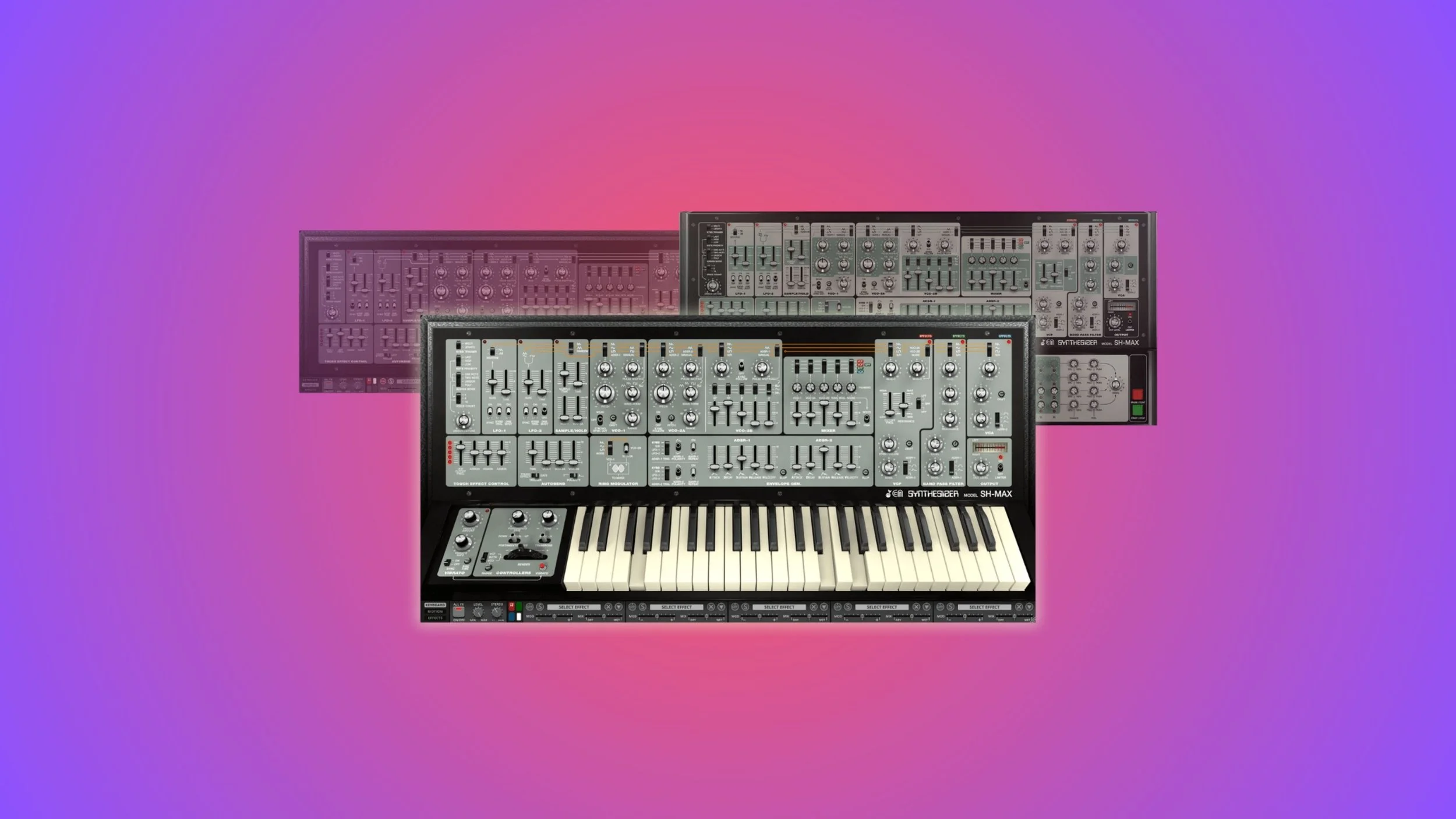
Roland’s mid-to-late ’70s SH instruments occupy a different corner of synth history than the more commonly referenced SH-101. The SH-3A (1974) was compact but forward-thinking, with preset functionality and early voltage-controlled architecture. The SH-5 (1976) moved into far more experimental territory, adding dual filters, extensive modulation routing, and semi-modular flexibility that made it one of Roland’s most ambitious monosynths of the era. By the time the SH-7 (1978) arrived, Roland had refined that complexity into a more performance-oriented but still powerful instrument with expanded routing and stability. Cherry Audio’s SH-MAX draws inspiration from those three specific designs — not the later SH-101 lineage — and merges their architectural ideas into a single software environment. SH-MAX explores the more sophisticated side of Roland’s early SH era: flexible routing, multiple filter behaviors, layered oscillator interaction, and deeper modulation options. The result feels less like a nostalgia product and more like a reinterpretation of Roland’s more advanced monosynth thinking from the late 1970s.
TL;DR
Combines three classic Roland SH-style synth architectures in one plugin
Expands them with polyphony, modulation, and effects
Designed for real production use, not just retro recreation
What It Is
Cherry Audio SH-Max is a software synthesizer that brings together three Roland SH-era architectures — inspired by the SH-3A, SH-5, and SH-7 — inside a single instrument. Rather than recreating one specific unit, it draws from the structural design and signal flow of those mid-to-late ’70s models. Each of the originals occupied a different space in Roland’s early monosynth history: the SH-3A offered compact voltage-controlled synthesis with preset capability and a focused filter character; the SH-5 expanded into more experimental territory with dual filters and deeper routing options; and the SH-7 refined that complexity into a performance-ready design with broader modulation control. SH-Max merges elements of those architectures into a unified, modern interface.
As a plugin, SH-Max extends beyond the hardware limitations of those original monophonic instruments. While the SH-3A, SH-5, and SH-7 were fixed-routing analog synths, SH-Max operates in a contemporary DAW environment, allowing polyphonic operation and modern workflow conveniences alongside its late-’70s design influences. Instead of loading three separate recreations, you’re working inside a consolidated environment that channels the more ambitious side of Roland’s early SH period while adapting it for present-day production.
How It Sounds
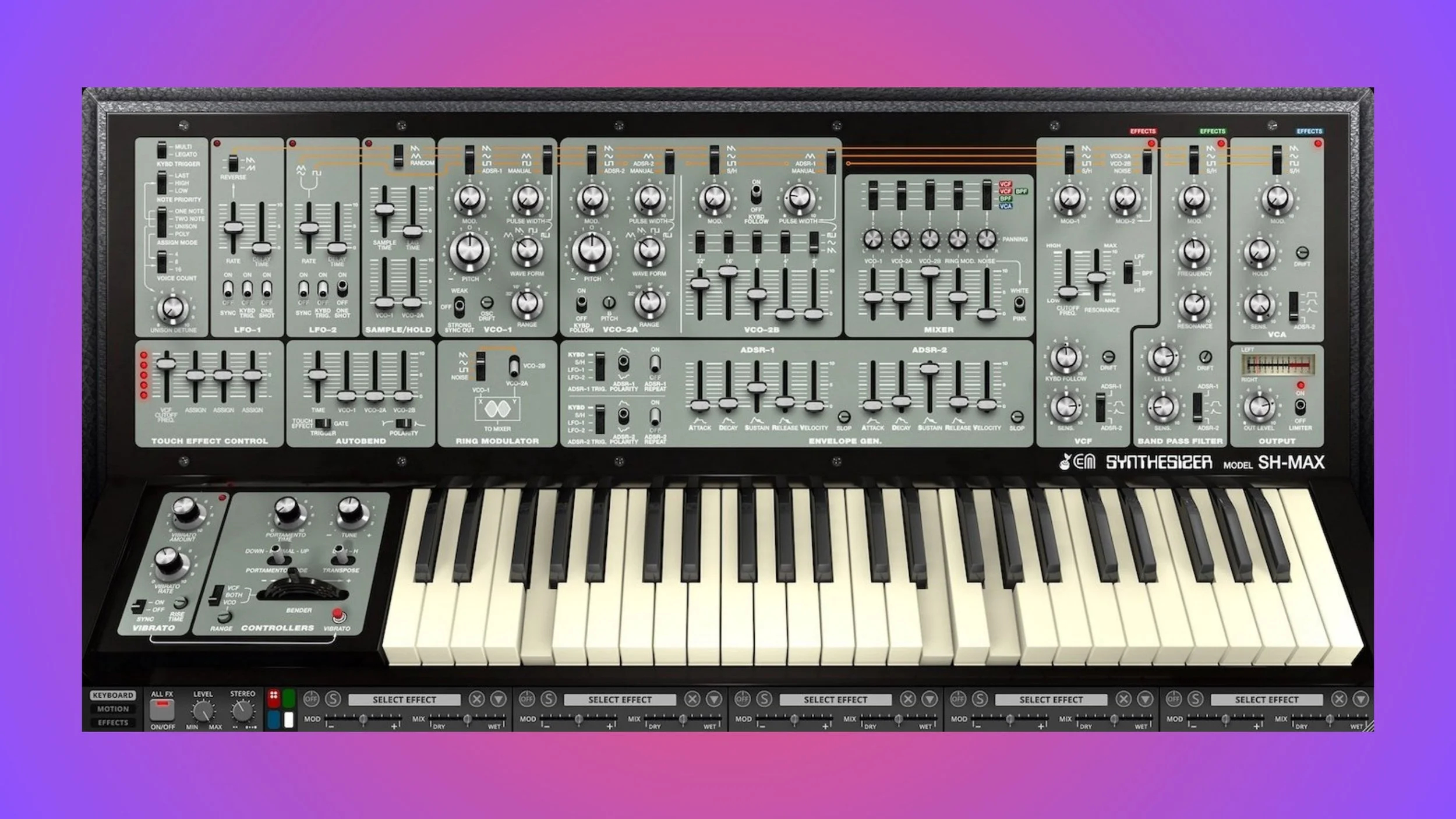
SH-MAX reflects the tonal identity of its three source instruments, which lean more complex and textured than later SH monosynths. The SH-3A-inspired engine carries a slightly raw, direct oscillator tone with classic early Roland filtering — assertive but not overly aggressive, and capable of tight basses and cutting leads. The SH-5 lineage introduces more character variation thanks to its dual-filter concept and expanded modulation possibilities; this is where tones begin to feel more layered, animated, and capable of subtle movement beyond straightforward subtractive patches. The SH-7 influence brings a slightly more refined and performance-ready weight, with a stable oscillator presence and smooth yet authoritative filter response.
In practical use, SH-MAX leans toward articulate, mid-forward analog character rather than hyper-modern sheen. Resonance has bite without collapsing low-end entirely, and modulation feels purposeful rather than chaotic. It excels at structured basslines, expressive mono leads, evolving filter sweeps, and classic electro-leaning textures. Because Cherry Audio removes the original hardware limitations — adding polyphony and expanded routing — you can also stretch these traditionally monophonic voices into stacked chords and layered textures while retaining the focused late-’70s tonal DNA.
Workflow and Real-World Use
In day-to-day production, SH-Max feels immediate in the way well-designed late-’70s monosynths often do. The interface clearly reflects the panel logic of their hardware counterpart — oscillator and mixer controls up front, filter shaping in a central position, and modulation routing laid out in a way that encourages experimentation rather than menu diving. If you’re comfortable with classic subtractive synthesis, navigation feels intuitive within minutes. That clarity makes it easy to build sounds from scratch instead of defaulting to presets.
Where SH-Max moves beyond vintage territory is in how it adapts those architectures for modern sessions. The original SH instruments were strictly monophonic and fixed in routing. Here, you’re not boxed into those constraints. You can design a focused mono bass inspired by the SH-3A or SH-7 mindset, then expand into polyphonic chords or layered textures without switching instruments. That flexibility makes it far more usable in contemporary production than a strict historical recreation would be.
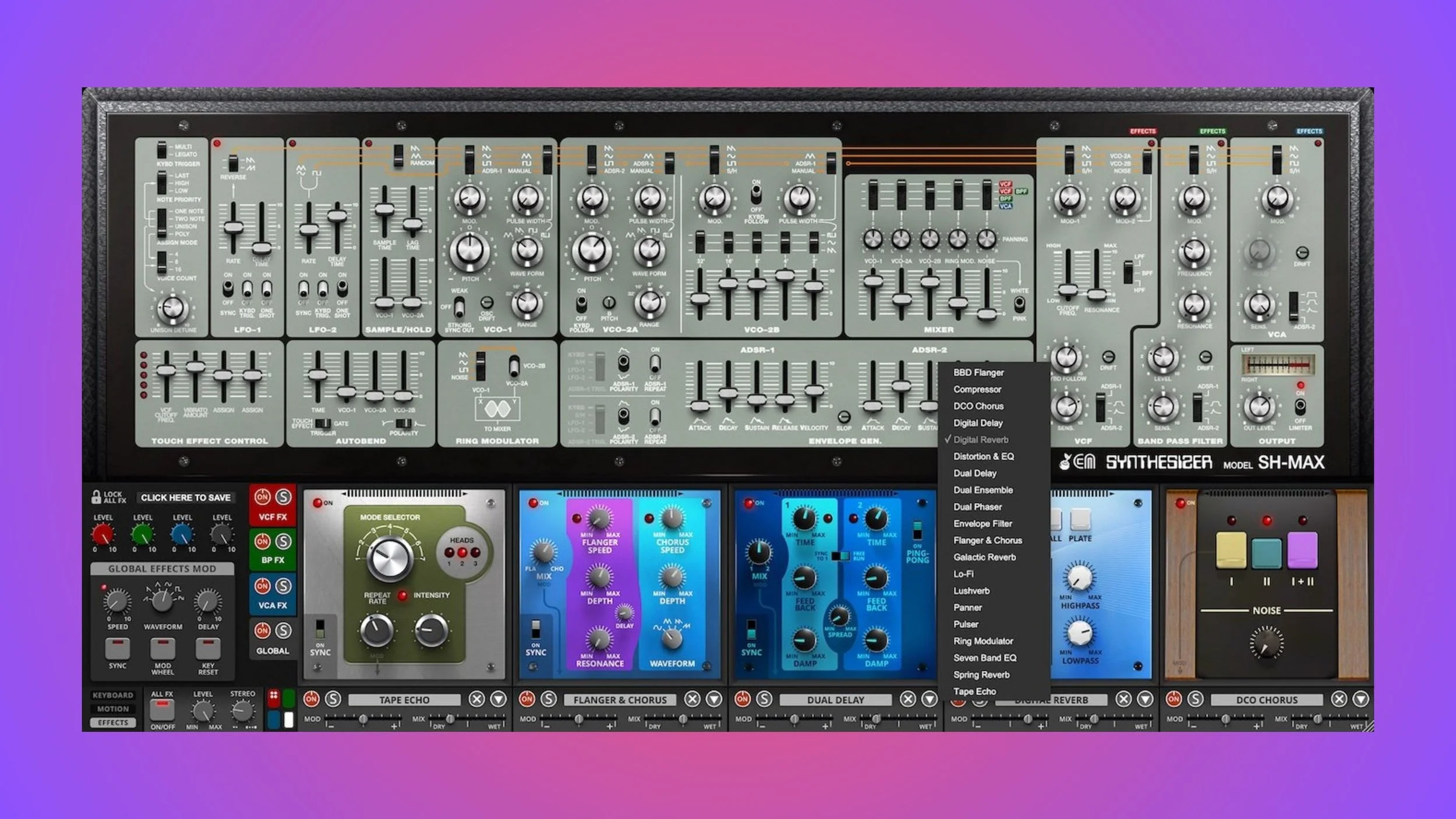
SH-Max also includes a substantial onboard effects section, reducing the need for external processing when sketching or refining patches. The available effects cover core production staples — reverb, delay, modulation, saturation-style processing — along with more character-driven options such as panning movement and lo-fi coloration. It keeps the signal path feeling cohesive while still allowing you to push sounds beyond straight vintage emulation.
Alternatives to Consider
If you’re looking for the later SH-101/SH-2 style simplicity, Roland’s SH-101 and SH-2 plugins offer officially branded recreations that aim for circuit-level authenticity, aiming for a modern recreation rather than an innovation. If you like the idea of combining different voices and oscillators to create the ultimate franken-synth, u-he’s powerhouse Diva remains a benchmark for analog-modeled flexibility, with deeper oscillator and filter combinations — though it isn’t SH-specific.
Meanwhile, TAL BassLine-101 zeroes in on recreating the classic Roland SH-101 vibe with astonishing clarity and authenticity — a monophonic bass synth that feels delightfully analog and raw. Where other plugins might chase broader sound palettes or modern hybrid features, Tal’s 101-inspired emulation stays faithful to that vintage bass and lead character while giving you useful extras like a sequencer/arp and filter-FM for more expressive sound design. It’s a great choice if you want that classic 80s monosynth feel with a touch of modern workflow, rather than a big all-rounder.
Pros
Combines three SH-inspired architectures in one plugin
Adds polyphony, extended modulation, and built-in effects
Clear, hands-on interface that mirrors classic subtractive workflow
Delivers convincing vintage-style bass and lead tones
Cons
Focused specifically on SH-style character, not a broad vintage catalog
May feel redundant if you already use official Roland Cloud SH plugins
Sonic palette centers on classic subtractive tones rather than hybrid or wavetable territory
Final Words
SH-Max matters because it consolidates an important slice of synth history into a practical, modern production tool. It respects the tonal DNA of the SH line while removing the limitations that originally defined it.
It’s best suited for producers who want focused, character-driven analog-style sounds without juggling multiple emulations. If you’re looking for cutting-edge synthesis methods or ultra-modern sound design, there are broader tools out there.
Disclosure: This site contains affiliate links. If you purchase through these links, I may earn a commission at no extra cost to you.