
garageToolz by Belterbox Review: Is This The Ultimate Tool for the UKG Sound?
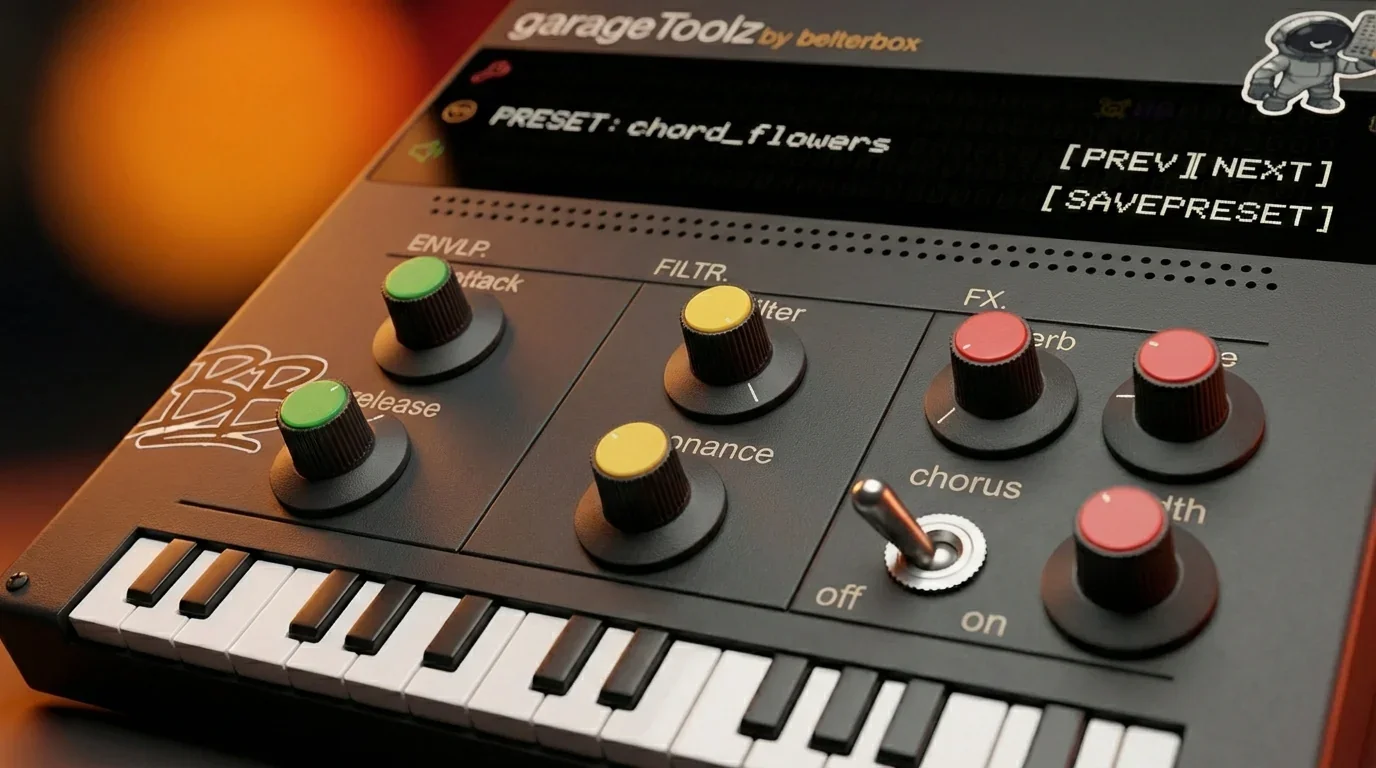
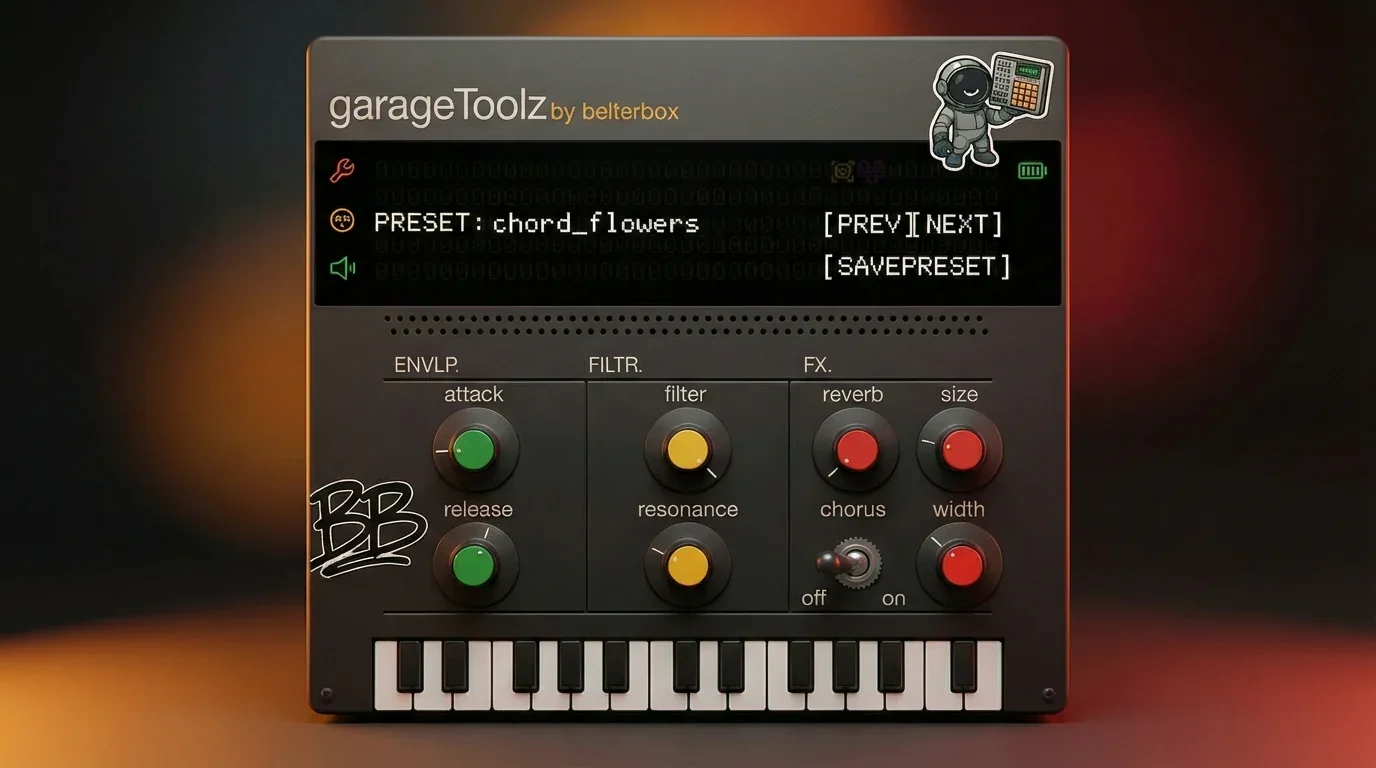
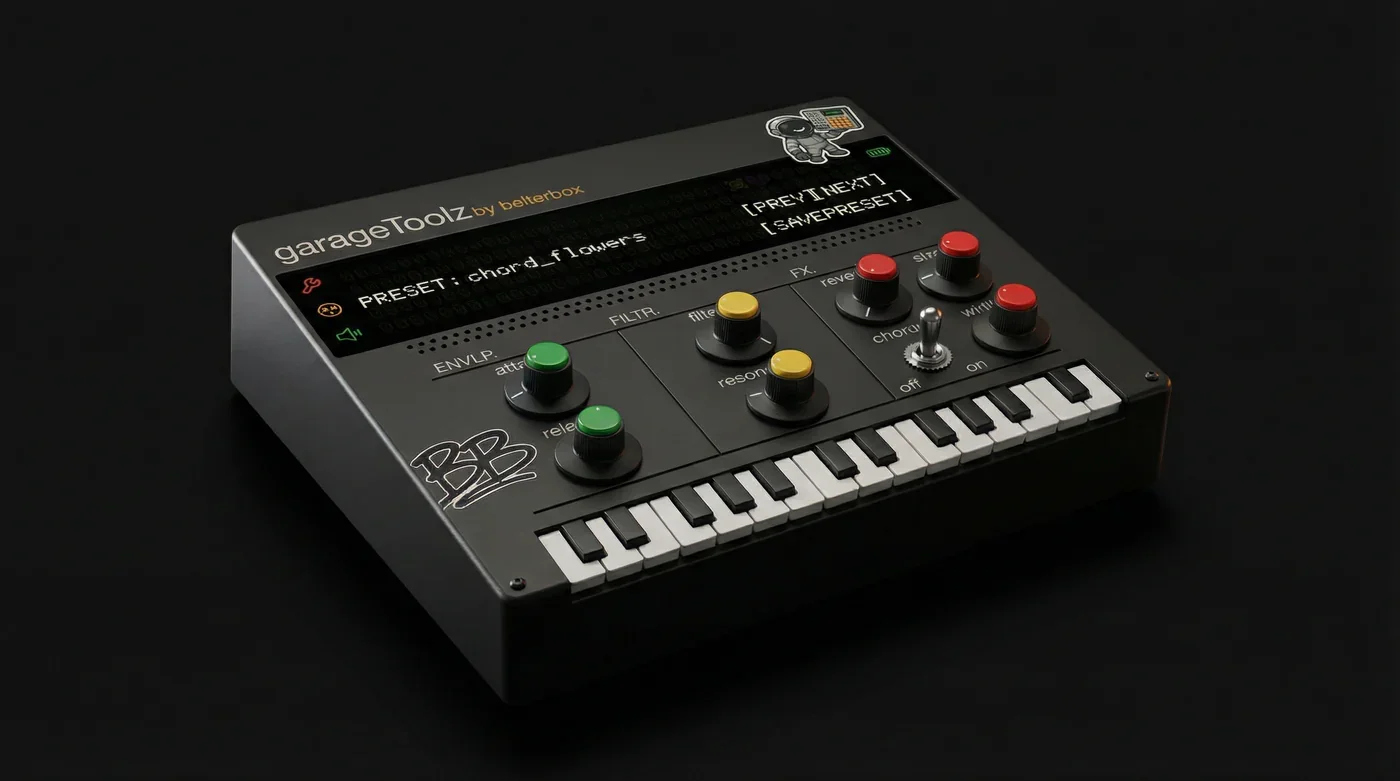
There's a particular sound doing the rounds again. Raw UK Garage basslines, crunchy organ stabs, dusty sampled chords, grooves that feel intentionally imperfect — it's everywhere from underground club nights to TikTok production videos, and a whole generation of producers is chasing it. After years of hyper-polished EDM aesthetics, the appeal of something that sounds fast, gritty, and rooted in 90s hardware culture makes a lot of sense. garageToolz by Belterbox is built for exactly that itch. It's a compact sample-based rompler — 130 sounds covering basses, organs, stabs, textures, chords, and effects — and it doesn't pretend to be anything else. No deep synthesis engine, no modulation matrix, no rabbit holes. You get filtering, ADSR controls, chorus, and reverb. Load it up, find a sound, shape it slightly, move on. That's the entire philosophy, and it works!
The Sounds
The strongest argument for garageToolz is the library itself. The tones are immediately recognizable: crunchy organ chords, bright stabs, dusty sampled textures, bass patches that sit in that late-90s sweet spot between punchy and warm. Nothing here is clinically clean, which is exactly the point. There's a deliberate roughness that makes the sounds feel authentic rather than artificially nostalgic.
A highlight for me is the bass selection. The classic "Lately" bass — the one associated with the Yamaha TX81Z and foundational to UK Garage — is in there and it still hits. It cuts through a mix without needing EQ surgery, which is why producers keep coming back to that sound 30 years later. More broadly, a lot of patches in garageToolz land in the right emotional space immediately, without much processing required. For sketching ideas or building grooves quickly, that's genuinely valuable.
The plugin also commits to its identity in a way that's refreshing. It's not trying to cover every style of electronic music. It's UK Garage, speed garage, old-school House, and raw club textures — and within that lane, the palette is solid. You have what you need to build a left-field club track or a credible garage-flavored production without hunting through folders.
In Use
Where garageToolz earns its keep is as an inspiration tool. This is the plugin you open when you want to sketch something quickly — throw a bassline down, find a stab, build a vibe in 20 minutes rather than two hours. Producers working in House, bassline, speed garage, or DJ-friendly edits will get the most out of it because the sounds slot into those contexts naturally.
The simplified interface helps here more than you might expect. Because there are no deep menus to lose yourself in, the workflow pushes you toward decisions. You're browsing and playing rather than designing, which keeps momentum going. In a lot of ways, the constraint is the feature.
That said, the limitations are real. There's no modulation routing, no layering, and the effect options are minimal. If you want to drift beyond the plugin's comfort zone stylistically, you'll hit a ceiling. Producers with large collections of vintage romplers or sample libraries might also find some of the sounds familiar — not a dealbreaker, but worth knowing.
Personally, I'd love to see some different filter flavors in a future update, maybe a bit crusher or some lo-fi delay options to push things further. The bones are there for it.
Alternatives to Consider
The closest point of reference is probably Audio Blast's Rave Generator 3, which covers similar nostalgic territory but from a different angle — more old-school rave, techno, and hardcore, with a much larger library (1000+ stabs, 500 basses) and the ability to stack up to 16 instruments simultaneously. It's a more feature-rich tool, which cuts both ways: more flexibility, but also more complexity. garageToolz is narrower and more focused, which makes it faster to use if UK Garage and House is specifically where you're working.
Meat Beats is another indie developer worth mentioning — a small-batch operation making similar stripped-back tools for underground producers, including vinyl-sourced drum kits and hardware chord packs. The ethos is comparable: less is more, sounds over features, vibe over versatility. Different catalog, same general mindset.
The spiritual ancestors here are instruments like the Korg M1 and the Roland JV series — romplers that gave producers quick access to genre-defining sounds without overcomplicating the process. garageToolz is essentially that idea updated for the current moment: immediate, focused, and built around a very specific aesthetic.
Bottom Line: Is It Worth It?
garageToolz is a limited tool, but it's limited in a useful way. If you're looking for those UK Garage and House textures — the bass punch, the classic stabs, the dusty organ chords — it's all here in one place and it works. You're not paying for a Swiss Army knife; you're paying for a very sharp blade that does one thing well. For producers chasing that sound, that's a reasonable trade.
Also worth mentioning: Belterbox is producing some kick-ass video short tutorials. These little snippets are free on the usual social media platforms, and no matter your skill level, I guarantee they’ll inspire you to make more music.
This site contains affiliate links. If you book or purchase through these links, I may earn a commission at no extra cost to you. This helps support the site and keeps my content free. As an Amazon Associate, I earn from qualifying purchases.