
Hahmo DSP SuperClassic Review: A Modern Supersaw Synth Built to Be Played
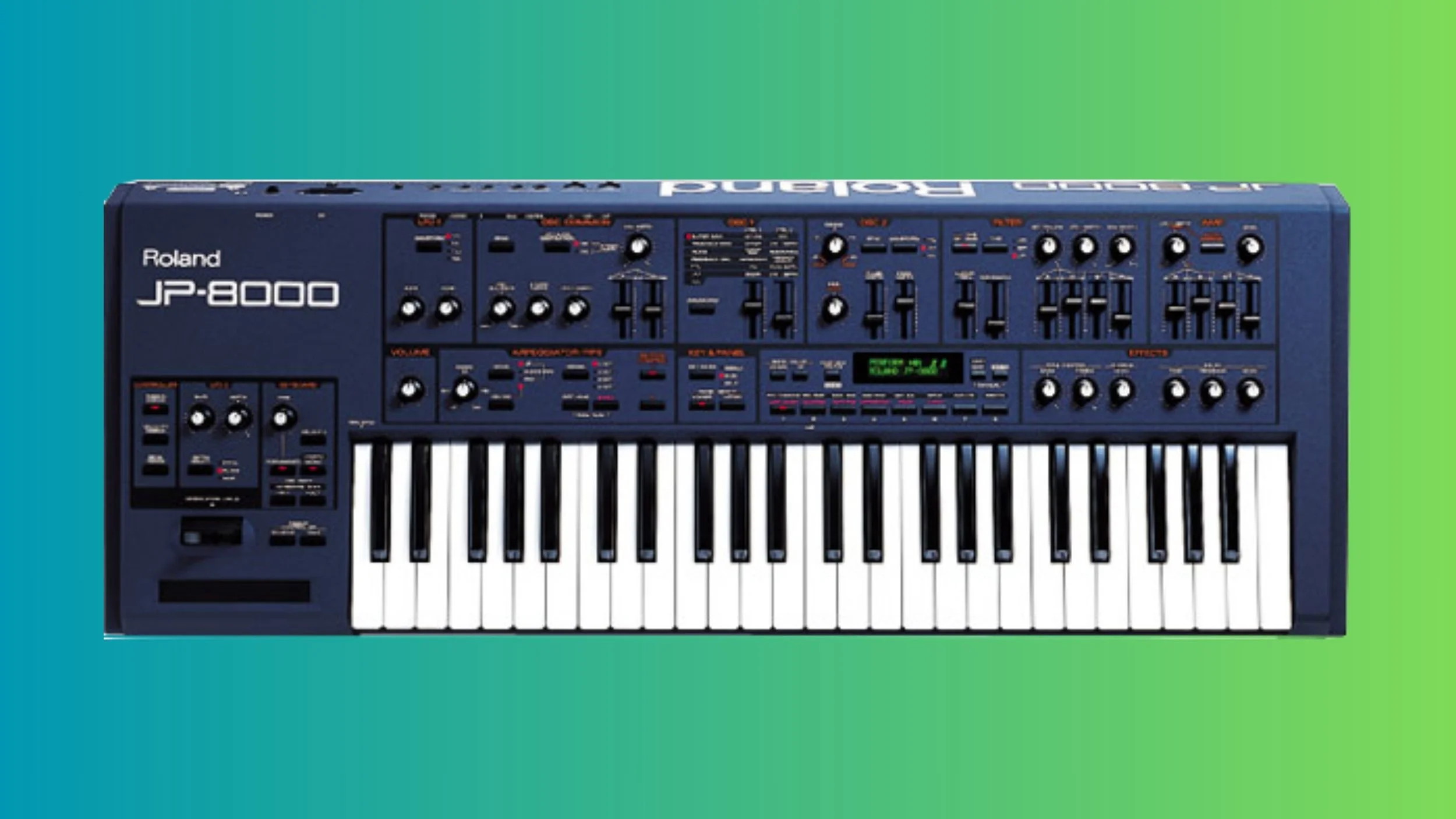
The Roland JP-8000 and its supersaw oscillator left a lasting mark on electronic music, shaping everything from late-90s trance to modern EDM and rave-leaning genres. While that sound is instantly recognizable, it often gets folded into today’s broader wave of vintage-analog synths inspired by Moogs, Junos, and Prophets — instruments that tend to prioritize warmth and nostalgia over immediacy and impact. Hahmo DSP SuperClassic approaches that lineage from a different angle. Instead of chasing exhaustive hardware accuracy, it focuses on the musical identity of the supersaw itself: width, punch, and movement, presented through a streamlined, modern instrument designed to be played. In a crowded plugin landscape, that focus gives SuperClassic a distinct voice — one that feels grounded in the present rather than the past.
What SuperClassic Is Designed to Do
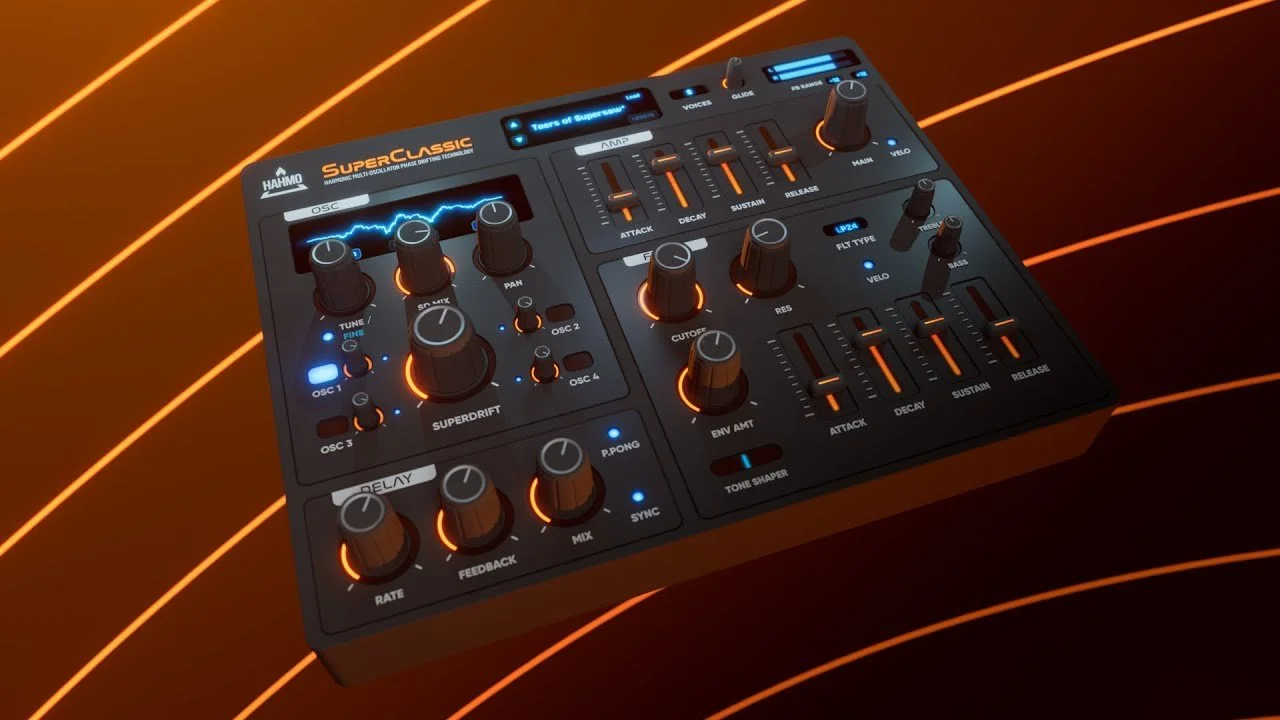
Hahmo DSP SuperClassic is a supersaw-centric virtual analog synthesizer built around a clearly defined purpose. Rather than trying to cover a wide range of synthesis methods or emulate a specific piece of hardware down to the component level, it focuses on the musical role the supersaw has played historically: wide, slightly detuned, high-energy sounds that feel immediate and expressive. From the outset, SuperClassic positions itself as a focused instrument rather than a generalist synth meant to handle every possible sound design task.
Technically, the synth runs in modern plugin formats for macOS and Windows and is built around a polyphonic, multi-voice architecture that emphasizes stacking and layering. The core of its sound engine is Hahmo DSP’s SuperDrift system, which introduces subtle, continuously shifting variations between voices. Instead of relying on static detune amounts, SuperDrift creates small fluctuations in pitch and phase that help dense supersaw stacks retain movement and depth over time. The result is a sound that feels more organic, even when playing sustained chords or long pads.
What’s equally important is what SuperClassic deliberately leaves out. There’s no sprawling modulation matrix, no deep menu diving, and no attempt to turn the instrument into a full synthesis laboratory. That restraint feels intentional rather than limiting: the synth is designed to respond quickly, reward performance, and make it easy to arrive at musically useful results. By committing to a narrow but well-defined role, SuperClassic sets clear expectations and establishes the criteria by which it should be judged.
Sound, Presets, and Playability
From the first notes, Hahmo DSP SuperClassic makes its priorities clear. The sound is full, wide, and immediately punchy, with the kind of weight and presence you expect from a synth built around stacked saw waves. There’s a sense of movement baked into even simple patches, which keeps sustained notes from feeling static or overly polished. Instead of chasing analog warmth or vintage softness, SuperClassic leans into clarity, scale, and impact — qualities that translate well in dense modern productions.
The preset library reinforces that focus. Every preset feels intentionally voiced, with an emphasis on playable leads, pads, and high-energy textures rather than showcase oddities. They’re inspiring starting points that hold up in a mix, not just quick demos of the engine. The current preset count is relatively modest, which may stand out to some users, but the overall quality makes it easy to treat them as foundations rather than finished sounds. It also feels like the kind of synth where future expansions — whether official or community-driven — would make a lot of sense.
What really ties the sound and presets together is how playable the instrument feels. SuperClassic responds well to performance, inviting you to stay on the keyboard rather than constantly reaching for parameters. It’s easy to land on satisfying results quickly, and the synth seems designed to reward musical decisions over technical ones. That sense of immediacy is a big part of its appeal: it’s a synth that encourages exploration through playing, not programming, and that makes it consistently pleasant and inspiring to use.
Interface, Musical Context, and Practical Boundaries
The interface plays a big role in how SuperClassic feels to use. Controls are laid out clearly, and the signal flow is easy to understand at a glance. That clarity translates directly into speed: it takes very little time to move from loading the plugin to shaping a sound that feels finished enough to play or record. The synth gives immediate feedback, which reinforces the sense that it’s designed for musical interaction rather than extended technical tweaking.
That immediacy also points naturally toward the kinds of music SuperClassic excels at. Its wide stereo image, assertive mids, and controlled high end make it particularly well suited to modern electronic styles that rely on scale and energy — rage type beats, hard trance, and left-field dance music all feel like natural homes for this sound. At the same time, the clarity of the engine means it doesn’t have to be pushed into obvious genre tropes; with restrained programming or external processing, it can just as easily serve more subtle or textural roles.
There are, however, clear boundaries to what the synth is meant to do. Modulation options are focused rather than deep, and the synthesis approach doesn’t aim to cover a wide range of oscillator types or experimental routing. Those limits feel intentional, reinforcing the idea that SuperClassic is not trying to replace a fully featured flagship synth. Instead, it occupies a narrower space where speed, consistency, and character matter more than flexibility. For users who value immediacy and a defined sonic identity, that trade-off will likely feel like a strength rather than a compromise.
Alternatives
For producers looking for a more historically grounded take on the JP-8000 sound, Arturia JUP‑8000 V is an obvious reference point. Arturia’s approach leans toward faithfully recreating the original instrument’s architecture, modulation behavior, and overall signal flow, offering a deeper, more technical experience that mirrors working with the hardware. It’s well suited to users who enjoy detailed programming and want access to the broader feature set and quirks of the original design.
From a different angle, u-he Diva represents a modular, component-based approach to classic synthesis rather than a single-instrument recreation. Diva excels at combining oscillator, filter, and envelope models inspired by multiple vintage synths, allowing users to build highly nuanced analog-style sounds. While it can produce powerful stacked saw tones, its strength lies in depth, flexibility, and circuit-level detail, with a workflow that rewards careful programming more than immediate performance.
More broadly, general-purpose modern synths such as Xfer Serum 2 approach the supersaw sound as just one option among many. These instruments excel at deep modulation, complex routing, and broad sonic exploration, making them ideal for sound designers who want maximum control. In contrast, SuperClassic takes a more focused route: it narrows its scope to a specific sonic identity and performance feel, emphasizing immediacy and playability rather than versatility. That clear positioning is what ultimately defines where it fits — not as a replacement for these tools, but as a complementary instrument with its own purpose.
Verdict
Hahmo DSP SuperClassic succeeds because it knows exactly what it’s trying to be. Its strength lies in focus: a clear sonic identity, a streamlined interface, and a sound that feels alive and responsive without requiring deep technical setup. It’s unusually pleasant to play, and that quality alone sets it apart in a plugin market that often prioritizes features over feel.
Rather than competing with large, do-everything synths or chasing historical accuracy for its own sake, SuperClassic fills a more specific role. It offers a supersaw sound that feels current, energetic, and musical, especially in modern electronic contexts where clarity matters.
In short, SuperClassic is a banger, and I couldn’t be more excited to see what Hahmo DSP comes up with next!
Disclosure: This site contains affiliate links. If you purchase through these links, I may earn a commission at no extra cost to you.