
MUTEK Montréal 2026: What to Know and Who to See

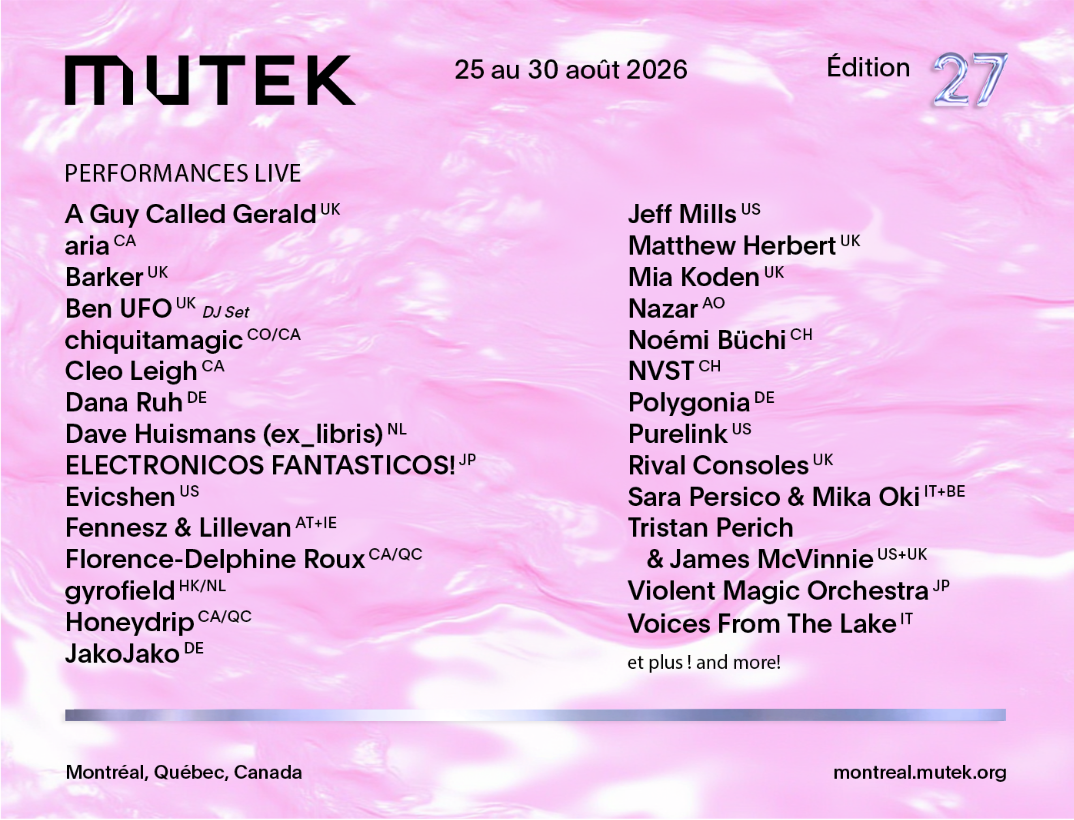
MUTEK has been running in Montréal since 2000, and in that time it's built something close to a second identity for the city — one that has nothing to do with jazz fests or comedy galas and everything to do with modular synths, generative visuals, and a very specific strain of avant-garde electronic music. The festival's model has since been exported to Barcelona, Mexico City, Tokyo, Buenos Aires, Dubai, and Santiago, but Montréal remains the flagship edition, and the one that still sets the tone for what MUTEK is supposed to be. This year's edition, the 27th, turns up the scale without losing that identity: two new venues, nearly 120 artists from 28 countries, and six straight days of programming spread across Montréal's Quartier des Spectacles, from Aug. 25 to 30. If you make electronic music, work with live visuals, or just want to hear what the current edge of the genre sounds like, this is the one local festival worth clearing your calendar for.
What’s MUTEK
MUTEK isn't a DJ festival with a few live acts sprinkled in — it's built around live performance, real-time visual synthesis, and sound design that doesn't always resolve into a beat. Expect modular rigs, generative visuals, and acts that treat the audiovisual pairing as the whole point rather than a backdrop. It's a different kind of night out than most of what passes for an "electronic music festival" in North America, and that's exactly why it's worth writing about here.
This year's edition is organized around five series, each tied to a specific venue and a specific mood. Knowing the series is the fastest way to figure out which nights match what you actually want to hear.
Nocturne (Society for Arts and Technology) is the festival's core — the SAT's main space and the Satosphere dome host the widest mix of future-facing and established names, from techno-adjacent live sets to immersive dome visuals.
X/Visions (Maison Symphonique) is brand new for 2026. Three evenings inside Montréal's symphony hall, built for acts whose sound rewards a room with real acoustics — think ambient, drone, and composed electronica rather than club tracks.
Métropolis (MTELUS) is where the festival gets loud. Back-to-back all-nighters with a stage design built for a dancefloor crowd, this is the series for people who came to move.
Play (Les Grands Ballets' Studio-Theatre) is also new this year — afternoon audiovisual shows leaning into DIY interfaces and analog experimentation, a lower-key counterpart to the evening series.
Expérience (Esplanade Tranquille) is free, outdoors, and running every night from 5pm. It's the low-commitment entry point if you're curious but not ready to buy a pass.

Who to see
If you only have time for one night at Métropolis, make it count — this is where MUTEK goes full dancefloor. Jeff Mills needs no introduction to anyone who's spent time with Detroit techno; his live sets are less about tracks than about tension, and MTELUS' sound system is built for exactly that kind of pressure. On a different night, Ben UFO plays a DJ set drawing on his Hessle Audio pedigree — expect a set that moves through tempos and textures rather than sitting on one groove, which is rarer than it sounds at a festival this size.
Head to Maison Symphonique for something entirely different. The X/Visions series exists because the hall's acoustics reward attention, and Fennesz & Lillevan are the clearest argument for going: Fennesz's guitar-and-glitch ambient work paired with Lillevan's real-time visuals turns a concert hall into something closer to a shared listening room. It's the kind of set that doesn't translate on a stream — you have to be in the room.
Nocturne, back at SAT, is where the festival's more experimental and future-facing programming lives. Violent Magic Orchestra sits at the extreme end — techno collapsed into black metal and strobe, not for everyone, but a genuine jolt if you're used to more polite AV shows. On the local side, Honeydrip represents the Québec bass and dub-adjacent scene MUTEK has been platforming for years, and is worth catching if you want a sense of what's happening in Montreal's club scene outside the festival bubble.
And if you're not holding a pass at all, the Expérience stage at Esplanade Tranquille is free every night from 5pm — a reasonable way to sample the festival's energy before deciding whether to buy in for the indoor shows.
Tickets & Passes
Individual tickets, day passes, and weekend passes are all on sale, alongside a Festival + Forum Passport for anyone also interested in the talks and workshop side of the event — the 12th edition of the MUTEK Forum runs August 26–28 across two venues this year (Les Grands Ballets' Studio-Theatre and Agora de la Danse).
All the paid venues sit within walking distance of each other in the Quartier des Spectacles, so it's realistic to catch an early show at one venue and move to another the same night. The Esplanade Tranquille outdoor stage costs nothing and requires no ticket at all.
Bottom line: New venues, a bigger international footprint, and programming that still refuses to flatten itself into a standard festival lineup — MUTEK's 27th edition gives you a lot of ways into the same six days, whether that's a symphony hall or a sweaty dancefloor at 2am. Pick your series, pick your night, and go hear something different.
Disclosure: This site contains affiliate links. If you purchase through these links, I may earn a commission at no extra cost to you.