
Synth-a-Sette Cassette Synth Review: Tiny, Analog, and Surprisingly Fun
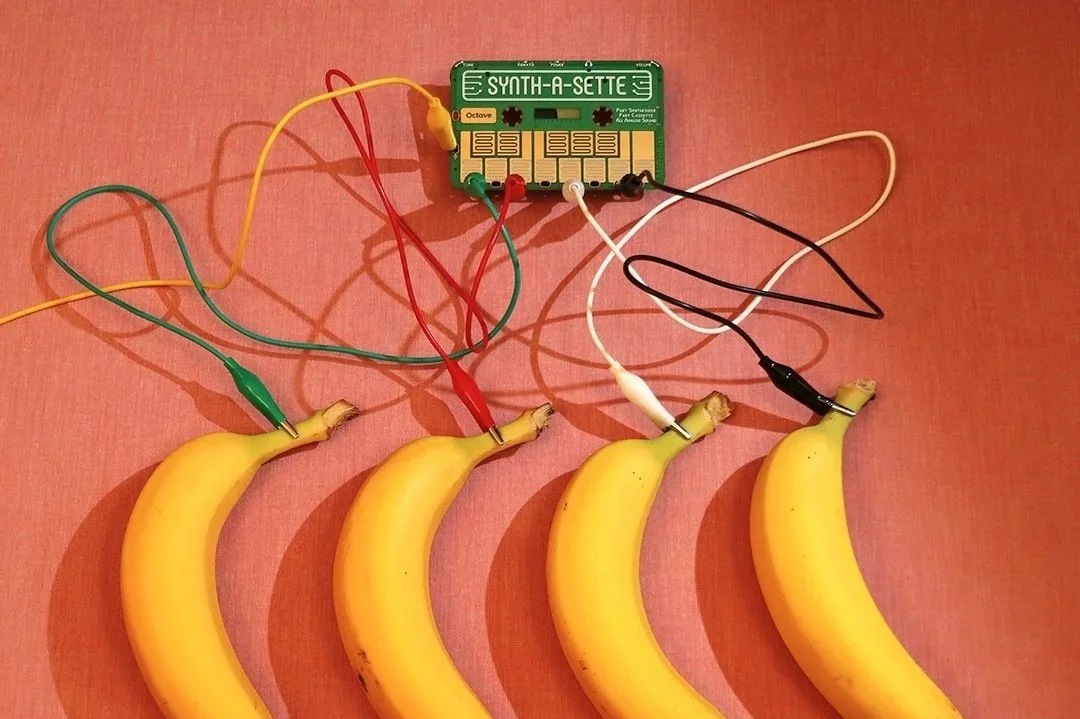
The Synth-a-Sette is one of those little devices you can’t quite categorize at first glance. It looks like a retro cassette, feels like a piece of pocketable nostalgia, and somehow turns out to be a fully analog synthesizer you can twist, tweak, and push into genuinely wild tones. It’s playful in a way that most modern synths aren’t, but there’s real circuitry under the hood—this isn’t a novelty gadget pretending to be an instrument. It’s made for people who love hands-on sound design and who get excited by the idea of a synth you can toss in a jacket pocket. What makes it especially charming is how it taps into the feeling of discovering music gear as a kid: small, mysterious, and packed with potential. But unlike the toys you grew up with, this thing can actually sit comfortably in a real studio setup. It’s a reminder that inspiration doesn’t have to come from big flagship keyboards or expensive modular rigs—sometimes a weird, cassette-shaped synth is all you need to spark your next idea.
Disclosure: This site contains affiliate links. If you purchase through these links, I may earn a commission at no extra cost to you.
The Concept & Design
The Synth-a-Sette leans hard into its cassette aesthetic, but it never feels gimmicky. Knobs and switches are laid out with surprising logic, the labeling is clear enough once you spend a minute with it, and the overall footprint is small enough to fit anywhere on your desk without getting lost. It’s lightweight but not flimsy, and the build has that DIY boutique charm where every component feels intentionally chosen rather than mass-produced for the lowest cost.
There’s also something inviting about the form factor—because it’s not shaped like a “serious” synth, you naturally approach it with curiosity instead of expectations. That mindset makes it more fun to play. The compact interface encourages you to move quickly, experiment wildly, and stumble into happy accidents. It’s the kind of instrument that feels more like an object of creative mischief than a studio tool, but that’s exactly why it works so well.
What sets the Synth-a-Sette apart, though, is how it treats interaction itself as part of the instrument. Instead of a traditional keyboard, it uses patchable contact points that respond to conductivity, meaning you can trigger and alter sound using jumper wires, your fingers, or everyday conductive objects like a bunch of bananas. It’s a playful nod to old-school electronics kits and experimental sound art, blurring the line between synth and educational tool. That design choice reinforces the Synth-a-Sette’s philosophy of using touch and conductivity in a way that feels immediate and surprisingly musical.
Sound & Synthesis
For a synth this tiny, the analog engine has real presence. You can coax gritty basses, squelchy leads, unstable drones, or bright video-game-style bleeps depending on how aggressively you push the oscillators and filter. There’s a rawness to the tone that feels unpolished in a good way—like a piece of gear that wants you to break the rules rather than chase pristine fidelity. The tuning can get a little wild, but that unpredictability is part of the charm and encourages creative play.
The filter, in particular, gives the Synth-a-Sette a lot of its personality. Sweeps can jump from smooth to snarling with a tiny turn, and there’s enough drive in the circuit to add a crunchy edge without losing musicality. It’s easy to find textures that cut through a mix or sit underneath a beat, even though you’re working with minimal controls. You won’t get the depth of a full analog synth voice, but what’s here is characterful, and instantly usable.
At a technical level, the Synth-a-Sette is deliberately stripped back. It focuses on direct analog signal flow, minimal controls, and real-time interaction rather than deep modulation, preset storage, or complex routing. That simplicity is what gives it both its immediacy and its unpredictability — small knob movements can have outsized effects, and the sound always feels alive rather than locked in. It’s an instrument designed around interaction first, and specifications second.
Workflow, Playability & Integration
Despite the small size, the Synth-a-Sette never feels cramped or frustrating. The knobs respond with a satisfying physicality, the envelope reacts quickly, and the layout encourages live tweaking rather than menu-diving. It feels best when you treat it like a performance instrument—something you turn, twist, and provoke into giving you happy accidents. You’re not programming patches as much as surfing between personalities, and that immediacy is a huge part of its appeal.
Integration is about as straightforward as you’d expect from a micro-sized boutique synth. It plays nicely with pedals, samplers, and small synth rigs, and the audio output is clean enough to run into your interface without fuss. You’ll probably use it more as a texture generator than as a centerpiece, but that’s exactly where it shines. It’s a perfect “sound spice” machine for producers who want analog grime or weird melodic ideas they wouldn’t get from plugins.
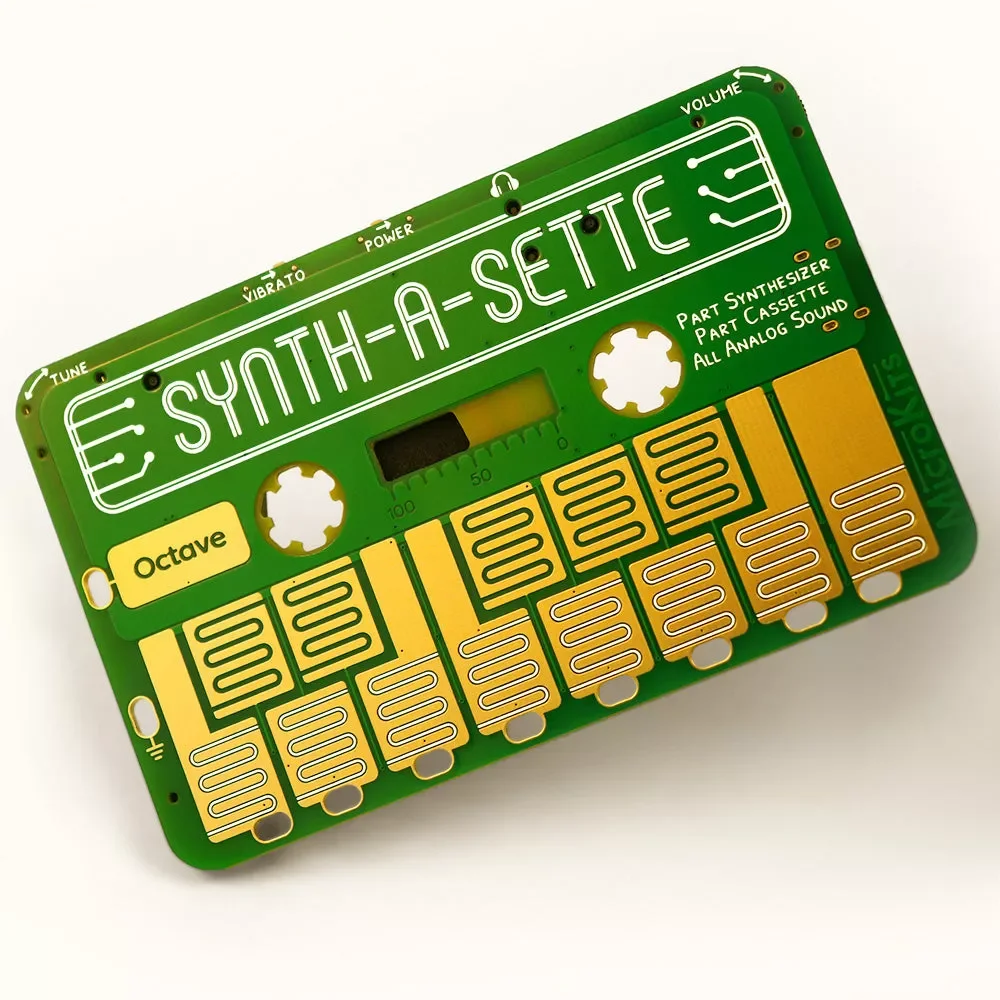
Under the hood, the Synth-a-Sette is about as straightforward as it looks. It’s a monophonic analog synth with a 13-key touchpad and an “octave up” pad that gives you roughly two octaves of range, plus simple thumbwheels for pitch and volume so you can trim it to whatever you’re playing along with. There’s no MIDI, CV, or clock sync listed anywhere – this is a purely self-contained little instrument – so your main hookups are the built-in speaker and the headphone/line out jack, which makes it easy to run into pedals, samplers, or an audio interface. Power comes from two AAA batteries or USB-C, so it’s genuinely pocket-friendly.
Architecturally, you’re working with a filtered square-wave voice with switchable vibrato, so any wobble or drift you hear is more about lo-fi analog character than a calibration disaster; once you’ve nudged the tuning wheel into place, it’ll sit comfortably enough in a track while still feeling a bit alive and unruly.
Alternatives to Consider
If you’re looking for an alternative, the first comparison that usually comes up is the Stylosette by Dubreq. While both share the cassette-sized form factor, they’re built around different ideas. The Synth-a-Sette leans into education and experimentation, whereas the Stylosette behaves more like a traditional mini synth, with a touch-sensitive finger keyboard, onboard delay and vibrato, a small patch bay, and a stronger built-in speaker. Sonically, the Synth-a-Sette skews softer and more mellow, while the Stylosette has a brighter, more vintage edge. They overlap visually, but functionally they serve different creative impulses.
If you're drawn to tiny synths that pack more power than their footprint suggests, the Korg NTS-1 is another obvious comparison. It’s digital rather than analog, but the custom oscillators and deep effects engine let you build sounds that are surprisingly rich. It’s more flexible and polished than the Synth-a-Sette, but it lacks the same quirky, unpredictable charm.
The Bastl Kastle 2 offers similar experimental energy, leaning into chaotic patchable textures that blur the line between synth and noise generator. It’s a great choice for producers who want glitchy, evolving patterns rather than traditional leads or basslines. It’s also one of the best-priced entry points into semi-modular sound design.
Teenage Engineering’s Pocket Operator series also belongs in this family of portable inspiration machines. Their tone is punchy and immediate, and some of the models bring drum synthesis or melodic sequencing that goes far beyond what the Synth-a-Sette is built for. They’re more structured and rhythmic, whereas the Synth-a-Sette leans more into pure tone sculpting.
Pros & Cons
Pros
Cassette-sized design is fun, nostalgic, and inspiring
Characterful analog sound with real grit and warmth
Extremely portable and easy to integrate into any setup
Immediacy encourages experimentation
Cons
Limited feature set compared to larger synths
Not ideal as a main melodic or bass instrument
No deep modulation options
Verdict
The Synth-a-Sette is a perfect example of why tiny boutique synths have such a fan base: they’re fun, somewhat expressive, portable, and capable of surprising you in ways that big keyboards rarely do. It’s the kind of instrument you grab when you want to break out of habits or spark a weird new idea, and the analog tone has just enough bite to make its way into serious tracks. It’s playful in its design but absolutely capable in practice.
This is a great pick for producers who love character, hands-on sound design, and gear that doesn’t take itself too seriously. If you’re looking for deep synthesis or a versatile workhorse, a more complete by brands like Arturia and Behringer will serve you better. But if what you want is a creative spark—a synth that feels as fun as it sounds—this little cassette could be exactly what you’re looking for.
Cover credit: MicroKits
Disclosure: This site contains affiliate links. If you purchase through these links, I may earn a commission at no extra cost to you.