
Teenage Engineering EP/BC-1: A CD Player With DJ Tricks
CDs never fully left the DJ booth, and these days they turn up on merch tables and in thrift-store bins for pocket change. That makes them one of the cheapest sample sources around. Teenage Engineering has picked this moment, a few weeks after its CEO said the company plans to stop making synths, to release the Teenage Engineering EP/BC-1 (also written EP-BC1 or BC-1), its first CD player. It's the first product in TE's new Broadcast Series, it has the same footprint as the EP-133 K.O. II, and it treats the disc as something you play with, not just something you listen to: varispeed, cue points, a jog stick, and beat detection that sends tempo to other gear. It came out on November 20, 2026 and is available now. This is a first look based on TE's own documentation and early coverage, not a hands-on test.
Disclosure: This site contains affiliate links. If you purchase through these links, I may earn a commission at no extra cost to you.
TL;DR – Teenage Engineering EP/BC-1
Varispeed from 50% to 150%, with three cue points per disc
Beat detection with a sync output that clocks drum machines and samplers to the CD
Rips CDs straight to WAV on a USB stick, or streams into your DAW over USB-C
Bluetooth and Auracast to headphones or any number of K.O.–AMP 35 speakers
Built-in battery rated at about six hours
What the EP/BC-1 is
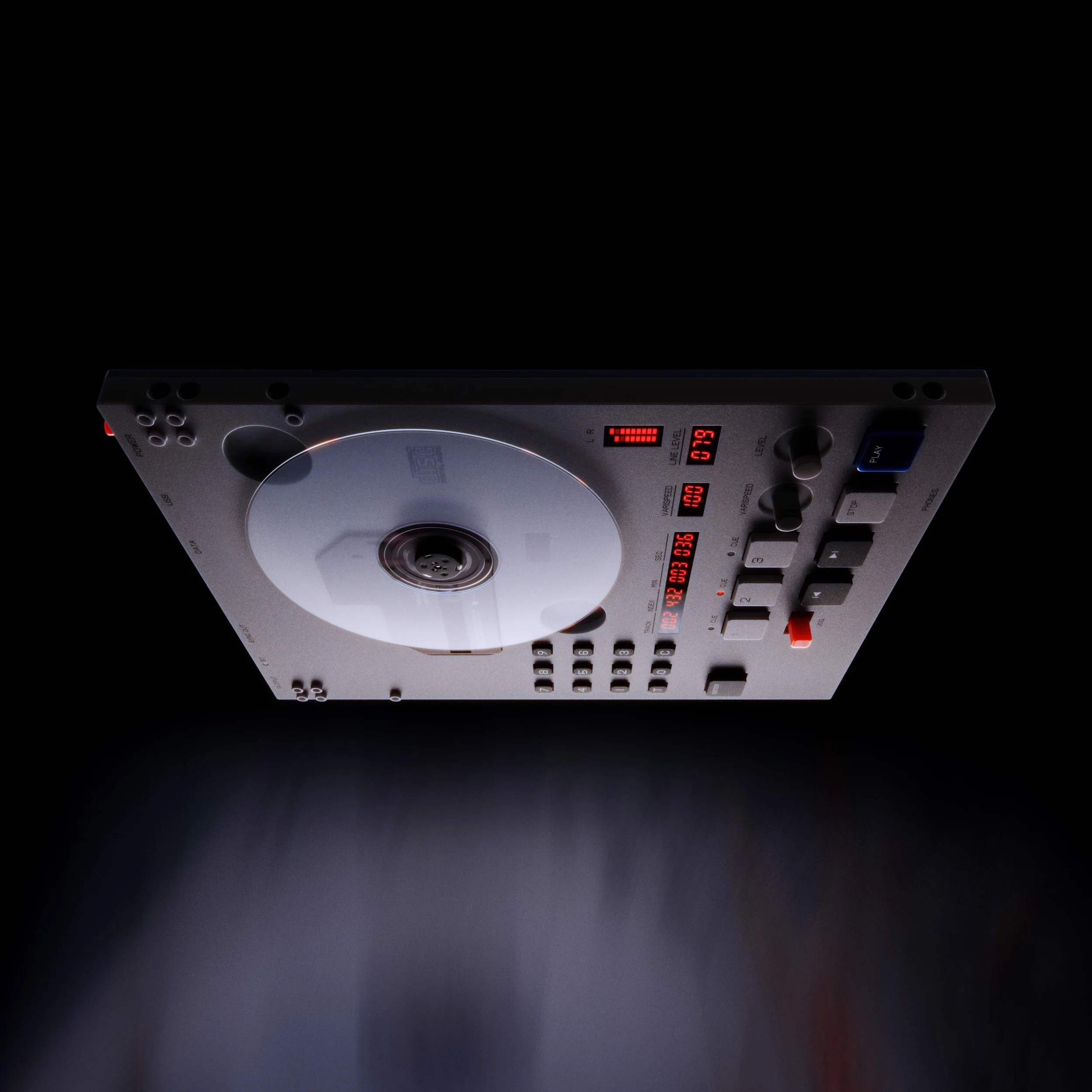
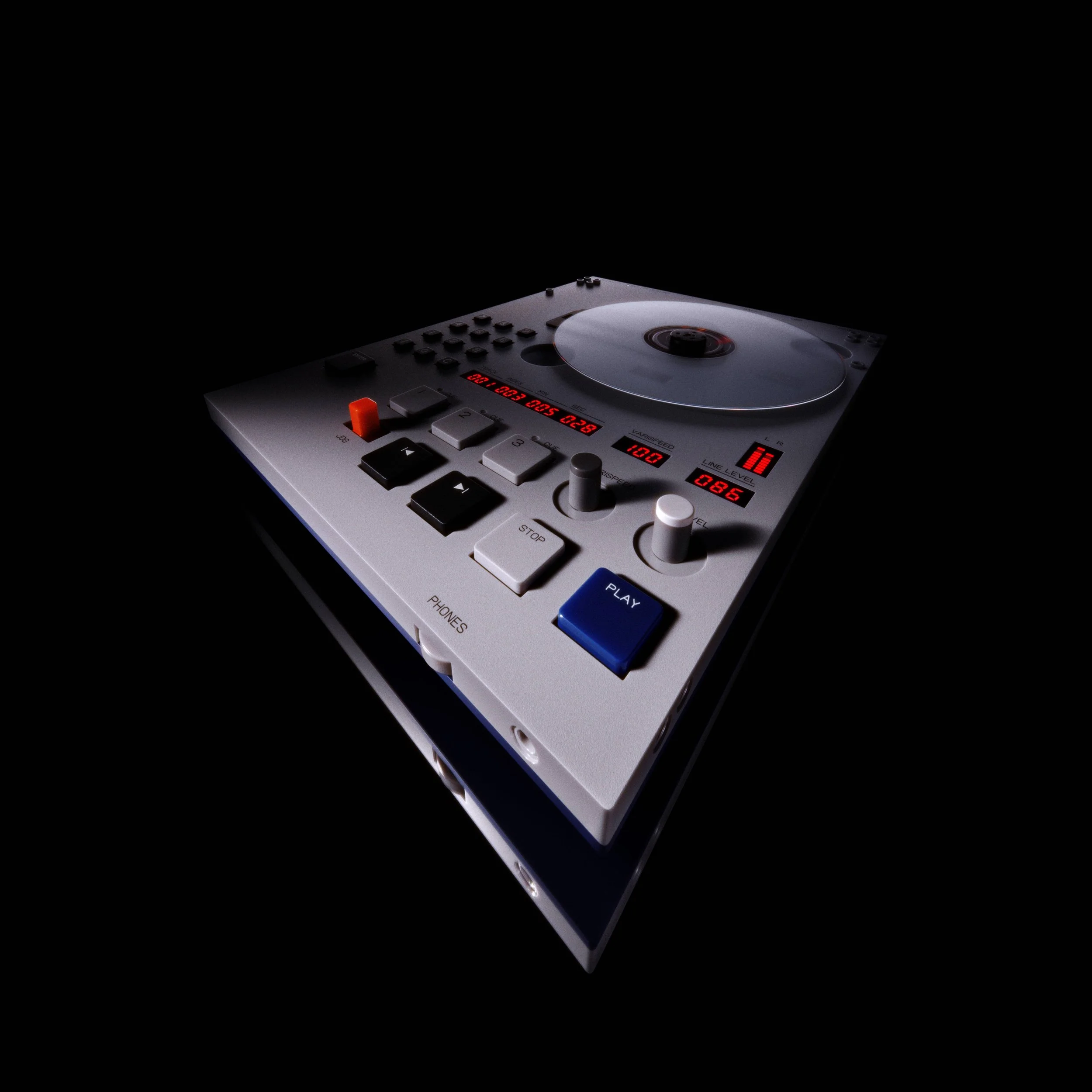
The EP/BC-1 is a slim slab, 240 x 176 mm and only 16 mm tall, with the disc spinning out in the open on top. There's no tray and no lid. Around it you get a red LED display for track, index and time, dual VU meters, a numeric keypad, and TE's usual chunky buttons. It reads more like a turntable than a Discman, which is clearly the point.
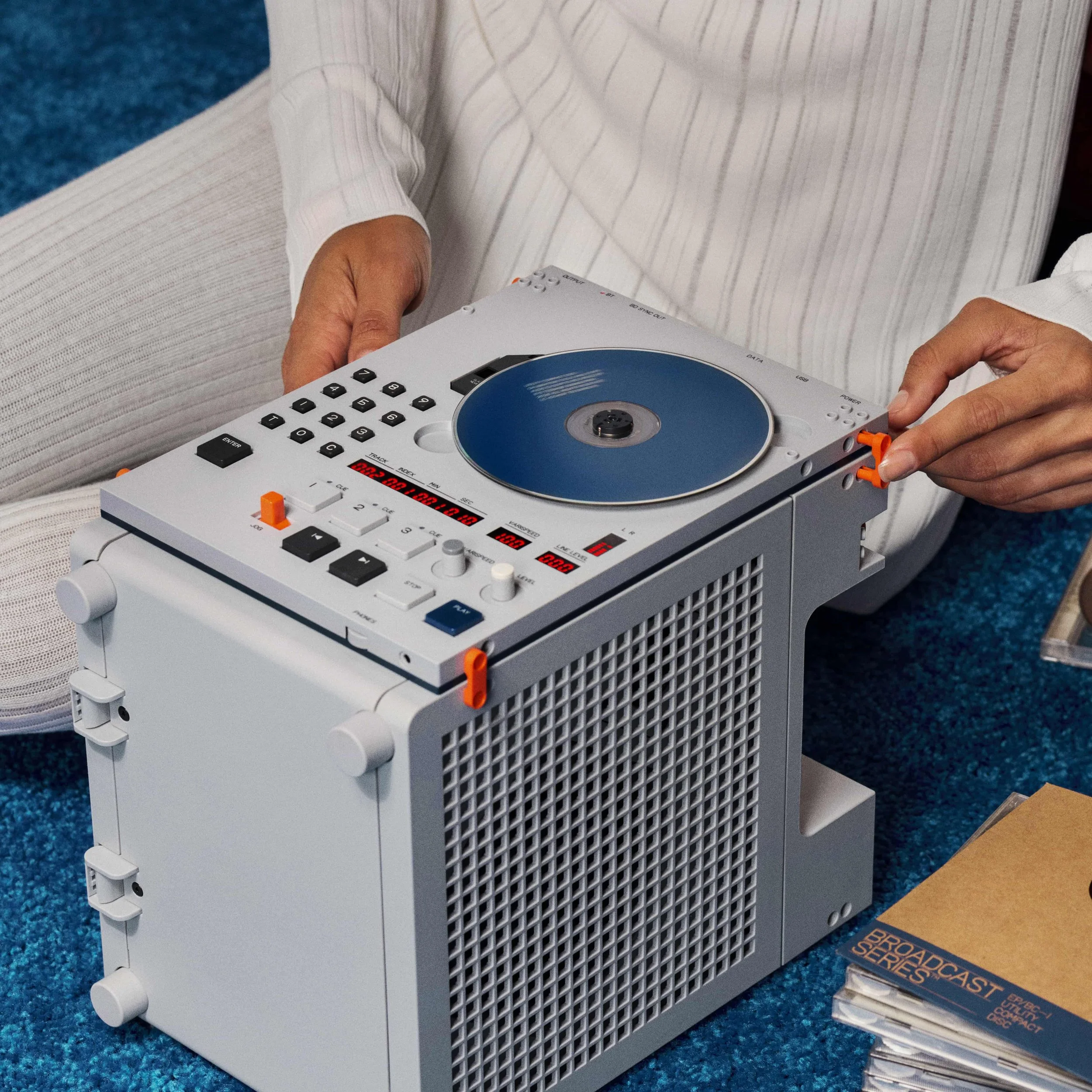
It plays standard audio CDs and MP3 data discs. The outputs are a 3.5 mm line out, a 3.5 mm headphone out with its own volume, a USB-C port that works as an audio and MIDI interface, and a second USB port for a flash drive. The internal battery charges over USB in about two hours. TE includes a utility CD with calibration tracks and music, and the player snaps onto the K.O.–AMP 35 portable speaker with the K.O. dock kit. TE also sells all three together as the "CD sound system kit." It only comes in grey.
Standout features
Varispeed with real range. 50 to 150% is a much wider range than a typical DJ pitch fader. You can drag a house record down into slow, syrupy downtempo, or push a sleepy soul ballad up until the vocal chipmunks into something usable. TE's product page also lists time stretch, but the user guide doesn't explain how it behaves. Until someone tests it, think of varispeed as tape-style: speed and pitch move together.
Beat detection and sync out. The BC-1 analyzes BPM on every beat and shows the reading with a confidence level. If the detection drifts, you can nudge it with tap tempo. A 3.5 mm TRS sync jack sends a 16th-note pulse on the tip and play/stop on the ring. In plain terms, your drum machine or EP sampler follows the CD. You can jam a beat over a jazz record, or layer techno drums under an ambient album without touching a laptop.
Cue points and jog stick. You get three cue markers per disc, and the player remembers markers for your last 40 CDs, so your favourite break is still marked next week. The jog stick scrubs at 2x, 4x or 8x, with a finer mode for exact placement. The numpad jumps straight to a track or timestamp.
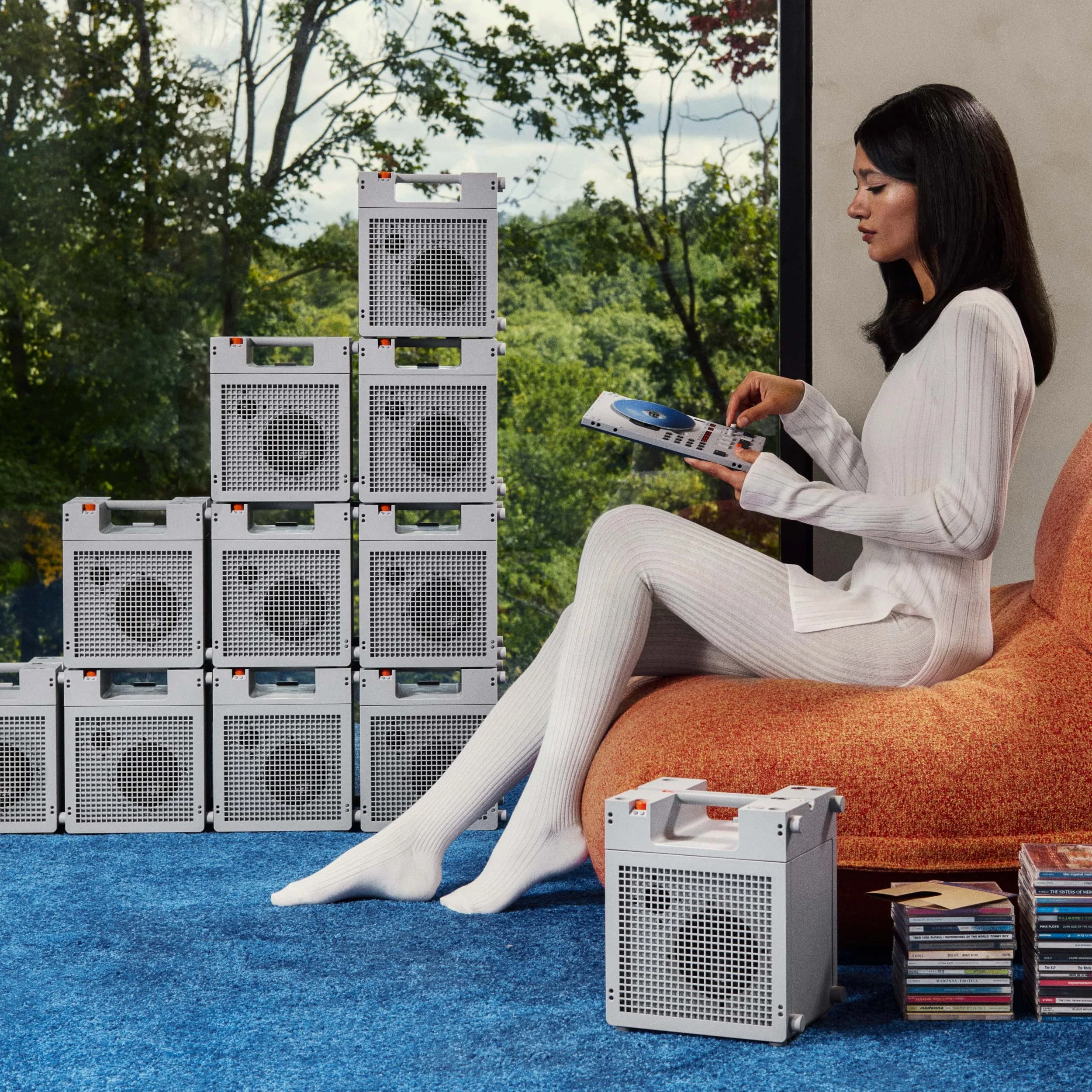
A CD player built for sampling. This is the feature that makes the BC-1 worth covering here. Plug it into a computer and it shows up as a USB audio input, so you can record straight into your DAW. You can also skip the computer and rip tracks to a flash drive as 16-bit/44.1 kHz WAV files. MIDI CCs on channel 1 handle play, stop, next and previous. TE's own suggested setup is the BC-1 and a K.O. II running into the K.O. Sidekick mixer as a "ones and twos" rig, with a CD on one side and your beats on the other.
Bluetooth and Auracast. Standard Bluetooth sends audio to headphones and speakers, and Auracast broadcasts to an unlimited number of K.O.–AMP 35s. That's a fun trick for a rooftop or a backyard party, though more for hanging out than for proper sound reinforcement.
Limitations
The big one for DJs is that cue jumps aren't instant. TE's guide says so directly, and early coverage points out that the player has to seek, which adds a lag that club CD decks solved decades ago. That rules out cue juggling and tight drops. There are only three cues per disc, and cue markers aren't saved for MP3 discs. Nothing in the documentation mentions loops, waveforms or key lock.
On the audio side, the line out is rated at 1 Vrms. Darko.Audio notes that's about half of what most hi-fi CD players put out, so expect to run your mixer gain higher. Connecting Bluetooth disables the line out, and there's no optical or coaxial output. Ripping happens one track at a time, to drives formatted FAT32 at 32 GB or less. With an exposed disc and no skip protection mentioned anywhere, it's tabletop gear, not something to walk around with.
Who should buy it (and who should skip it)
The BC-1 makes the most sense for crate diggers and samplers who already own a stack of CDs, or who keep buying them cheap, and want a quick, hands-on way to get them into a DAW or an EP sampler. It also fits TE ecosystem owners who want a laid-back K.O. II plus Sidekick setup, and hobbyist DJs who like the idea of beat-syncing their drum machine to a record instead of a laptop.
Skip it if you actually DJ on CDs in public. Laggy cues, no loops and no confirmed key lock make it a toy next to a real CD deck. Skip it too if you mainly want to listen. A hi-fi portable player gives you more output, digital outs and better headphone drive. And if your music lives entirely on streaming and USB sticks, the novelty runs out fast.
Alternatives
AlphaTheta CDJ-1500X: if CDs are part of a real club workflow. It's a compact pro multi player with a 10.1-inch touchscreen, beat sync and beat jump, and it handles CDs alongside USB and streaming. It's in a different league for size and budget, but it does everything the BC-1 can't in a booth.
FiiO DM13: if you mostly want to hear your CDs. It has dual Cirrus Logic CS43198 DACs, balanced outputs, optical and coaxial digital outs, aptX Bluetooth and its own USB ripping. It has no varispeed and no sync, but it's the better pick for headphones and hi-fi.
Pros
Wide 50–150% varispeed
Sync out locks other gear to a CD's tempo
USB audio and direct WAV ripping make sampling painless
Same footprint as the EP-133 and plays well with the TE ecosystem
Battery-powered with Auracast streaming
Cons
Cue jumps aren't instant
Only three cues, and none saved on MP3 discs
Low line-out level, and Bluetooth disables it
No optical or coaxial output
Exposed disc, grey only
Bottom line
The EP/BC-1 isn't a DJ deck, whatever the "professional" on the label says. It's a sampling and jamming tool that happens to play CDs, and judged that way it's smart: varispeed, a clock output and USB audio turn a dusty CD collection into a sample library that syncs with your gear. If you dig through CD bins, own a K.O. II, or want a playful second deck next to a K.O. Sidekick, it's an easy one to want. If you need club-grade cues or audiophile output, look elsewhere.
Disclosure: This site contains affiliate links. If you purchase through these links, I may earn a commission at no extra cost to you.