
XLN RC-20 Retro Color v2: What's New in the GOAT Lo-Fi Plugin
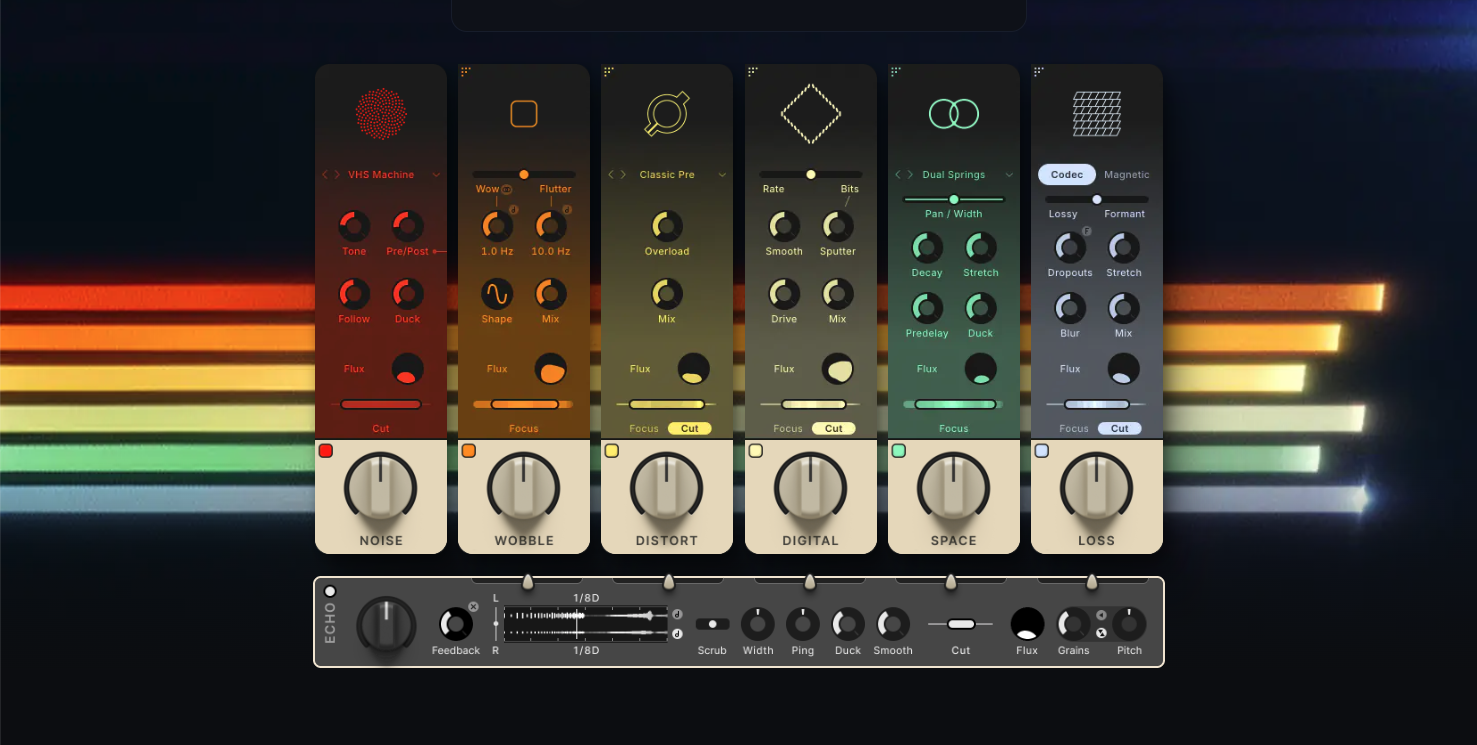
For about ten years, RC-20 Retro Color has been the plugin producers reach for when a sound is too clean. Put it on a Rhodes loop, a vocal, a drum bus or a whole mix, and the sound comes back like it spent a decade in a basement next to a dehumidifier. That's why XLN Audio RC-20 Retro Color v2, the plugin's first major version, is a bigger deal than a usual update. v2 came out on November 3, 2026. It adds an Echo module that runs its repeats back through RC-20's own effects, tape-style Varispeed, drag-and-drop module order and a lot of new flavors inside each module. This is a first look based on XLN's specs, early demos and the first wave of user reactions, not a hands-on test.
Check the current price of RC-20 Retro Color v2 here
TL;DR – RC-20 Retro Color v2
New Echo module with RC-20's effects inside the feedback loop, plus a granular Grains section
Varispeed for tape-style slowdowns at half, quarter or eighth speed, locked to tempo
Drag-and-drop module order, per-module frequency filters and loudness matching
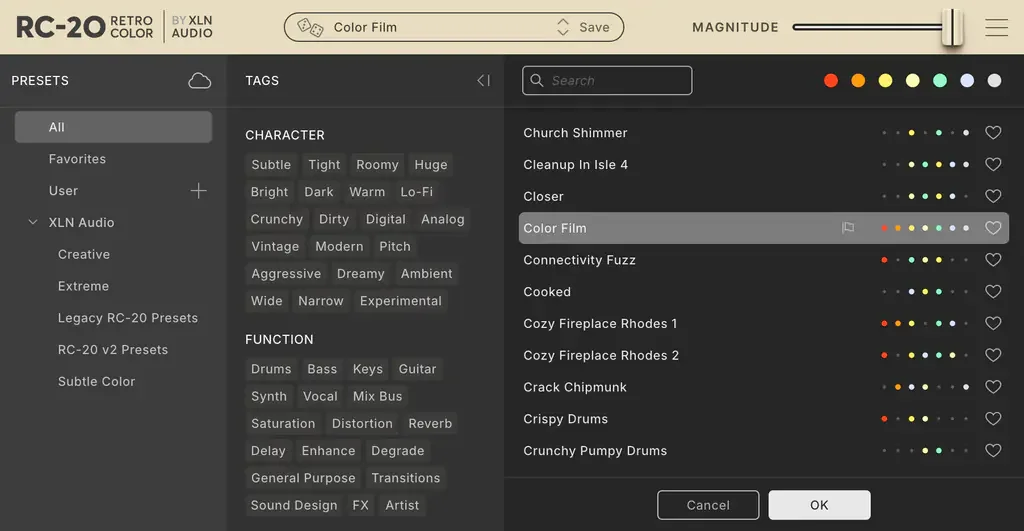
250+ new presets, with all v1 factory and artist presets still included
VST3, AU and AAX on macOS 10.13+ and Windows 10/11, and it installs alongside v1
Some links in this post are affiliate links. If you buy through them, Internet Tattoo may earn a commission at no extra cost to you.
What Is RC-20 Retro Color v2?
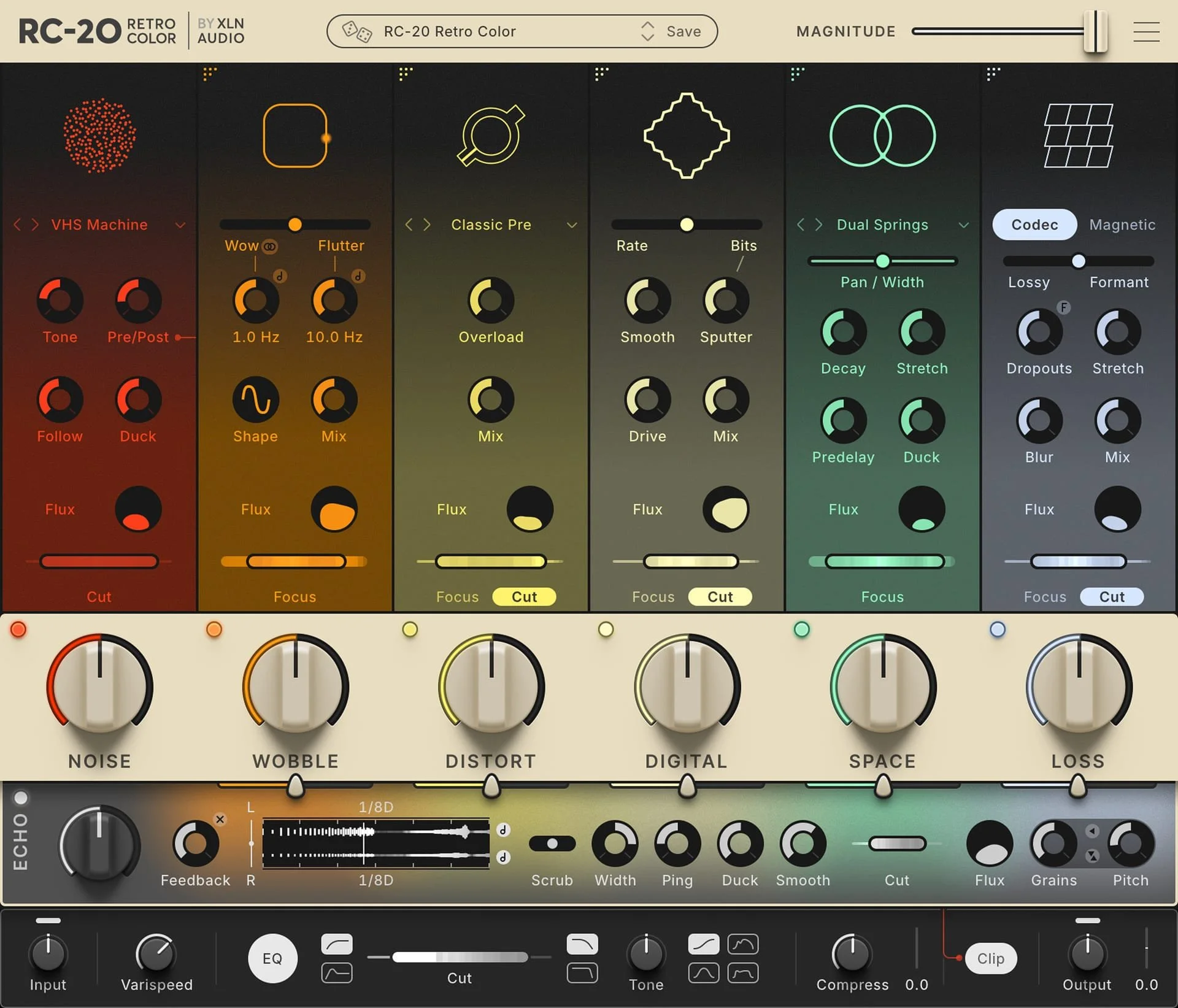
RC-20 is a character multi-effect. It doesn't model one specific tape deck or sampler. Instead, it gives you a set of modules for different kinds of vintage damage: noise, wobble, distortion, digital crunch, space and signal loss. The Magnitude slider scales all of it at once. That one-knob, "make it older" approach is why it ended up on so many beats, indie records and pop vocals.
v2 keeps that sound and builds around it. It installs as a separate plugin, so your v1 projects open exactly as they did before. All the original factory and artist presets are included, and you can import your own v1 presets in a few clicks. XLN also offers a 10-day full-featured trial, which is worth using for reasons covered below.
Standout Features
Echo is the reason v2 exists. It's a feedback delay, and the repeats can pass back through Wobble, Distort, Digital, Space and Loss. Each repeat comes back a little more warped, crunchy or worn than the last. You can push the feedback into self-oscillation, sync the times to tempo, go ping-pong and duck the echoes under the dry signal. Early users on KVR point out a useful trick: you can apply the module effects only to the feedback path, so the dry sound stays intact and only the repeats fall apart. Think of a dub techno chord stab whose echoes get murkier with every pass, or a vocal throw in a house track that slowly dissolves.
Grains sits inside the Echo. It can pitch or reverse the repeats to turn plain delay trails into shimmer and granular clouds. Ambient producers and anyone building transitions or risers will get the most out of it.
Varispeed gives you the slowed-down tape effect at 1/2, 1/4 or 1/8 speed, locked to your project tempo. It's a quick way to get a half-time switch-up on a drum break, a screwed-down vocal chop or a synthwave pad that sounds like the motor is dying.
Every module gets new flavors. Distort adds tape, preamp and 4-track cassette models, plus an Overload stage. Noise gets new sources like dial-up modem chatter and crowd noise, which you can route before or after the effects and duck under the track. Wobble adds Warp to reshape its modulation. Digital gains Sputter, a gated "dying battery" stutter, plus Drive. Loss gets Codec, a gritty digital degradation algorithm aimed at that low-bitrate internet-audio smear.
Space finally earns its slot. Some reviews called the original Space module a bit superfluous. v2 fills it with a much bigger set of reverbs: rooms, plates, springs, cabinets and some odder spaces, plus Stretch, width and ducking controls. It used to be RC-20's weakest module, and it now looks like a usable reverb section.
The workflow catches up with modern plugins. Modules can be reordered by drag and drop, an idea borrowed from XLN's DB-30 Drum Butter. Focus and Cut filters let each module work on only part of the spectrum, so you can crunch the mids of a bassline and leave the sub clean. Loudness match levels the processed signal to the dry one, so you judge the color and not just the volume boost. There's also undo history, module locking while you browse presets, snapshot comparisons, oversampling, a master compressor and clipper, a Tone section with lo-fi speaker and vintage mic colors, and stereo width from mono to 200%.
The preset browser is more useful. The 250+ new presets can be filtered by character, function and module. There's also a randomizer and a way to save collections. That matters in a plugin where the first preset is often the main ingredient.
Limitations
It's heavier on the CPU. Several early users on KVR and Gearspace report a big jump in CPU load compared with v1. One says it uses more than demanding reverb algorithms even with everything turned off. Plan to freeze or bounce tracks, and test it on your own machine during the trial before putting instances on every channel.
The new look divides people. Some longtime users miss the old interface, and a few think the new one looks less distinctive. Some users also reported an early display glitch where the graphics didn't line up with the plugin window. Others say turning off hardware acceleration in the settings fixes it.
Old sessions don't carry over. Because v2 is a separate plugin, existing projects stay on v1. Moving them to v2 means rebuilding the chain by hand, and you'll have two RC-20s in your plugin list.
Some of the new character is more polished than organic. A few sound-design-minded users feel that Varispeed and some of the new flavors are less organic than the original's. It's a matter of taste, but worth hearing for yourself.
It's also a coloring tool and won't fix a bad recording. Pro Tools First isn't supported, and installation needs an internet connection.
Should You Upgrade?
RC-20 v2 is for producers who treat texture as part of the arrangement: lo-fi hip-hop and boom bap, indie electronic, synthwave, ambient, deep house and dubby techno. Current v1 owners have the easiest decision. The upgrade path is discounted, v1 stays installed, and Echo alone replaces the separate delay many people were putting after RC-20 anyway. New buyers who stack separate tape, bitcrusher and delay plugins to get one sound can now do it in one instance.
Skip it if you want a modern, clean sound with only a little controlled warmth. A dedicated saturation plugin will be more precise. Also skip it if you want the believable sound of one specific machine. RC-20 has always sounded like the idea of old gear more than a faithful copy of it, and some ears hear that as stylized. And if you're on an older laptop that already struggles, the CPU reports are a real concern.
Alternatives
Baby Audio Super VHS goes the other way from RC-20 v2: almost no controls. It's built around six effects, each of which can be controlled with a single knob, plus an EQ, bitcrusher and limiter. You get the vibe in about two moves, and the tradeoff is depth. Sound On Sound's reviewer even suggested Baby Audio add a 'back page' for more controls. It's a great fit for synthwave pads, vaporwave chops and '80s-flavored keys when you'd rather commit fast than tweak.
Excite Audio Lifeline Console is the closest match to RC-20 in structure. It has five reorderable effect modules designed to emulate the sound of vintage analogue hardware: Pre-amp emulation, EQ, Compression, tape-style Modulation and Wear. The Wear module has Tape, Vinyl and Cassette modes, and its noise can be ducked or triggered by input audio. On top of that, all modules allow individual processing of the two stereo channels or of the mid and side signals.
Wavesfactory Cassette is the pick if what you actually want is the real thing rather than RC-20's stylized take on "old." It does one job, emulating vintage cassette tapes and decks, and it goes deep: it models 4 tape types, and extra settings include dropouts, degradation and a "Re-Cassette" parameter. MusicRadar's review called it nuanced and convincing tape emulation that sounds great on pads, drums and mix buses. It suits lo-fi beats, bedroom pop and ambient tracks where a believable four-track haze matters more than a box of tricks.
Pros
Echo with effects in the feedback loop is a genuinely new idea for this plugin
Reorderable modules and per-module filters add real control
Loudness match makes A/B comparisons honest
Much stronger Space module
v1 stays installed, with presets carried over
Cons
Noticeably heavier CPU load, according to early users
No conversion of existing v1 sessions
The new interface splits opinion
Some new flavors sound more polished than organic
Bottom Line
RC-20 Retro Color v2 is a real expansion, not a new coat of paint. Echo turns it from a coloring insert into a sound-design tool. The workflow changes fix most of what made v1 feel dated. For v1 owners this is close to an automatic upgrade. For everyone else it's now the most complete all-in-one lo-fi box around and still the reference point every alternative to RC-20 Retro Color gets measured against. Run the trial first to check how it sits on your CPU. The intro offer runs until January 12, 2027.
Disclosure: This site contains affiliate links. If you purchase through these links, I may earn a commission at no extra cost to you.