
Korg Handytraxx Guide: Portable Vinyl, Sampling & Scratch Culture Reborn
Portable vinyl is having a moment again. What started as a niche thing for diggers and “portablism” die-hards has quietly become one of the most interesting corners of DJ culture — and now Korg has entered the chat. The new Handytraxx series isn’t just a cute nostalgia play; it’s a full rethink of portable turntables for different types of vinyl-heads: scratch kids, record collectors, lo-fi lovers, and people digitizing rare music before it disappears forever. What makes this especially fun is that Korg isn't treating portability like a compromise. There's a proper DJ-focused model with effects and looping, two Tube editions for warm listening and character, and even a high-resolution archival unit for serious audio heads. Whether you're trying to scratch on a park bench, sample dusty 45s at a flea market, or future-proof your record collection, the Handytraxx lineup has a lane for you — but each model has a very different personality and purpose. Let’s break down how they work and who each one really makes sense for.
What the Handytraxx Is
The Handytraxx isn’t just a portable turntable — it’s Korg stepping into a category that has lived on the fringes of DJ and vinyl culture for years and deciding it deserves proper attention. Portable record players have traditionally been tools for crate-diggers flipping through dusty bins, beatmakers sampling in quiet corners of cafés, and portablists scratching in parks on sunny afternoons. They were always charming, sometimes janky, and typically built more for utility and community spirit than audio refinement. By reviving the concept and giving it multiple specialized models, Korg is effectively saying this format isn’t a side-quest — it’s its own creative lane.
This matters because it reframes what a turntable can be. Instead of thinking of vinyl playback as something that has to happen at home on a hi-fi rack or in a full DJ booth, the Handytraxx invites vinyl everywhere: rooftops, sidewalks, studios, friends’ living rooms, even tour backpacks. And it does so without reducing the idea to a novelty. There’s a performance-focused version for scratching and looping, tube-driven versions for warm, character-rich home listening, and even a model dedicated to pristine archival transfers. It treats portable vinyl not as a compromise but as an extension of a culture that values hands-on sound, physical media, and creative freedom on the go.
The Models & How They Differ
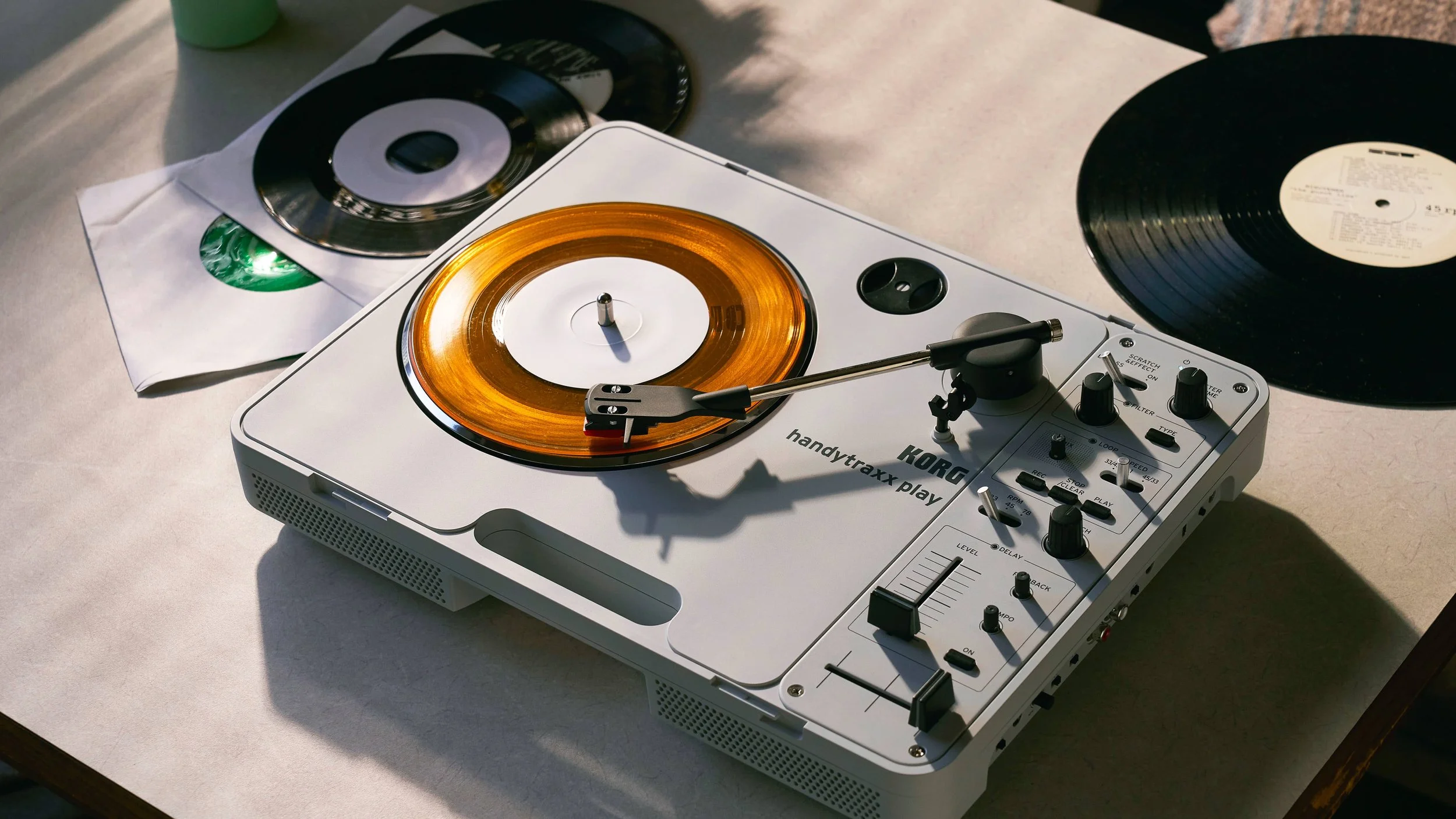
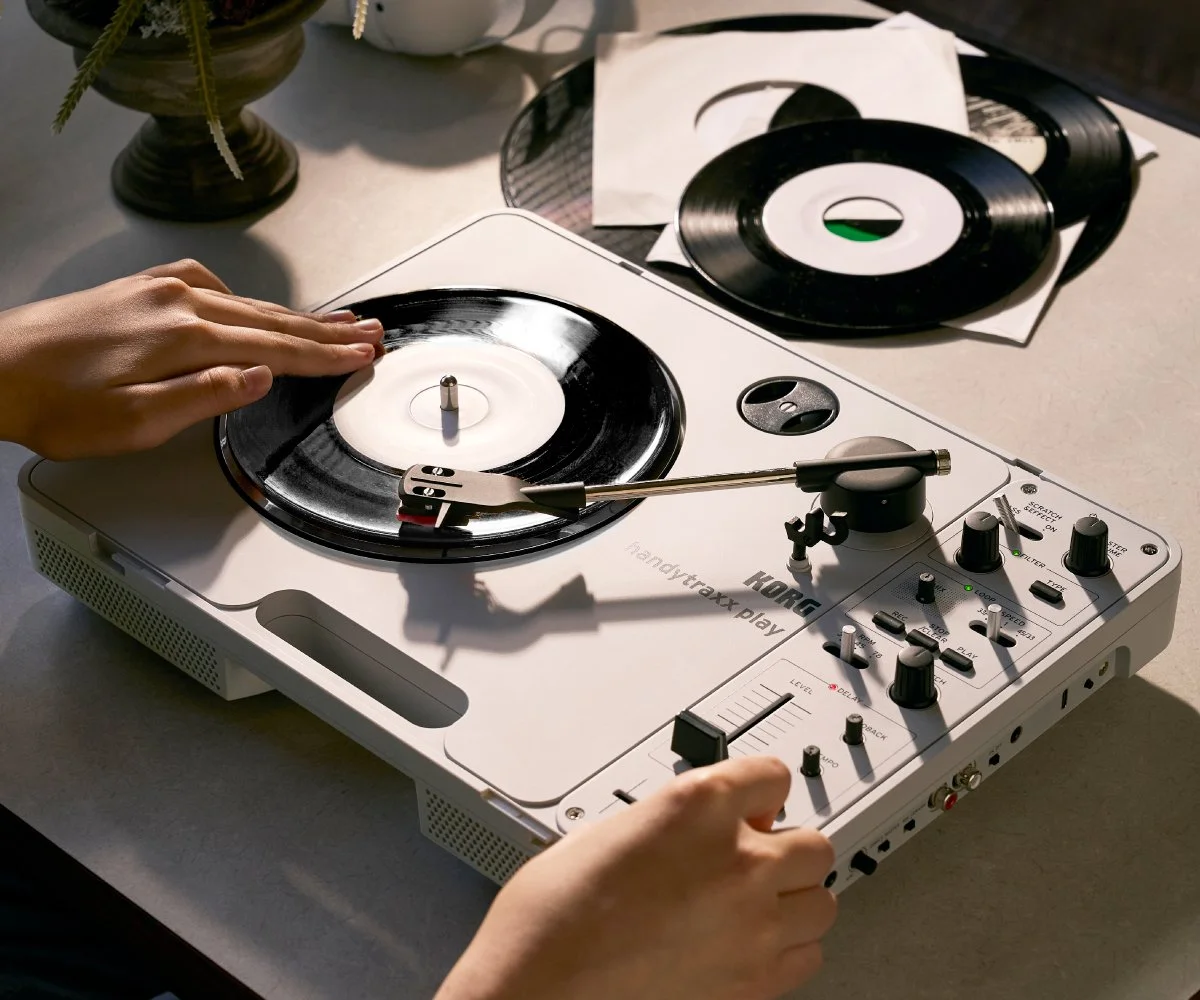
Korg didn’t just bring back a portable turntable — they built an entire family, each with a different purpose. The Handytraxx Play is the most performance-driven of the bunch: battery powered, built-in speaker, hands-on controls, and performance-oriented features like onboard effects and loop-style tools for practice or improvisation. It’s the evolution of that classic park-bench portablist setup, but with modern polish and a clear sense that portability shouldn’t mean sacrificing feel or fun. It’s the one that will resonate most with scratch kids, beatmakers, and anyone who wants a turntable that feels alive outside the studio.
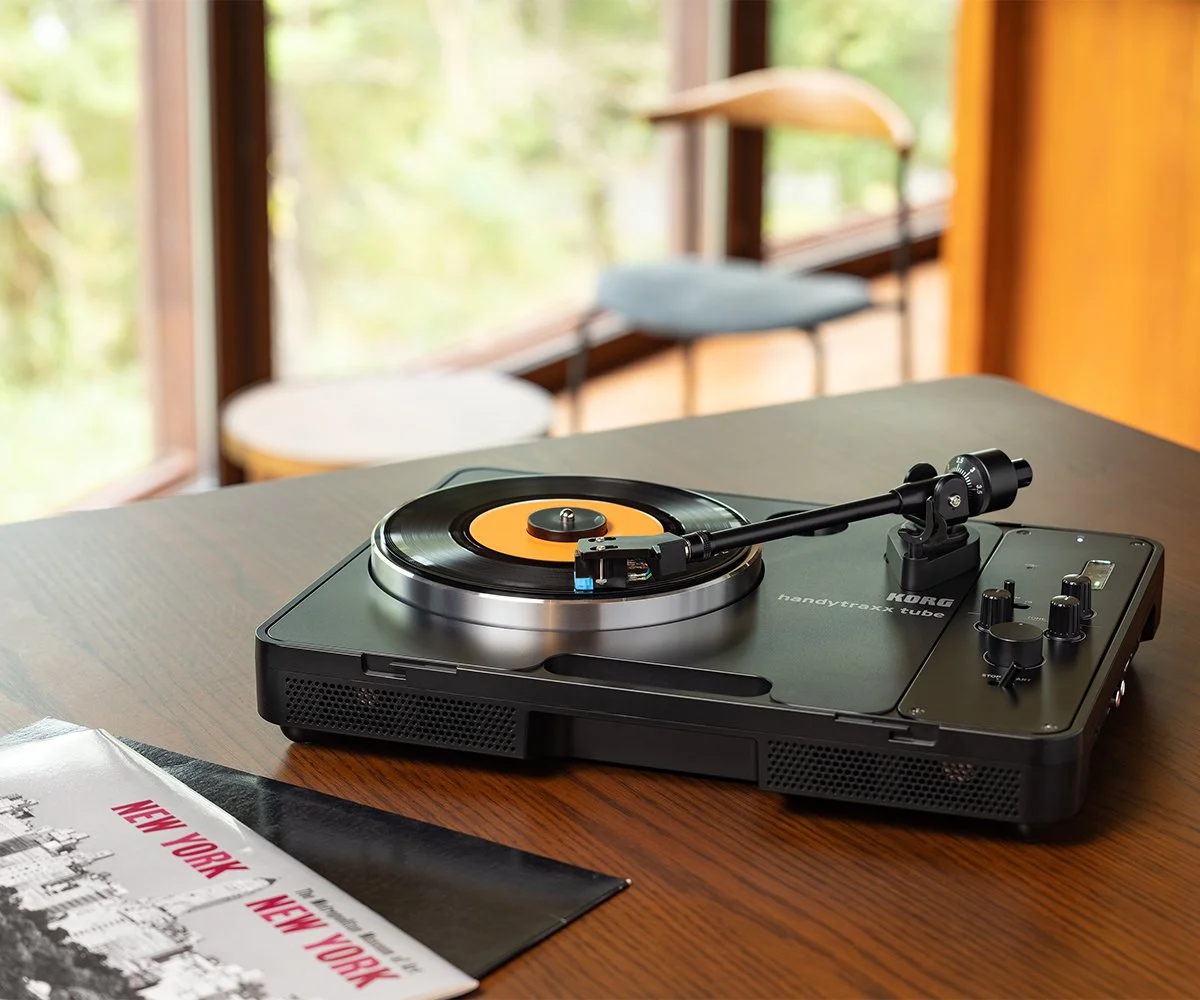
The rest of the lineup leans into vinyl as a listening-first experience. The Handytraxx Tube and Tube J both use Korg’s Nutube circuit to give playback a warm, character-rich glow — the kind of soft saturation and harmonic bloom vinyl lovers chase. The standard Tube feels like the cozy, personality-driven option, ideal for casual listening sessions or relaxed home environments where tone is more important than technicality.
The Tube J pushes that concept a bit further. It’s tuned for a more refined, detailed sound, offering a slightly more nuanced take on the Nutube’s coloration. It’s not pitched as a true audiophile deck with swappable parts or high-end upgrade paths, but it’s clearly made for listeners who want an elevated, more intimate vinyl experience while still keeping things portable.
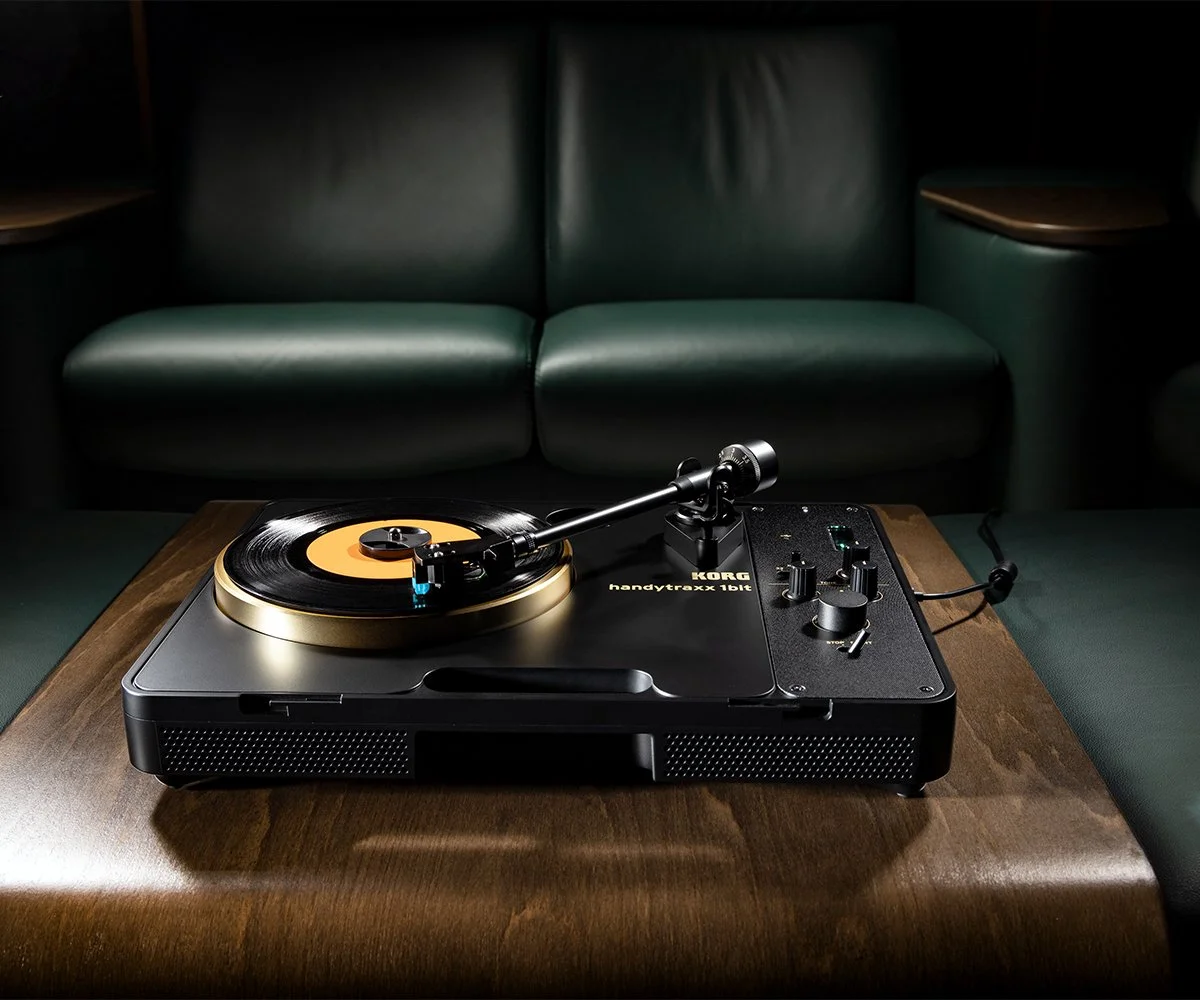
Then there’s the outlier: the Handytraxx 1-bit, designed for high-resolution vinyl transfers. Instead of simple WAV rips, it captures audio in 1-bit DSD-quality formats, giving collectors a way to preserve rare pressings with exceptionally clean, lossless detail. It’s not marketed as an archival machine for institutions, but it absolutely appeals to serious vinyl fans who want to back up their collections properly — people who care as much about long-term preservation as they do about day-to-day listening.
Who It’s For & Real-World Use Cases
The appeal of the Handytraxx really depends on how you interact with vinyl. If you're a DJ who likes practicing cuts outside the studio or taking music into unconventional spaces, the Play model feels like a tiny revolution. It's the kind of device you throw in a tote bag on a whim and end up using more than expected — park sessions, rooftop hangs, sampling sessions at a thrift store, spontaneous scratch jams with friends. It removes friction, which is a big deal in a culture where creativity often arrives unplanned. The built-in speaker and effects mean you don't need a setup, a mixer, or even power outlets; you just lift the needle and go. For beatmakers specifically, it turns record-digging into a complete loop: find the record, listen, sample, chop, and vibe on the spot.
If you're on the listening and archiving side of vinyl, the Tube and 1-bit models speak to a totally different use case. They're for people who value the ritual of listening — warm tone, tactile playback, and the feeling that every record has a mood and space of its own. The Tube versions in particular feel designed for cozy sessions at home, where you’re less concerned about scratching and more interested in texture, atmosphere, and the emotional weight of sound. Meanwhile, the 1-bit version is for completists and preservation-minded collectors, the ones who don’t just love vinyl but worry about protecting it — the kind of person who hears a rare pressing and immediately thinks, “This needs to be backed up properly.” It turns a portable deck into part of a long-term archival workflow instead of just a listening experience.
Alternatives & How It Stacks Up
Portable turntables aren’t new, but they’ve rarely been treated with this much intention. For years, the go-to options were the Vestax Handy Trax and, more recently, the Numark PT01 Scratch — both beloved for being cheap, hackable, and endlessly moddable. That whole scene grew around DIY upgrades: custom faders, tonearm swaps, motor tweaks, 3D-printed parts. Korg’s Handytraxx line takes a different angle. Instead of assuming users will mod their way into better performance, the models seem built to offer more complete, purpose-specific experiences right out of the box. Less tinkering, more “pick the one that matches your vinyl lifestyle.”
On the audiophile and archival side, the comparison shifts. Traditional hi-fi turntables from companies like Pro-Ject, Rega, or Technics still dominate for home listening and upgrade paths. They give you full-size platters, heavier builds, and the freedom to change tonearms, cartridges, and phono stages over time. What they don’t offer is mobility — or a version tailored specifically to transferring vinyl at high-resolution for preservation.
That’s where the Handytraxx stands alone: it's less about replacing a full hi-fi deck and more about expanding where and how vinyl can live in your life. If you already have a primary turntable, this feels like a second system with a mission. If you don’t, the question becomes what matters more to you — portability and personality, or the traditional home-rig ecosystem? Either way, the Handytraxx forces the market to take portable vinyl seriously again, and that’s worth paying attention to.
Pros & Cons
Pros
Purpose-built versions for different vinyl lifestyles — not a one-size-fits-all gimmick
The Play model makes portable scratching genuinely fun and usable
Nutube versions offer warm, characterful vinyl playback with real personality
1-bit model caters to archivists and serious collectors preserving rare records
Portable, battery-friendly, and designed for real-world mobility
Feels like a thoughtfully modern evolution of the Vestax/portablist legacy
Cons
Likely pricier than traditional portable scratch decks
Not a replacement for full-size rigs for club DJing or purist hi-fi setups
Mod-culture appeal may not match PT01 scene initially
The Final Word
The Handytraxx line is a reminder that vinyl isn’t stuck in the living room — it can be social, portable, expressive, and flexible, depending on how you interact with it. Korg didn’t just revive portable turntables; they treated the idea with respect, building versions for performers, listeners, and preservationists instead of trying to squeeze everyone into one box.
If you scratch, dig, and make beats, the Play feels like the obvious move — the kind of thing you throw in a backpack and actually use. If vinyl is part of your home ritual and you want tone and texture, the Tube models feel like modern lo-fi listening machines. And if you’re the type who thinks about archiving records the way filmmakers think about film scans, the 1-bit edition is in a category of its own.
It’s rare to see a legacy corner of music culture suddenly get treated with this much respect, and that alone makes this lineup feel exciting. Portable vinyl used to feel like a side-hustle hobby. Now it feels like a format again.
This site contains affiliate links. If you book or purchase through these links, I may earn a commission at no extra cost to you. This helps support the site and keeps my content free. As an Amazon Associate, I earn from qualifying purchases.