
NAMM 2026: New Synths, Cool DJ Gear, and Pro Audio Innovations
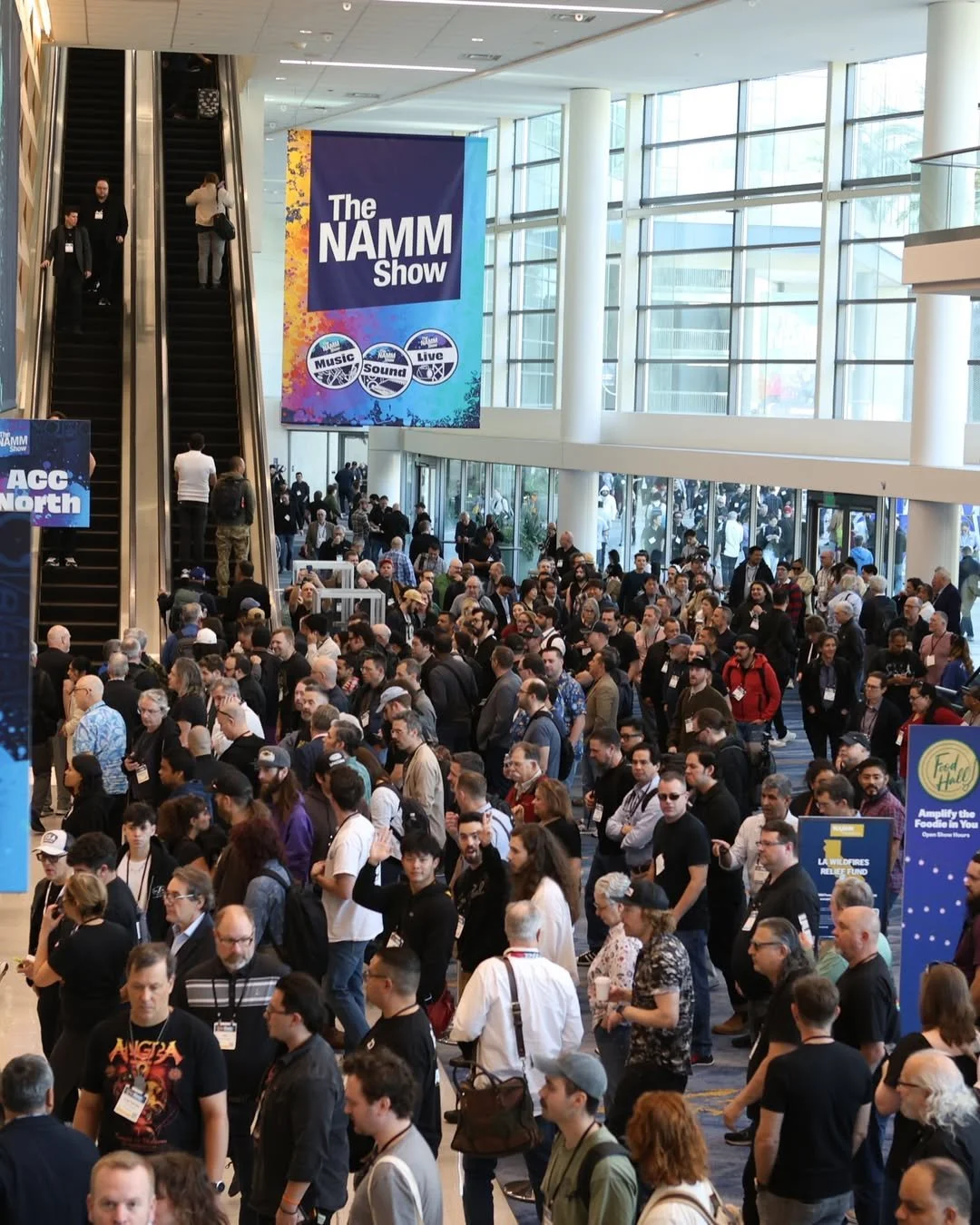
NAMM is the music industry’s biggest trade show—a yearly pressure-cooker where instrument makers, audio brands, and music-tech companies show off what they’ve been building behind the scenes. Even if you’re not flying to Anaheim to walk the floor, NAMM still matters because it tends to set the pace for the year: new synths, new DJ tools, surprise software drops, and a wave of “this is what we’re focusing on next” announcements that ripple out for months. For NAMM 2026, the show returns to Anaheim, California, running across late January with the exhibit floor open Thursday, January 22 through Saturday, January 24. And the news cycle is already moving: pre-NAMM reveals are landing early, and the usual rumor ecosystem is spinning up fast. This post is your up-to-date hub for what’s already confirmed, what looks most likely to drop next, and what’s worth paying attention to if you make music, DJ, or obsess over gear.
Updated: January 24 2026 to include news about Soundtoys, Hercules, and Casio.
Soundtoys SpaceBlender 2
Soundtoys has released SpaceBlender 2, an evolved version of its experimental reverb and spatial effects plugin that builds on the original’s concept of creating “imaginary spaces” through a unique algorithmic engine rather than conventional reverb physics. Like the first SpaceBlender, the second iteration lets you shape sound into expansive, evolving textures with intuitive controls for Time, Color, Texture, Mod, Freeze, and Mix, and features an interactive visualizer that responds in real time as you sculpt ambience and spatial character across a wide temporal range.
Rather than aiming for strict realism, SpaceBlender II is built to blur the line between reverb, delay, and creative spatial processing, offering everything from snappy gated effects, reverse ambiance, and dense evolving textures to long, immersive soundscapes that can be tempo-synced. Its design is meant to make complex ambient and spatial effects accessible without deep menu diving, and it integrates smoothly into DAWs as a VST3/AU/AAX plugin — though details like specific system requirements and additional new features over the original aren’t fully outlined in the publicly available sources.
More info about Soundtoys here
Hercules DJControl T10
Hercules has unveiled the DJControl T10, a new DJ controller built around 10-inch motorized platters for a more deck-like, hands-on mixing feel. It’s positioned as the successor to the DJControl T7 and keeps a familiar performance layout with controls like performance pads, three-band EQ, and full mixer-style channel sections.
On the software side, the T10 supports Serato DJ Pro (with a license included) and also works with DJUCED, making it a flexible option for different DJ workflows. Hercules is also bundling extras like Dr. Suzuki slipmats and a custom UDG bag, which reinforces that it’s being framed as a gig-ready package rather than just a hardware teaser.
More info about Hercules controllers here
Casio SAMPLER
Casio has unveiled a new portable standalone sampler that looks to bring classic sampling into a compact, modern format with deep heritage appeal, sort of a SP-404 meets SK-1 type vibe. The unit features a 4×4 pad layout, supports 16-bit/48 kHz WAV sampling, and includes up to 64 GB of internal memory for storing both user recordings and a library of preset sounds drawn from vintage Casio instruments — suggesting a bridge between retro character and contemporary sample-making workflows.
It’s designed for immediate creativity with built-in real-time sampling and sequencing controls on the hardware itself, making it useful both as a sketchpad for ideas and as a performance tool without needing a computer. Details like exact I/O specifics and whether external MIDI control is supported haven’t been confirmed yet, but the combination of pads, onboard sampling, and a sizable preset palette points toward a versatile, hands-on sampler that taps into Casio’s long history of budget-friendly, fun sampling gear.
More info about Casio here
Behringer Synths - JN-80 and D Mini
Behringer’s presence at NAMM 2026 is getting broader with confirmed showings of both the JN-80 and the D Mini alongside the previously mentioned JT-2, signaling the company’s continued push into accessible hardware inspired by classic designs.
The JN-80 is revealed as Behringer’s take on Juno-style architecture, blending familiar analog-inspired features with modern affordances like suboscillator, chorus, and multimode filter options, and it’s clearly aimed at players who want that Juno-flavored sound without high vintage prices.
The D Mini appears to be a compact, playable synth with a simple layout and hands-on controls that make it easy to dial in basses, leads, and classic analog tones in a small footprint. Shown together, these units extend Behringer’s strategy of offering hardware that channels iconic synth characters in formats that range from desktop to keyboard.
More info about Behringer here
Behringer JT-2
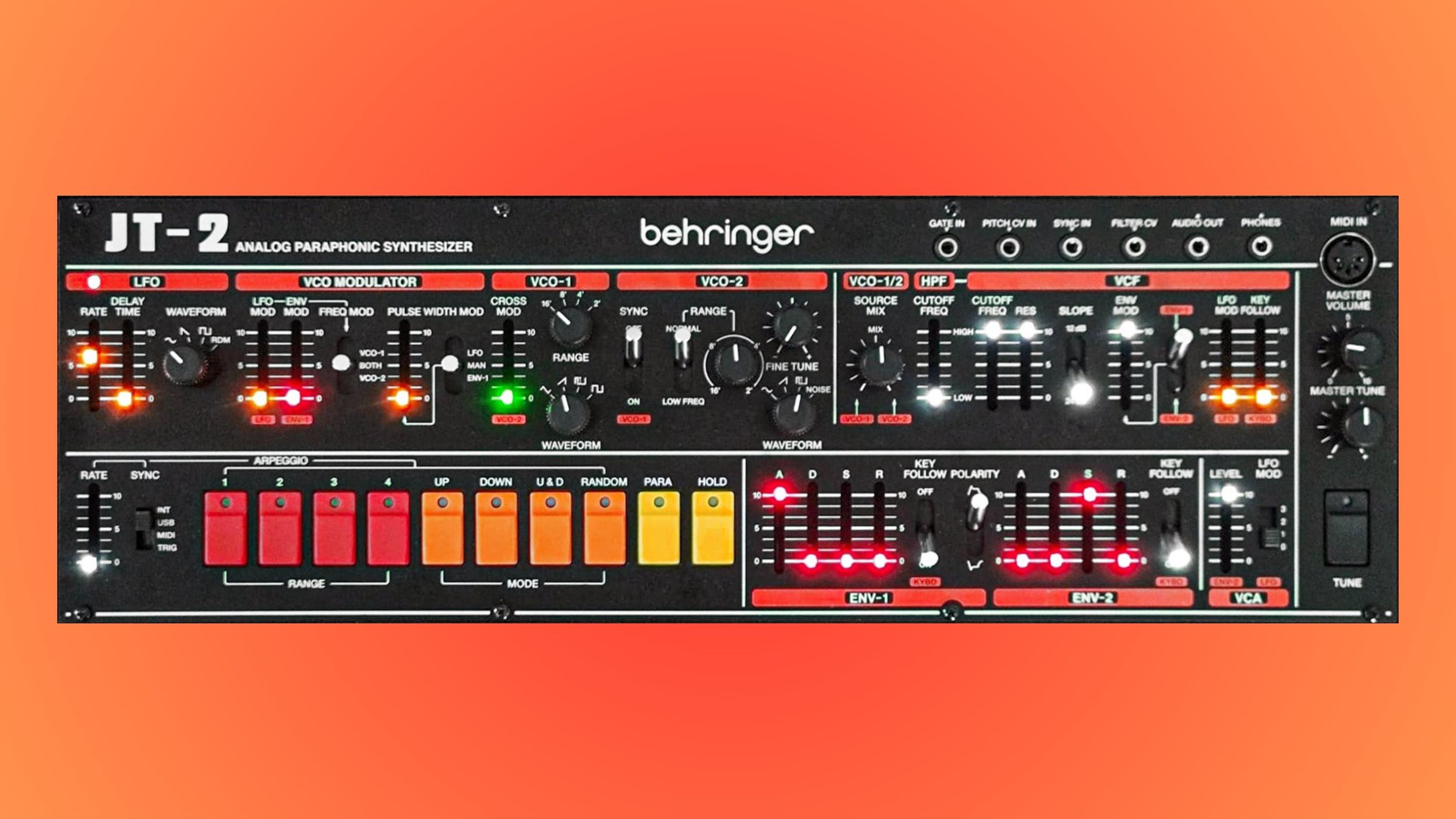
At NAMM 2026 Behringer has publicly displayed the JT-2, a Eurorack/desktop synth module that distills a single voice from the classic Roland Jupiter-8 into an analog paraphonic synth voice built around the same VCOs and VCFs as the original, with two oscillators, cross-modulation, sync, dual envelopes, LFO, plus autotune and an arpeggiator controlled via Jupiter-style buttons. The form factor and connectivity are clearly aimed at modular setups, with 3.5 mm CV/gate, sync and filter outputs alongside MIDI In, USB and a mono audio out on the rear panel.
Unlike a full Jupiter-8 clone it’s not fully polyphonic, relying on paraphonic behavior that suggests up to two notes but without independent VCF/VCA per voice. The panel layout mirrors Jupiter aesthetics but strips back features like preset storage and keyboards in favor of compact integration with Eurorack. Behringer has said this sits alongside their ongoing work on a full-key Jupiter remake, and while certain details like final polyphony behavior remain undefined publicly, the JT-2’s engine and controls are confirmed by onsite sightings.
Behringer has a bunch of synths in the works. Are they ever coming out? Check our full breakdown here!
More info about Behringer here
Bastl Instruments Citadel Alchemist
Bastl Instruments expands its Citadel Eurorack line with Citadel Alchemist, a modular adaptation of the Kastle 2 Alchemist that packs a hybrid synthesis engine into a 16 HP module driven by four digital oscillators and five distinct modes (FILTER, FM, SUPERSINE, SUPERSAW and GLITCHNOISE) for a broad timbral range. The Alchemist’s main TIMBRE sweep and RATIO control morph the synthesis character across these modes while dual FX give you delay on one side and a chorus/flanger/distortion/comb filter macro on the other, all accessible via Eurorack CV.
A pattern generator and LFO provide synced modulation and rhythmic CV/Gate outputs, and the module also forwards USB and TRS MIDI in/out, positioning it as both a sound source and a MIDI sequencer/controller within a rig. Bastl retains the reversible panel concept from the Citadel family, and like its Kastle counterparts the firmware ecosystem is open for user exploration, though how deep the open-source support goes remains a detail you’ll want to explore yourself.
For more info about the Bastl product line, check our post on the topic.
More info about Bastl here
Korg Berlin phase8
Korg Berlin is introducing phase8, an eight-voice acoustic/electro-acoustic synthesizer that uses physically vibrating chromatically tuned metal resonators driven by electromechanical actuators to generate sound rather than purely digital or traditional electronic oscillators, with up to 13 swappable resonators letting you install any eight you want for customized tuning and character. Each resonator responds to touch, pluck, tap or objects placed against it, and the instrument’s controls include per-voice envelopes, waveshaping, modulation, velocity sensitivity and a polymetric step sequencer with onboard recall.
An Air slider adjusts how strongly the acoustic resonators interact with physical gestures, and all parameters can be automated over the sequencer. Connectivity spans MIDI In/Out (TRS), USB MIDI, sync in/out, CV input, a main audio output and headphone jack, positioning phase8 for hybrid hardware setups. This project has been in development through multiple prototype stages and now looks close to production under the Korg Berlin brand, though details like full feature confirmation remain evolving.
More info about Korg here
Behringer BMX
Behringer showed off a prototype of the BMX, a new drum machine concept inspired by the Oberheim DMX that’s appearing in the wild at NAMM 2026, blending homage with modern tweaks. According to shared photos and descriptions from Behringer’s own social posts, the BMX pairs the original DMX’s classic samples with a built-in sampler and analog filter section, while retaining a familiar button and fader layout updated with expanded editing controls and a larger display.
Connectivity on the rear appears to include USB, MIDI, trigger/sync, individual outs, a summed main out and a sampling input, pointing to both standalone and integrated studio use. The prototype’s look—with Oberheim-style pinstripes and wood end cheeks—hints at a vintage aesthetic reinterpreted for a contemporary workflow. There’s no confirmed detail yet on the full feature set, sequencer capabilities, or final hardware behavior, and Behringer hasn’t publicly outlined production timelines or compatibility details.
More info about Behringer here
Akai MPC XL
Akai Professional has officially unveiled the MPC XL at NAMM 2026 as the new flagship standalone production workstation in its MPC lineup, succeeding the MPC X and bringing modernized hardware and workflow upgrades. The MPC XL packs a Gen 2 eight-core processor with 16 GB of RAM and 256 GB of internal storage, and runs the latest MPC 3.x OS, letting it load up to 32 plugin instruments, 16 audio tracks, and support up to 256 voices without a computer.
Its surface combines a large multi-touch display, 16 velocity-sensitive RGB MPCe pads, a dedicated touch strip and 16 Q-Link encoders with OLED feedback for hands-on control, paired with enhanced sequencing and sampling tools. Connectivity includes robust I/O with multiple analog inputs/outputs, USB-C, MIDI DIN ports, and CV/Gate outputs for modular gear integration. Official pricing is set at $2,899, and the MPC XL is available now through authorized dealers and select retailers.
More info about Akai here
Reloop RP-5000 MK4
The newly announced Reloop RP-5000 MK4 updates Reloop’s classic direct-drive DJ turntable with a stronger, club-ready motor and refined ergonomics while keeping the analog workflow familiar for vinyl DJs. It runs at three speeds (33 ⅓, 45, and 78 rpm) and offers a swappable pitch range for more creative tempo work, with a smooth, click-less pitch fader and a reverse mode for scratching and performance techniques.
The deck uses a statically balanced S-shaped tonearm with adjustable anti-skating and hydraulic lift, and the layout places play-critical controls where experienced DJs expect them to support natural, real-world use. Built with a precision die-cast aluminium platter and a reinforced chassis with improved vibration damping, the MK4 aims for consistent rotation and tactile control in both booth and home setups. It retains pro-level connectivity and design cues from earlier RP-5000 models, though full details on some aspects like bundled cartridges or compatibility with digital control systems remain unspecified in the initial announcements.
The company is also set to introduce the Reloop Flux Go, a pocket-sized, two-channel DVS interface for Serato DJ Pro.
Check price here
More info about Reloop here
Warm Audio Fluff Drive
The Warm Audio Fluff Drive is a new signature overdrive pedal developed with guitarist Ryan “Fluff” Bruce, designed as a modern take on the classic Tube Screamer-style circuit tailored for high-gain and metal rigs. It runs at 18 V for extra headroom with a switchable option to 9 V, and features standard Drive, Level, and Tone controls alongside a sweepable Mid-Enhance (150 Hz–2500 Hz), Low-Boost, and an onboard high/low noise gate with a top-mounted bypass switch.
Additional mini switches let players position the Mid-Enhance stage pre, post, or off relative to the gain circuit for flexible tonal shaping. Warm Audio says premium components including JRC4558 op-amps and discrete JFETs help deliver clarity and aggression across instruments from standard guitars to 7- and 8-string baritones. It comes in White and Teal finishes.
Warm Audio also announced the Retro 64, a new dynamic live/studio microphone inspired by the classic Electro-Voice 664 design, built for stage-ready vocal capture with strong off-axis rejection and feedback control.
More info about Warm Audio here
RANE SYSTEM ONE
The RANE SYSTEM ONE is RANE’s newly unveiled two-channel standalone DJ system built around motorized 7.2" platters and running Engine DJ onboard, positioning it as the first all-in-one standalone unit with real spinning decks for tactile performance. The system includes a vertical high-definition touchscreen with RGB waveforms, Stems support and onboard FX, and an “OmniSource” architecture that lets you mix from USB, SD, optional internal drive and supported streaming/cloud sources, with Serato DJ Pro and Algoriddim djay compatibility slated for early 2026.
Connectivity spans pro audio outputs, multiple media inputs, microphones with EQ and effects, plus Wi-Fi and Bluetooth, with additional lighting control features built in. RANE has also integrated performance-focused components like Precision Feel upfaders and a MAG FOUR crossfader as part of the hardware design. Official pricing and release date details are confirmed as announced at NAMM (roughly mid-$2,499 range), while broader availability timelines are still being finalized.
Check price here
More info about RANE here
BOSS Effects Pedals Plugin Expanded
Roland has launched the BOSS Effects Pedals plugin, bringing officially modelled versions of eight classic compact BOSS stompboxes into DAWs via VST3, AU, and AAX formats through Roland Cloud Ultimate membership. The initial library includes iconic models like OD-1 OverDrive, SD-1 Super OverDrive, DS-1 Distortion, PH-1 Phaser, each loaded one at a time in a simple interface faithful to the hardware’s controls.
Every effect delivers the genuine sound and response of the original pedal and adds DAW-friendly features such as input/output level controls and tempo sync for time-based effects. There’s no standalone purchase option yet: access is tied to the subscription service with a 30-day free trial available, and Roland plans to expand the core pedal library over time.
More info about BOSS here
Nord Electro 7
Nord’s Electro 7 continues the Electro series’ core mission: a gig-ready keyboard that’s fast, reliable, and built around the sounds working players actually need — pianos, electric pianos, organs, and a curated set of synth tones that cover a lot of ground without turning into a deep-programming workstation.
Rather than trying to reinvent the concept, Electro 7 feels like a refinement of Nord’s “grab-and-go” formula at a time when live rigs are getting more portable and hybrid, and players want instruments that stay immediate under pressure. In the premium stage-keyboard space, it represents a very specific value: tactile control, quick access to the essentials, and flexible shaping that doesn’t come with a steep workflow tax — ideal for performers and producers who want real keys in front of them while still operating inside a modern setup.
More info about Nord here
AlphaTheta RMX-Ignite
AlphaTheta’s RMX-Ignite stands out as an early 2026 announcement because it’s built for DJs who treat effects as part of the performance, not just a finishing touch. At a high level, it’s a next-gen multi-band effects processor with performance sampling integrated into the concept, designed to sit at the center of a DJ setup and make transitions, builds, and live edits feel more deliberate than basic filter sweeps.
It also lands at a moment where DJ gear is clearly moving toward hybrid workflows — mixing plus remixing, DJing plus live performance — and RMX-Ignite fits that direction cleanly. The overall idea feels like a modern continuation of the classic RMX-style approach: big playable controls, hands-on FX, and a setup that encourages physical, real-time interaction with the music instead of subtle background processing.
More info about AlphaTheta here
ASM Leviasynth — ASM’s new flagship hybrid synthesizer
ASM has officially introduced the Leviasynth, positioned as the next major instrument following the Hydrasynth line. It’s a 16-voice hybrid algorithmic synthesizer built around eight oscillators per voice, with a signal path that combines a dedicated analogue filter stage alongside multiple digital filter models, aiming to blend modern digital synthesis depth with analog-style shaping.
It’s available in two formats: a keyboard version with a 61-note Polytouch polyphonic aftertouch keybed, and a desktop version featuring 16 Polytouch pads. The engine supports deep modulation with multiple envelopes, LFOs, and a large modulation matrix, plus algorithm morphing and a built-in three-track sequencer, making it a serious option for players who want complex, performance-ready sound design in a single hardware synth.
Read our full break down of the Leviasynth here
More info about ASM here
Stylophone On-The-Fly Performance Sequencer
Stylophone has introduced the On-The-Fly Performance Sequencer, a hands-on hardware sequencer built for fast pattern creation and live manipulation. It keeps everything on the front panel, with dual 4-step sections that can expand into 16, 32, or 64 steps, plus eight switchable pattern chains, multiple playback directions, and step effects like skip, glide, ratchet, tie, rest, random, and more. Swing and tempo controls are also included, so sequences can be reshaped on the fly without stopping.
Connectivity is designed for flexible setups, with CV/Gate I/O, sync, and MIDI, letting it work standalone, with external synths, or inside a Eurorack system. Overall, it’s positioned less like a basic step sequencer and more like a performance tool for people who want immediate control and improvisation-friendly sequencing in a compact hardware format.
More info about Stylophone here
Viscount Legend 70s MKII Stage Piano
Viscount has announced the Legend 70s MKII, an updated version of its modular stage piano platform built around swappable sound modules. The MKII upgrades the hardware with dual DSP cores, a new EPROM for more program memory, and comes in two versions: Compact (with a Fatar TP/110 keybed) and Artist-W (with a wooden keybed).
Viscount is also adding two new modules: an FM Synth Module with bi-timbral 6-operator FM and 16 voices per layer, plus a software editor, and an A. Piano 2G Module that doubles sample memory and introduces updated acoustic piano sounds. Both modules are confirmed to work with the original Legend ’70s as well.
More info about Viscount here
Korg — microAUDIO + Kaoss Pad V
Korg is already having a busy NAMM 2026 cycle, with multiple confirmed product announcements that feel like real news instead of vague teasing. Early on, the company revealed its microAUDIO interface lineup — the microAUDIO 22 and the more creatively oriented microAUDIO 722 — both compact USB-C 2-in/2-out interfaces designed for studio-friendly I/O and DSP-based tools. The 722 pushes the concept further by adding a resonant analogue-filter style signal path, which Korg says can work as both a standalone creative processor and a performance-ready interface.
Korg also announced the Kaoss Pad V, a new take on its touch-controlled effects and performance sampler concept. It features a redesigned dual-touch interface, expanded effects (including vocal processing and filter tools), and broader connectivity with dedicated instrument and microphone inputs plus USB audio integration. It’s also notable because it’s the first full-size Kaoss Pad-series release in over a decade, making it one of Korg’s most meaningful performance-focused updates in years.
More info about Korg here
Stay tuned…
I’ll keep this post updated as more gear gets officially announced and more speculation turns into real products. If you’re a producer, DJ, or just someone who likes staying ahead of what’s coming next, this page is meant to stay useful all week: confirmed news first, then the most realistic watchlist items as the picture gets clearer.
NAMM 2026 FAQ
What is NAMM?
NAMM is the major industry trade show where music gear companies show new instruments, studio tools, DJ hardware, and software to press, retailers, and artists. Even if you’re not attending, it’s still one of the biggest moments of the year for new releases and announcements.
Where is NAMM held?
NAMM is held in Anaheim, California, and it’s typically centered around the Anaheim Convention Center area.
Is NAMM open to the public?
NAMM is primarily a trade event, so it isn’t generally a public consumer show. Most people follow along through press coverage, videos, and official brand announcements.
When do NAMM products actually ship?
It depends. Some products go on sale immediately, while others are announced as “coming soon” and may take months to become widely available.
Updated: January 24 2026 to include news about Soundtoys, Hercules, and Casio.
Disclosure: This site contains affiliate links. If you purchase through these links, I may earn a commission at no extra cost to you.