
ASM Leviasynth Unveiled: Hydrasynth Walked So This Hybrid Algorithmic Synth Could Run
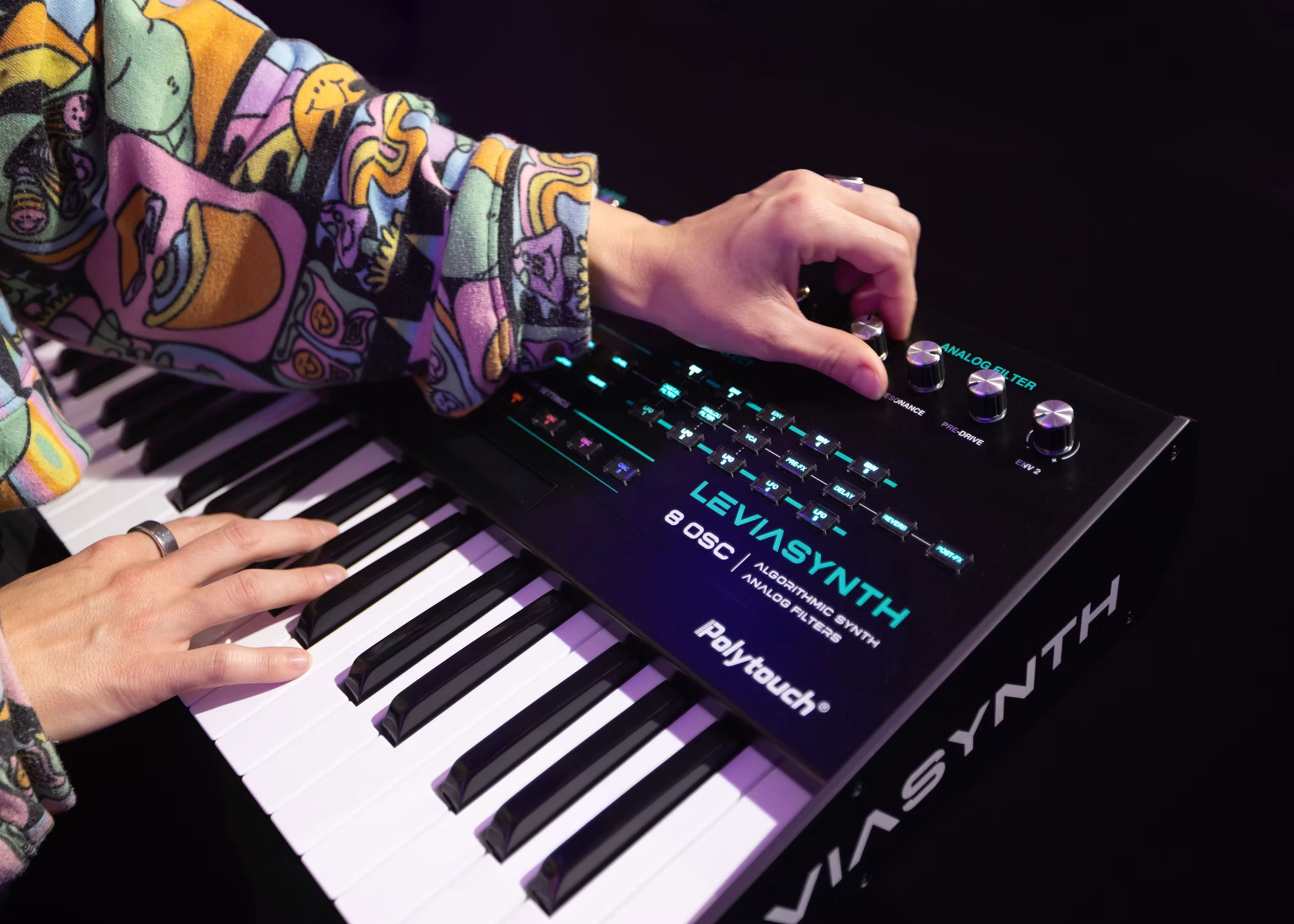
Ashun Sound Machines (ASM), the company behind the Hydrasynth series, has formally unveiled the Leviasynth at NAMM 2026. Positioned as a new flagship hybrid algorithmic synthesizer, Leviasynth shifts ASM’s architecture into a modern interpretation of multi-operator synthesis with a distinctly hybrid digital/analog signal path. Rather than being described strictly as an FM instrument, ASM frames the Leviasynth’s engine around algorithmic synthesis — a system of 8 oscillators per voice across 16 voices, organized into configurable operator algorithms that go beyond classic frequency modulation. Early announcements highlight both keyboard and desktop versions, extensive modulation resources, and a deep sound-design focus.
TL;DR
ASM Leviasynth is a 16-voice hybrid algorithmic synthesizer with 8 oscillators per voice.
Oscillators are arranged into configurable algorithms (144 presets plus custom slots) that shape modulation relationships.
Hardware comes in keyboard (61-note Polytouch with ribbon) and desktop module versions.
Integrated colour touchscreen UI, deep modulation (LFOs/Envelopes), and MPE compatibility.
Includes performance features like an onboard sequencer and macro capture, plus extensive effects and filter options.
What We Know So Far
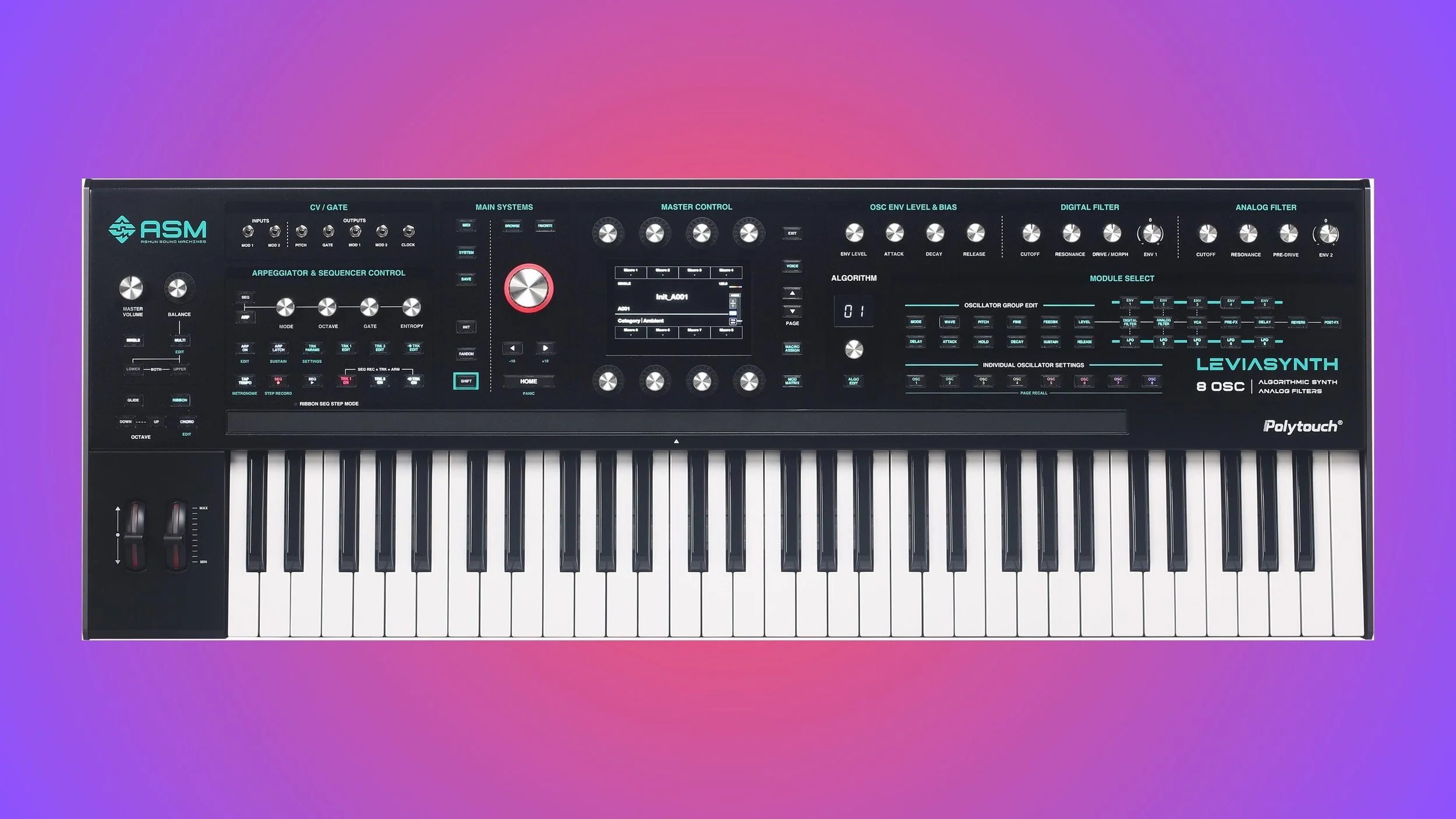
Confirmed info so far paints Leviasynth as a flagship 16-voice polyphonic synth built around an 8-oscillator-per-voice engine, with those oscillators arranged into configurable algorithms (ASM mentions 144 preset algorithms plus room for custom setups). Each oscillator can pull from a large pool of 300+ waveforms, and the engine supports multiple digital synthesis behaviors beyond classic FM, including phase modulation, PWM, sync, and phase distortion. On the filtering side, Leviasynth is explicitly hybrid: it combines a 4-pole analog low-pass filter with 18 digital filter types, giving you both analog weight and more characterful digital shaping in the same instrument.
Hardware-wise, ASM is offering two versions: a 61-key keyboard with Polytouch and a ribbon controller, plus a desktop module version that swaps keys for Polytouch pads. The interface includes a colour touchscreen, and the synth is described as having deep modulation resources (including a 32-slot modulation matrix) and MPE compatibility for expressive controllers. Performance tools include an onboard 3-track sequencer with the ability to capture note data and macro automation, plus Single/Multi setups for splits and layers—so it’s not just a sound-design engine, it’s built to be organized and played like a performance instrument.
Workflow and Real-World Use
In practice, Leviasynth looks designed for people who want complex synthesis without turning every patch into a homework assignment. The workflow is basically: pick an algorithm (or build one), shape your oscillator tones, then assign a few key controls so the sound becomes playable. The combination of hands-on controls and the touchscreen should make it easier to navigate the “deep stuff” quickly—especially when you’re doing modern sound design where movement matters as much as the starting tone. If you like the Hydrasynth mindset of expressive, evolving patches, Leviasynth seems to push that idea into a more operator/algorithm-driven direction.
For studio use, the big win is that it can cover both “main synth” duties and more experimental layers, since the engine can do clean, harmonic sounds just as easily as aggressive, shifting textures. The onboard 3-track sequencer and macro automation capture also suggest a workflow where you can perform motion into a patch and record it as audio (or as a playable sequence), rather than drawing automation lanes forever in your DAW. Live, the two formats make the intent clear: the keyboard model is for expressive playing with a full performance surface, while the desktop version feels aimed at hardware rigs where you want the sound engine and control, but not another big keybed on stage.
Alternatives to Consider
If you’re looking at Leviasynth for its operator/algorithm-style synthesis you might want to consider other options. For example, the Elektron Digitone is probably one of the most practical current choices. It uses a 4-operator FM engine with Elektron’s signature performance and sequencing workflow, making it well-suited to producers who want to build patterns and evolving digital tones as part of their creative process. Its compact form factor and hands-on interface let you explore intricate timbres without going deep into menus, and it fits naturally alongside other gear in both studio and live setups.
For players who want different takes on FM or hybrid digital sound in other price ranges, the Korg opsix reimagines six-operator FM with a more immediate, knob-centric control set that can feel more accessible than traditional operator synths. And on the budget end, the Korg Volca FM2 brings classic FM synthesis into a compact, affordable box with a simplified workflow that still lets you dial in characteristic FM tones, sequences, and patterns without a big investment. The Modal Electronics ARGON8 MkII represents a broader hybrid approach: it’s a digital polysynth with FM routing alongside wavetable and virtual-analog elements, which makes it useful for producers who want FM textures mixed with other digital synthesis methods rather than FM as the sole focus. These alternatives cover a range of needs from performance sequencing to accessible FM exploration to wide-ranging hybrid sound design.
Final Words
The ASM Leviasynth looks built for producers and performers who want deep operator-style / algorithmic synthesis in a modern hardware format—plus the kind of expressive control that turns complex patches into playable instruments. It’s a flagship-level take on FM-adjacent sound design that feels modern rather than stuck in classic DX territory.
If you want something simpler, cheaper, or already proven through months of real-world use, it’s worth waiting. The next things to watch are official pricing and availability by region, and more hands-on demos showing how the workflow, performance controls, and Multi setups actually feel outside of spec sheets.
NAMM 2026 is happening right now, and the synth + music tech news is already rolling in fast.
Click here for the latest NAMM 2026 updates on synths, plugins, and pro audio.
Disclosure: This site contains affiliate links. If you purchase through these links, I may earn a commission at no extra cost to you.