
AlphaTheta DJM-V5: The Compact 3-Channel Mixer With A Big DJM Energy
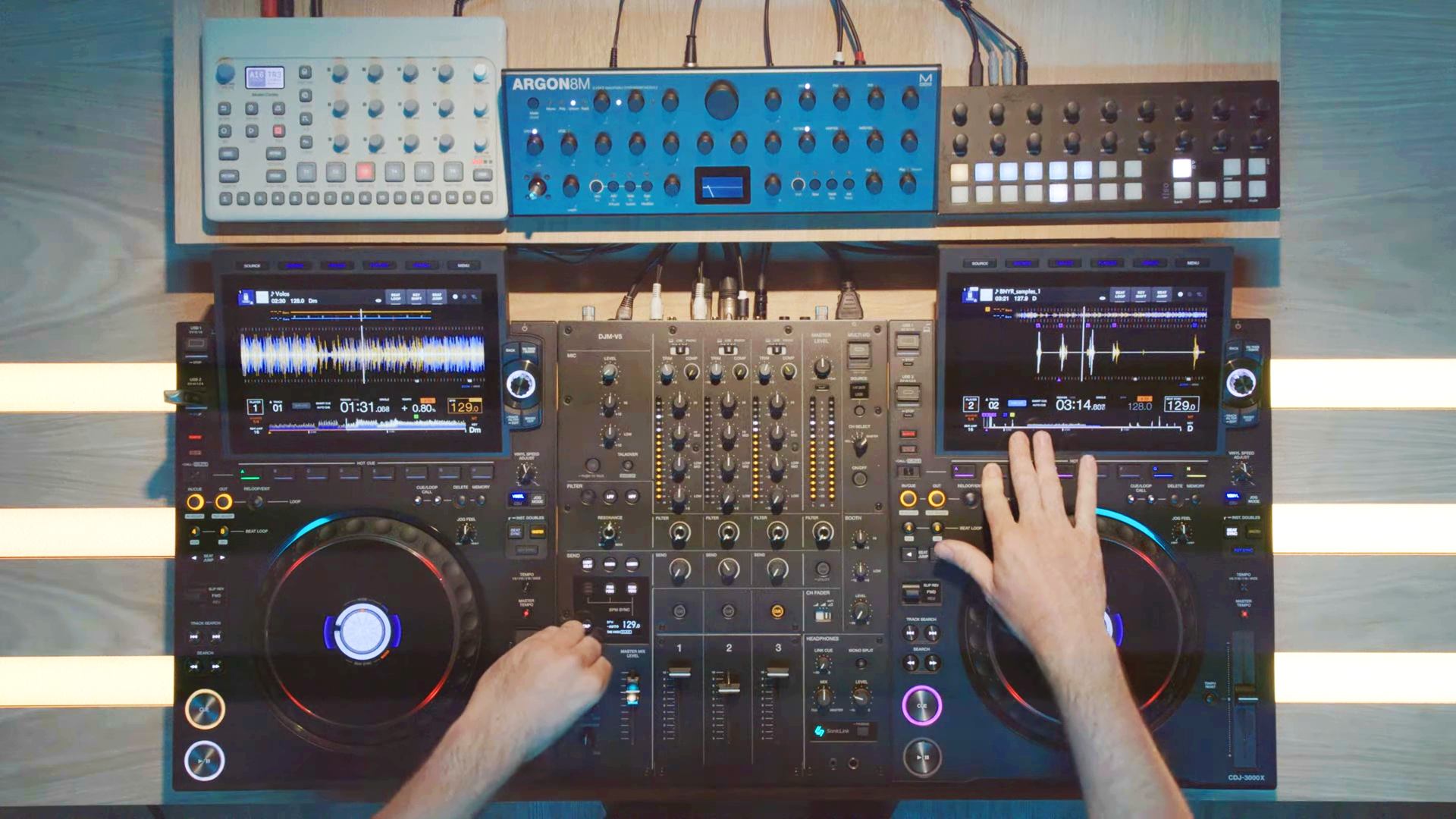
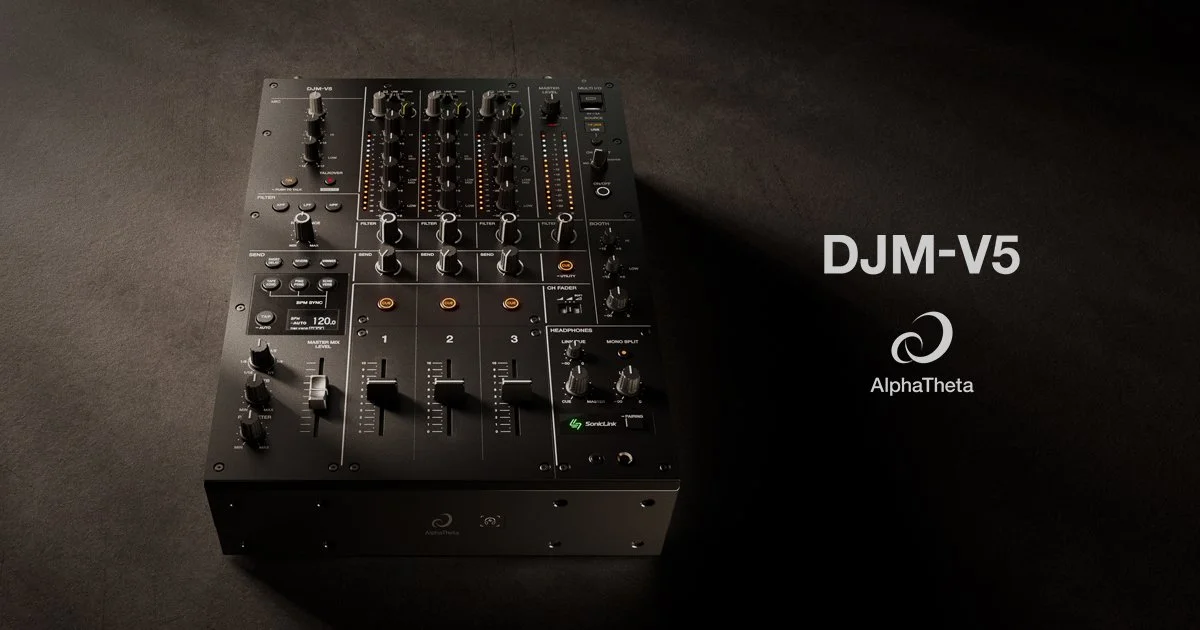
AlphaTheta’s DJM-V5 is a newly announced 3-channel DJ mixer that distills core elements of its flagship into a smaller format aimed at DJs working in tighter spaces or hybrid setups. It surfaces at a time when compact yet capable mixers are increasingly central to creative performance workflows, and brings a defined focus on tonal control and flexible signal shaping rather than sheer channel count. Across the reports we have so far, the V5 blends four-band EQ, per-channel compressors, six send effects, and a trio of filter modes including a new cross-pass filter that targets mids and highs while preserving bass energy. It also introduces SonicLink wireless monitoring for compatible headphones, and keeps robust connectivity for DJ software and external gear. Pricing and availability are confirmed in some regions but vary; other details remain unconfirmed.
TL;DR
3 channels with long-throw faders; no crossfader confirmed.
Four-band EQ and per-channel compression inherited from the flagship architecture.
Six send FX (Short Delay, Reverb, Shimmer, Tape Echo, Ping Pong, Echo-Verb).
Filter modes include low-pass, high-pass, and new cross-pass.
SonicLink wireless headphone monitoring and DJ software connectivity confirmed.
What We Know So Far
AlphaTheta’s DJM-V5 is a newly announced 3-channel DJ mixer that’s being positioned as a more compact, more affordable take on the company’s flagship DJM-V10 approach—without trying to be a “mini club mixer” in the traditional sense. The core identity here is about giving DJs more hands-on sound shaping than you’d expect from a smaller format, with features like 4-band EQ, per-channel compression, and send effects built into the workflow rather than treated as optional extras.
What’s confirmed so far is that the V5 includes six send FX (Short Delay, Reverb, Shimmer, Tape Echo, Ping Pong, Echo-Verb), plus filter modes that include low-pass, high-pass, and a new cross-pass filter that targets the mids/highs while keeping the bass present. It also introduces SonicLink wireless monitoring (Not confirmed yet: full compatibility details beyond what’s stated in the sources), and it’s described as having 3 channels with long-throw faders. Not confirmed yet: full global pricing and release timing beyond what’s reported.
Workflow and Real-World Use
In practice, the DJM-V5 looks built for DJs who mix in a more “layered” way—where transitions aren’t just about swapping tracks, but about sculpting how two (or three) sources sit together. Having 4-band EQ and channel compression on a compact mixer suggests a workflow where you can keep blends controlled and intentional without constantly fighting peaks, harsh highs, or low-end pileups. It reads like a mixer designed for long, detailed transitions and modern performance mixing, especially if you like to keep things moving without relying on aggressive cuts.
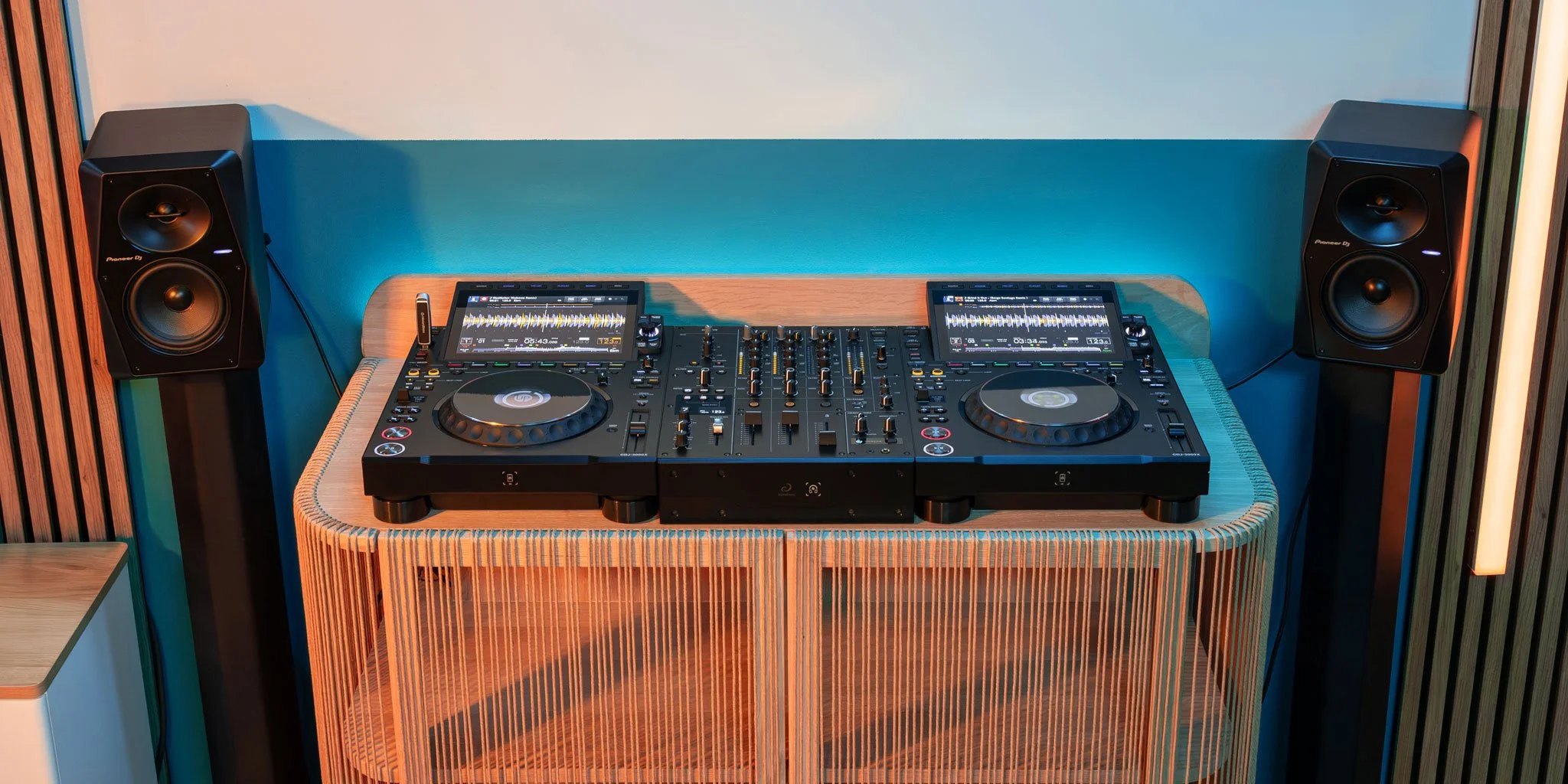
The other real-world angle is flexibility: the V5 is positioned as something that can sit in a smaller booth setup or a tighter home studio rig without feeling “entry-level.” SonicLink wireless monitoring could change how you cue in cramped environments (or in setups where you want fewer cables in the way), while the confirmed send FX lineup points toward performance styles that treat effects like part of the groove—small rhythmic delays, atmosphere, and texture—rather than occasional transitions-only tricks. Not confirmed yet: exactly how deep the routing options go beyond what’s stated, or how it compares in feel/latency to traditional wired cueing.
Alternatives to Consider
If you like the idea of a compact mixer with modern effects and a familiar club-style layout, AlphaTheta’s own DJM line is the obvious place to look. Something like a DJM-A9 is still the safer pick if you want something widely installed in booths and built around a more traditional “big room” workflow, especially for DJs who want that familiar Pioneer/AlphaTheta feel everywhere they play. Meanwhile, the DJM-V10 remains the high-end alternative if your priority is maximum channel flexibility and a flagship feature set, rather than a streamlined 3-channel approach.
Outside that ecosystem, Allen & Heath’s Xone mixers are the practical alternative if your priorities are sound character and hands-on mixing feel, especially for long blends and EQ-driven transitions. They tend to appeal to DJs who want a more “mixing desk” mentality, even if the effects approach and overall feature balance differs from what AlphaTheta is pitching here. And if you’re looking for a more performance-forward digital workflow, brands like Denon DJ sit in the broader conversation too—often chosen by DJs who want flexibility and modern connectivity first, even if the mixer experience and effects philosophy aren’t trying to mirror the DJM/V-series identity. Not confirmed yet: a full apples-to-apples comparison of exact I/O, effect routing, and monitoring behavior versus these options.
For more choices and all the details, check our post about the best DJ mixers.
Pros
3-channel layout that stays compact while still supporting layered mixing workflows
4-band EQ + per-channel compression for tighter blends and more control over busy mixes
Six send FX - Short Delay, Reverb, Shimmer, Tape Echo, Ping Pong, Echo-Verb
SonicLink wireless headphone monitoring support (details depend on compatible headphones)
Cons
Compact format may be limiting if you need more than 3 channels for your usual setup
Final Words
The DJM-V5 looks like it’s for DJs who want a compact mixer that still feels “serious,” with deep tone control and performance tools that support detailed blending and modern hybrid sets. If you’ve ever wanted a smaller setup without giving up the kind of shaping you’d expect from higher-end mixers, this is clearly aimed at that lane.
If you’re a scratch-focused DJ who needs a classic battle-style workflow, or you rely on a higher channel count as your default, this might not be the right fit. The main things to watch next are the remaining unconfirmed details—full release timing by region, complete connectivity specs, and exactly how SonicLink monitoring behaves in real performance conditions.
Disclosure: This site contains affiliate links. If you purchase through these links, I may earn a commission at no extra cost to you.