
Roland SP-404MKII vs. AIRA P-6: Which One Should You Buy?
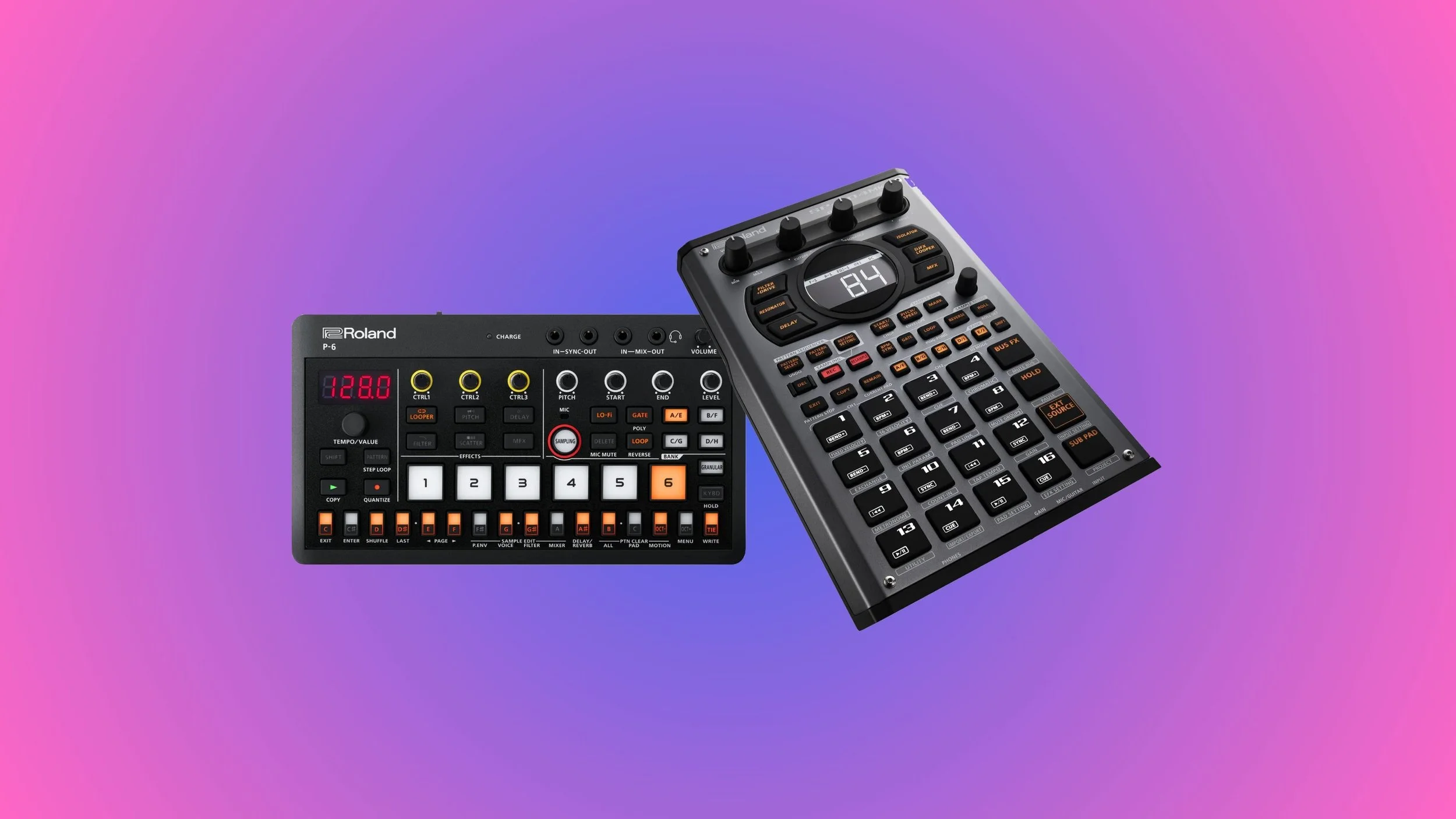
Some gear comparisons stick around because they’re not really about features — they’re about how you like to create. The debate between the Roland AIRA Compact P-6 and the Roland SP-404MKII falls squarely into that category. On the surface, both are samplers. In reality, they represent two very different approaches to making music in 2025: one focused on speed, portability, and experimentation, the other built around performance, depth, and commitment to a track. Sampling culture has quietly split into two lanes. One lane is about capturing ideas wherever you are — short loops, textures, fragments, happy accidents — and letting limitation drive creativity. The other is about turning sampling into an instrument in its own right, something you play, resample, process, and perform with intention. The P-6 and the SP-404MKII sit at opposite ends of that spectrum. Neither replaces the other, and neither is trying to. The real question isn’t which one is “better,” but which one matches the way you actually work right now.
What’s the difference in a sentence?
P-6 = fast, playful, experimental sampling wherever you are.
SP-404 = deliberate, hands-on sampling built for performance and finishing music.
There’s no wrong choice — but there is a right one depending on whether you’re chasing sparks or building fires.
The Lowdown
If you want a pocket-sized sampler built for quick ideas and creative play, start with the P-6. It’s designed to be grabbed at a moment’s notice — sample something, twist it, sequence it, move on. The emphasis is on momentum: fast capture, granular-style manipulation, and a deceptively deep sequencer that encourages experimentation without demanding long sessions. It feels less like a production tool and more like a musical sketchbook you can take anywhere.
If you want a sampler that can anchor a studio or live setup, go with the SP-404MKII. This is a performance instrument first and foremost. Bigger controls, deeper editing, more effects routing, and workflows built around resampling and playing patterns live. It rewards time spent with it, and it shines when you want to shape full tracks, rehearse sets, or perform with intent rather than just collect ideas.
What Each Device Is
What Is the Roland AIRA Compact P-6?
The Roland AIRA Compact P-6 is best understood as a creative sketch sampler, not a miniature version of a full workstation. Its design is centered around immediacy: quick sampling, fast pattern building, and playful manipulation of sound. You’re encouraged to grab short snippets, loop them, mangle them, and move forward without overthinking. It’s not trying to hold your entire track — it’s trying to capture the moment when an idea first appears.
What really defines the P-6 is how it frames limitation as a feature. The compact layout, short samples, and sequencer-driven workflow push you toward experimentation rather than precision editing. Granular-style manipulation, probability-based sequencing, and motion recording make it feel more like a sound toy with depth than a traditional sampler. It shines when you treat it as a notebook for rhythm, texture, and movement — something that keeps ideas alive before they harden into “serious” productions.
What Is the Roland SP-404MKII?
The Roland SP-404MKII sits at the opposite end of the spectrum. It’s a performance-focused sampler designed to be played, resampled, and shaped over time. Rather than prioritizing speed above all else, it prioritizes control — bigger pads, deeper editing, layered effects routing, and workflows that reward patience and repetition. This is a device you grow into rather than one you breeze through.
The SP-404MKII treats sampling as an instrument in its own right. You don’t just load sounds and trigger them — you build chains, resample your own processing, and let effects become part of the composition. It’s equally comfortable in a studio, a live set, or a hybrid DJ setup, and it encourages commitment: once an idea is in the machine, you stay with it, shape it, and push it until it becomes something finished. Where the P-6 is about capturing sparks, the SP-404MKII is about turning those sparks into something you can perform and stand behind.
Workflow & Feel: Making Music on Each Device
Using the Roland AIRA P-6 feels fast, loose, and intentionally unfinished. You sample something, drop it into a pattern, start nudging steps, add probability, record a bit of motion, and suddenly you’ve got momentum. The device pushes you forward instead of inviting you to stop and refine. You’re rarely thinking in terms of “this is the final version” — you’re thinking in loops, variations, and happy accidents. It’s very easy to lose track of time in a good way, because the barrier between idea and sound is so low.
The flip side of that freedom is that the P-6 doesn’t really want you to slow down. Fine-grained editing, long-form arrangement, and detailed sample surgery aren’t the point. If you approach it expecting the control of a traditional sampler, it can feel cramped. But if you treat it like a rhythm-and-texture generator — something that feeds ideas into your larger workflow — it feels alive and inspiring. It’s the kind of box you reach for when you want something to happen quickly.
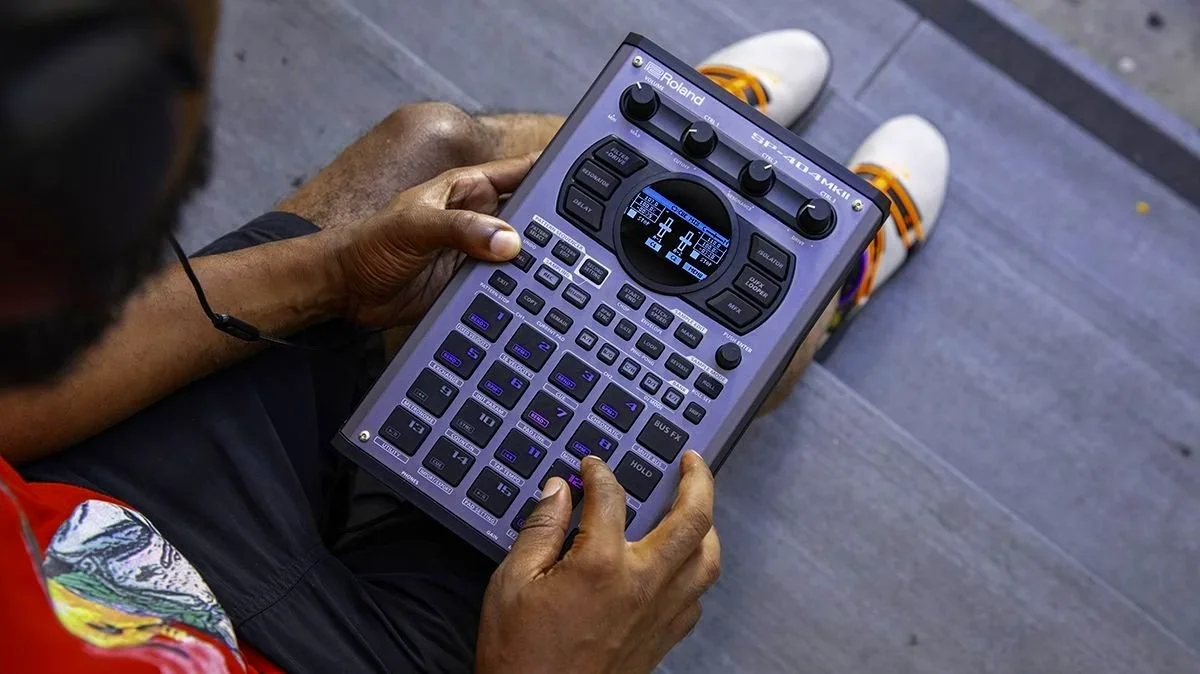
Working on the Roland SP-404MKII feels more deliberate. There’s a sense that you’re sitting down to work on a piece of music, not just sketch one. Sampling takes a bit more intention, but in return you get clearer editing, more confident control over levels and effects, and a workflow built around resampling and refinement. You start to think in layers: sample → process → resample → arrange → perform. It encourages commitment in a way the P-6 intentionally avoids.
That added depth changes how you relate to your ideas. On the SP-404MKII, a loop is rarely “just a loop” — it’s a building block that gets shaped, bounced, and recontextualized until it becomes part of a finished track or live set. The pads invite performance, the effects feel playable, and the whole device rewards muscle memory over time. It’s slower than the P-6 in the moment, but much stronger when you want to stay with an idea and push it all the way to something you’d actually release or perform.
Sound, Effects & Creative Character
The Roland AIRA Compact P-6 leans into playful sound transformation rather than polish. Its identity is tied to movement: granular-style manipulation, shifting playback behavior, and modulation that makes even simple samples feel unstable in interesting ways. Sounds don’t sit still for long. A short vocal chop can quickly turn into a rhythmic texture; a drum hit can smear into something melodic. The P-6 feels happiest when you’re pushing it — nudging parameters, recording motion, letting probability introduce variation. The results are often rough around the edges, but that’s part of the appeal.
What you don’t get from the P-6 is a sense of finality. Its effects and processing are there to provoke ideas, not to make something sound “finished.” It excels at weird, textural, left-field moments — the kind of sounds that later become hooks, fills, or background movement once exported into a DAW or another sampler. Think of it as a generator of raw material with personality, rather than a box designed to deliver mix-ready results on its own.
The Roland SP-404MKII, by contrast, treats effects as a core musical language. Its sound character is inseparable from its processing — filters, distortion, compression, vinyl-style coloration, spatial effects — all designed to be stacked, abused, and resampled. You’re not just adding effects to sounds; you’re baking them in. A dry sample rarely stays dry for long. The device encourages you to commit to processing decisions and build a track’s identity around them.
Because of that, the SP-404MKII often sounds more cohesive and finished, even early on. Lo-fi beats, gritty hip-hop textures, saturated techno loops, washed-out ambient layers — they all feel at home here. The effects aren’t subtle by default, but they’re musical, and they invite performance. Turning knobs, muting buses, resampling chains — it all feels like playing an instrument rather than tweaking a plugin. Where the P-6 thrives on instability and surprise, the SP-404MKII thrives on character, weight, and commitment.
Sequencing, Performance & Arrangement
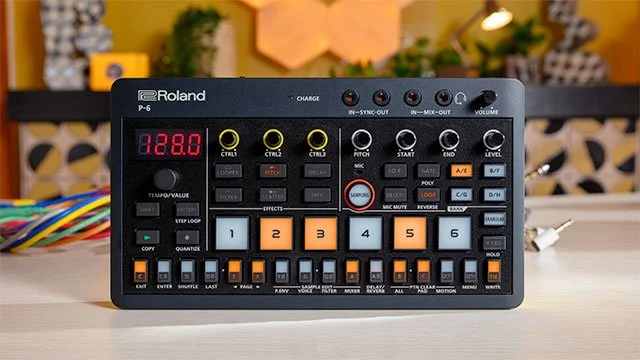
Sequencing on the Roland AIRA Compact P-6 feels experimental by design. Patterns come together quickly, and instead of pushing you toward linear arrangement, the P-6 encourages variation. Probability, micro-timing, sub-steps, and motion recording all work together to keep patterns feeling alive rather than locked in. You’re nudging things, not programming them to perfection. A beat can subtly change every time it loops, and that sense of instability becomes part of the music.
What the P-6 doesn’t really want to be is a full arranger. It’s not built for long song structures or carefully plotted transitions. Instead, it shines when you treat patterns as moments — loops that evolve, break down, and mutate. Performance here is more about letting the machine surprise you than executing a rehearsed sequence. It’s ideal for sketching grooves, building rhythmic ideas, or generating material that later gets developed elsewhere.
The Roland SP-404MKII approaches sequencing and performance from a much more intentional angle. Patterns feel like foundations rather than experiments, and the layout encourages you to think in terms of sections and transitions. Pads are central — they invite finger drumming, live triggering, and hands-on control. Combined with resampling and effects routing, performance becomes layered: you’re not just playing sounds, you’re playing versions of sounds you’ve already processed and committed to.
This is where the SP-404MKII earns its reputation as a live instrument. You can rehearse with it, build muscle memory, and perform with confidence. Muting parts, bringing effects in and out, resampling on the fly — all of it feels designed for someone standing in front of an audience or working toward a finished arrangement. Where the P-6 thrives on looseness and chance, the SP-404MKII thrives on control, flow, and performance-ready structure.
Alternatives to Consider
If neither the Roland AIRA Compact P-6 nor the Roland SP-404MKII feels like a perfect fit, there are a few adjacent options worth thinking about — each sitting in a slightly different lane.
The Teenage Engineering EP-133 K.O. II is a strong alternative if you like the idea of a portable sampler but want something more performance-oriented than the P-6. It trades granular experimentation for a more immediate, pad-based workflow that feels playful and musical. It’s still very much a sketchpad, but one that leans more toward beatmaking than texture manipulation.
If what attracts you to the SP-404MKII is its resampling philosophy but you want something more traditional in terms of sequencing, the Elektron Digitakt sits in an interesting middle ground. It’s more rigid and structured, but its sequencing depth and tight workflow make it appealing if you like deliberate, step-based composition and don’t need the SP’s performance FX identity.
For producers who want a sampler that feels closer to a full production hub, the Akai MPC Live II offers far more power and structure than either Roland option. It’s less about happy accidents and more about finishing tracks entirely inside one box — great if you want an all-in-one system, less ideal if you value immediacy and limitation.
P-6 vs. SP-404MKII: Which One Is Right for You?
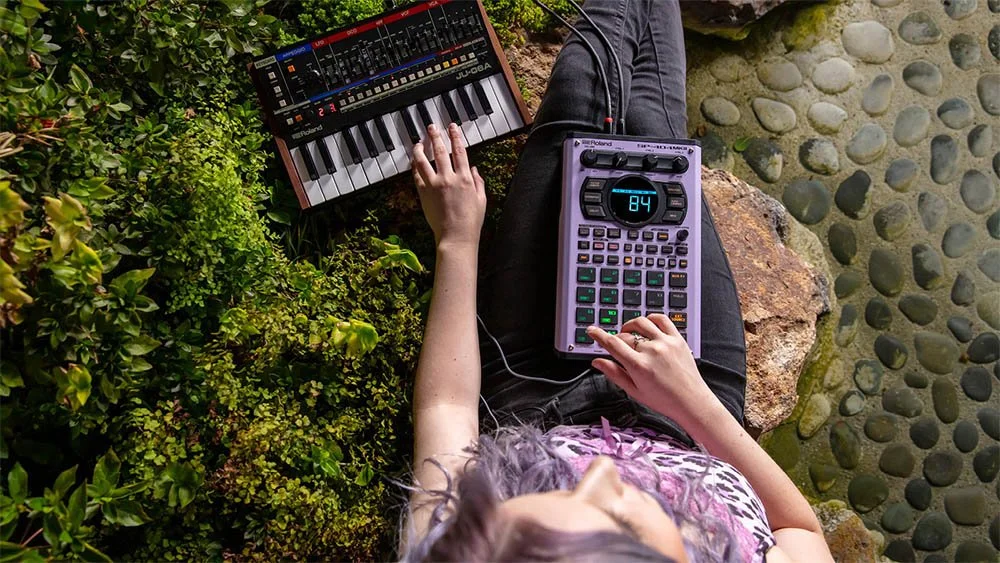
If you’re choosing between the Roland AIRA Compact P-6 and the Roland SP-404MKII, the decision really comes down to when and why you sample.
Go with the P-6 if your best ideas happen quickly and unpredictably. It’s for moments when you want to capture something before it slips away — a rhythm, a texture, a strange loop — without turning it into a full production session. It thrives on limitation, play, and movement, and it works best as a creative spark rather than a destination.
Choose the SP-404MKII if you want sampling to be central to your music-making. It’s a device you sit down with, learn deeply, and build around. Whether you’re shaping full tracks, preparing a live set, or leaning hard into resampling and effects as part of your sound, it rewards commitment and intention in a way the P-6 deliberately avoids.
Neither replaces the other, and that’s exactly why this comparison exists. If you’re honest about how you work — not how you think you should work — the right choice becomes pretty obvious.
Disclosure: This site contains affiliate links. If you purchase through these links, I may earn a commission at no extra cost to you.