
Behringer Pro-VS Mini Review: The Small Vector Synth That Could
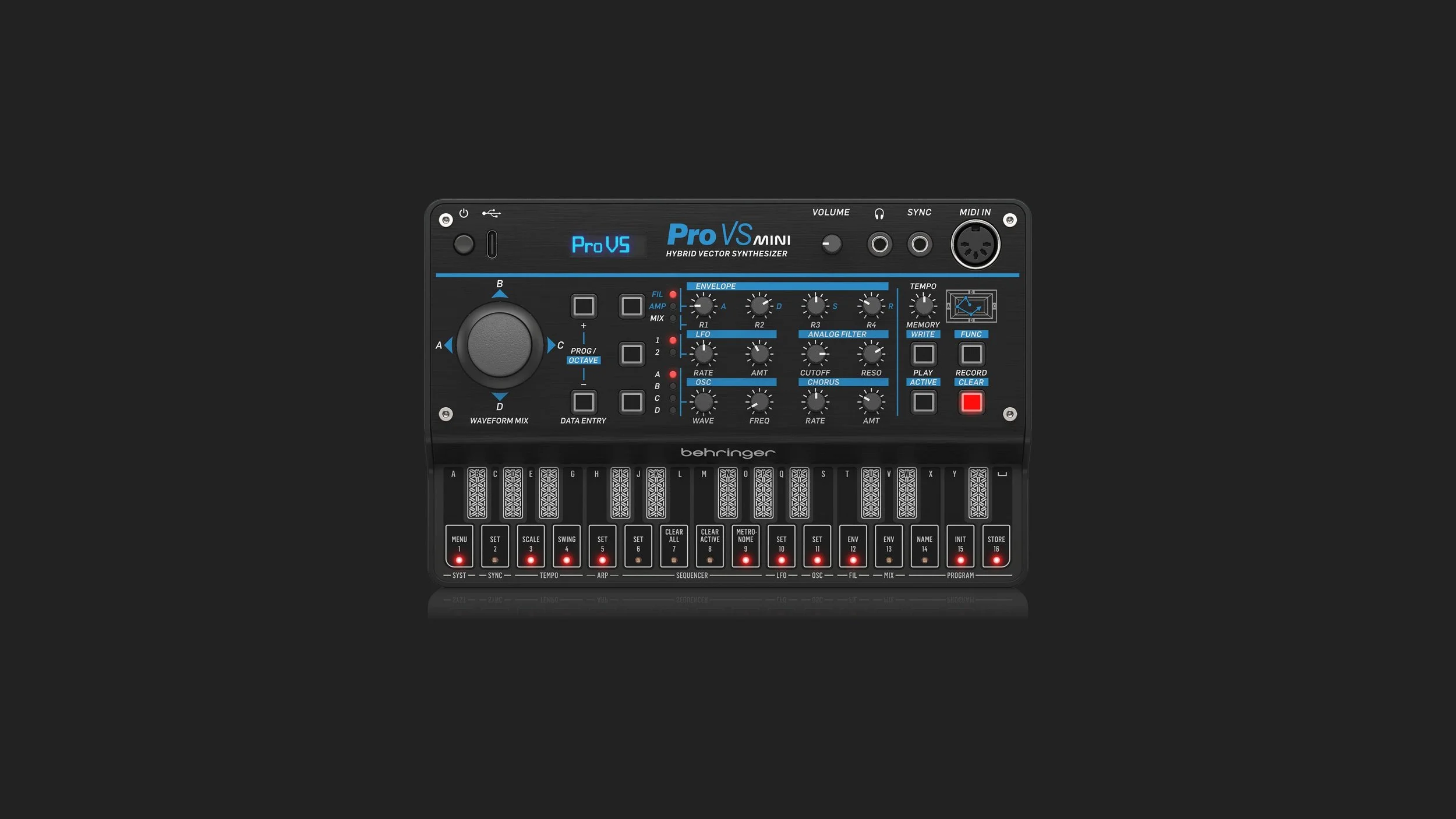
Vector synthesis has always occupied a strange but fascinating corner of synth history. Instead of focusing on classic subtractive warmth or FM complexity, instruments like the Prophet VS were built around motion—blending digital waveforms in real time to create sounds that constantly evolve. It’s a synthesis method that never became mainstream, but it left a lasting impression on anyone drawn to expressive, shifting textures rather than static tones. The Behringer Pro-VS Mini brings that idea back in a compact, affordable format, combining digital oscillators, joystick-based vector control, and an analog filter into a small desktop synth. Rather than trying to cover every synthesis style, it focuses on a specific sound identity: animated digital timbres shaped through hands-on movement. This review looks at how well that concept translates into a modern, miniaturized instrument—and who it actually makes sense for today.
The Pro-VS Mini rewards patience over chops — it's a texture instrument for animated pads and evolving sounds, not a polysynth for dense chords or fast keyboard work.
Quick specs
Voices: 4-voice paraphonic
Oscillators: 4 per voice, wavetable vector morphing
Filter: Analog low-pass
Keys: 27 touch-sensitive
Sequencer: 16-step
Connectivity: USB, DIN MIDI, sync in/out
Price: Check here
Sound Engine, Vector Synthesis & Sound Character
At the core of the Pro-VS Mini is a hybrid sound engine built around four digital oscillators per voice, blended using classic vector synthesis principles. Each oscillator can be assigned a different waveform, and the balance between them is controlled in real time via the joystick. Rather than switching or layering sounds in a fixed way, the instrument is designed to move continuously between timbres, creating patches that feel animated even before modulation is applied. This approach immediately sets it apart from subtractive-focused mini synths that prioritize static tone shaping.
Those digital oscillators are routed through an analog low-pass filter, which plays an important role in grounding the sound. The filter doesn’t try to turn the Pro-VS Mini into an analog polysynth, but it does smooth out the edges of the digital waveforms and add weight when needed. In practice, this hybrid topology works best when the filter is used as a shaping tool rather than the main attraction—taming brightness, emphasizing movement, or adding subtle resonance as the vector mix shifts.
Sonically, the Pro-VS Mini leans toward evolving pads, motion-heavy textures, and slightly glassy digital tones rather than thick, stacked poly sounds. Polyphony is limited, which encourages restraint and reinforces the idea that this is a texture and character instrument first. It excels when sounds are allowed to breathe and change over time, especially with slow joystick movements or gradual modulation. If you’re expecting convincing vintage analog emulations or dense chord work, this isn’t where the synth shines—but if animated, expressive digital timbres are the goal, the sound engine is clearly built with that in mind.
Interface, Controls, Workflow & Integration
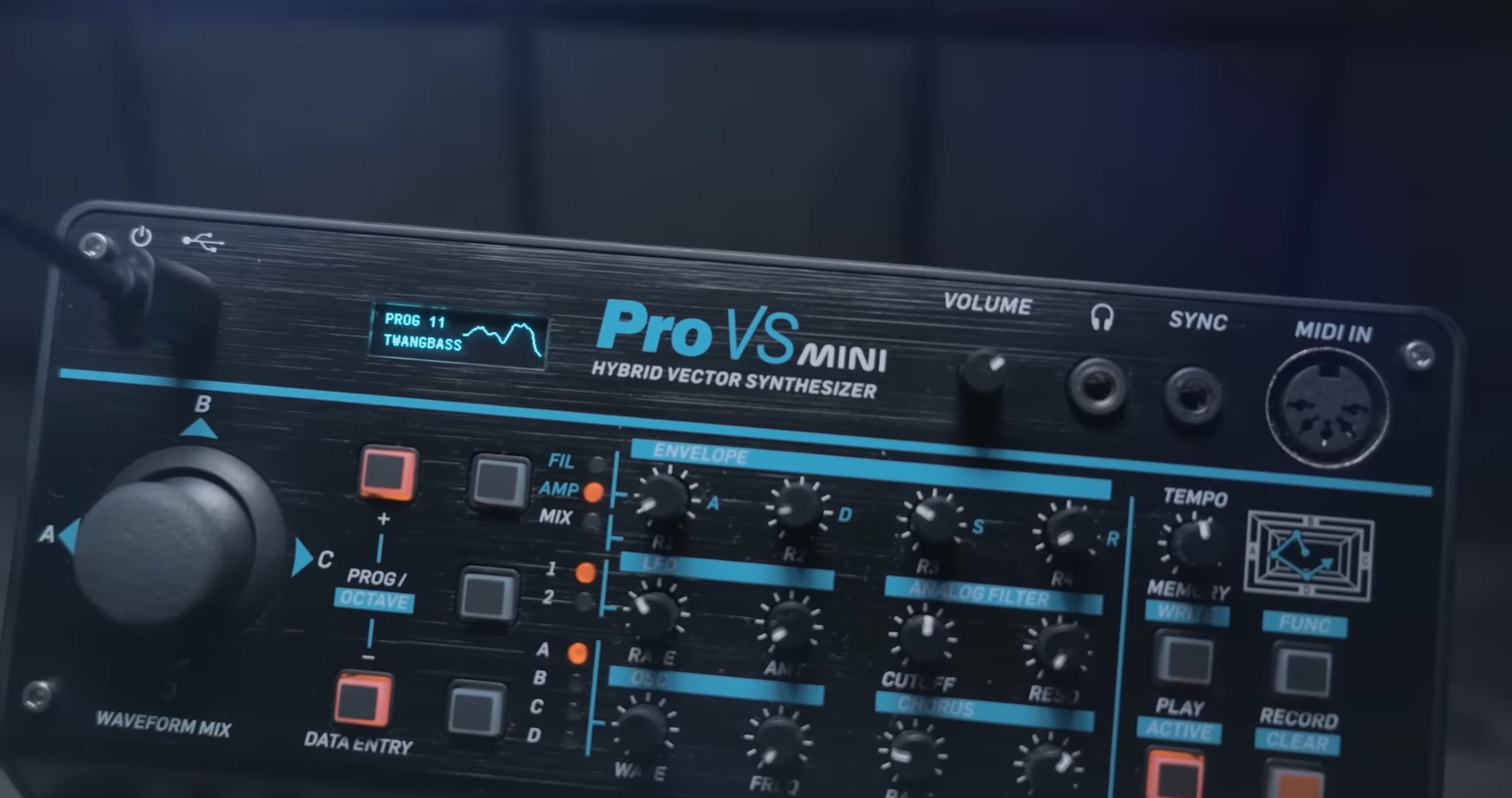
The interface of the Behringer Pro-VS Mini is built around immediacy rather than depth, with the joystick acting as the central performance and sound-design control. Vector blending feels intuitive here: small movements can subtly reshape a patch, while more exaggerated gestures create dramatic shifts in tone. This makes the synth feel performative in a way many compact instruments don’t, especially when sounds are designed to evolve continuously rather than land on fixed “sweet spots.”
The touch keyboard and compact control layout reflect the instrument’s size-first philosophy. For sketching ideas, triggering sequences, or experimenting with sound design, it works well enough, but it’s not aiming to replace a traditional keyboard. Parameter access relies on a mix of dedicated controls and menu navigation via the screen, which keeps the front panel uncluttered but does slow down deeper edits. As with many mini synths, the workflow rewards users who spend time learning where things live rather than expecting immediate one-knob-per-function access.
In terms of integration, the Pro-VS Mini covers the essentials without overcomplicating things. USB and DIN MIDI make it easy to pair with a DAW or external controller, and basic audio and sync connections allow it to slot into hardware setups just as easily. Used on its own, it feels like a self-contained sound module built for exploration; paired with an external keyboard or sequencer, it opens up considerably. The overall experience reflects the instrument’s priorities clearly: compact, expressive, and focused, with workflow trade-offs that come directly from its small footprint rather than poor design choices.
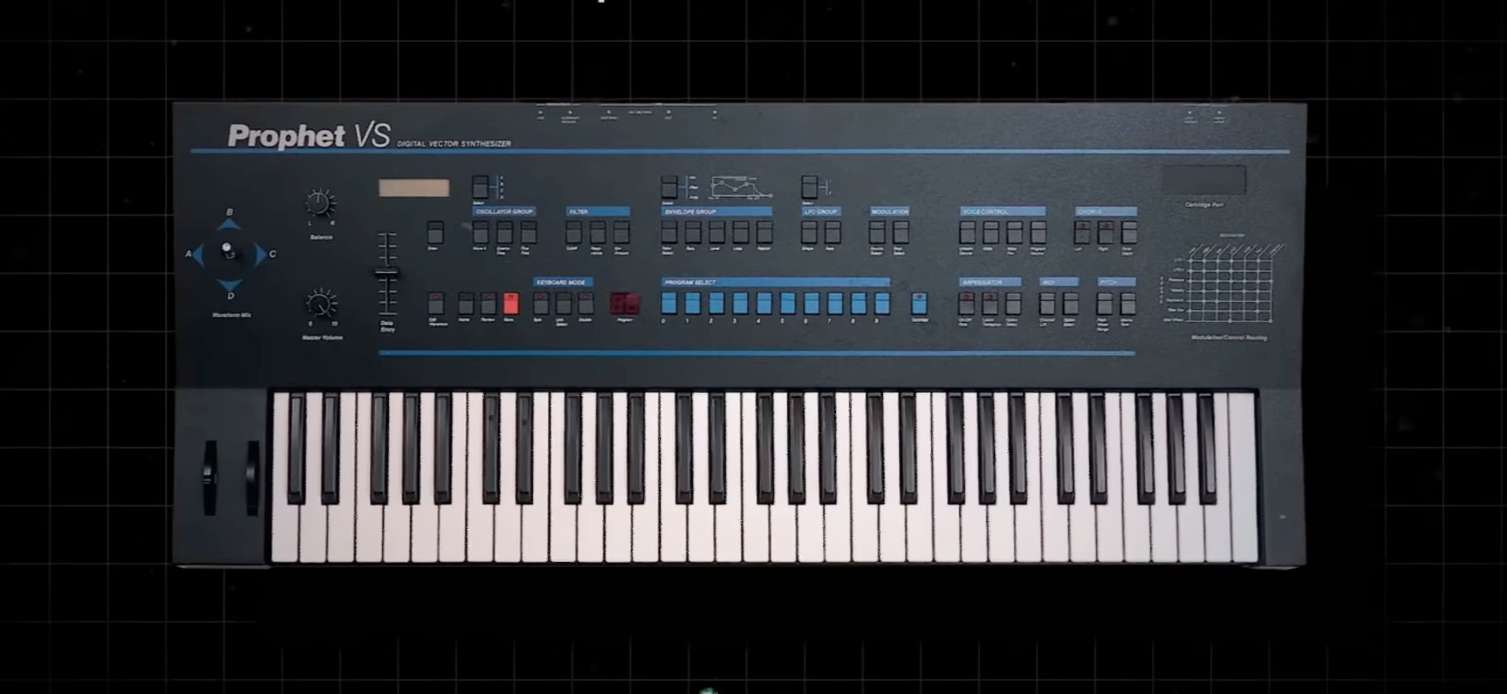
The OG Prophet VS / Credit: Behringer
Sequencer, Modulation & Built-In Effects
Movement on the Pro-VS Mini comes from a combination of a built-in step sequencer, basic modulation sources, and onboard effects, all designed to complement the vector engine rather than overwhelm it. The sequencer is functional and musical, letting you quickly sketch repeating phrases or evolving patterns that benefit from subtle joystick motion over time. It’s not meant to compete with deep grooveboxes or performance sequencers, but it does its job well enough to turn static patches into looping, animated ideas without reaching for external gear.
Modulation is intentionally straightforward. With a small set of LFOs and envelopes, the synth encourages slow, deliberate motion rather than complex modulation routing. This works in its favor: instead of endlessly assigning sources and destinations, you’re more likely to focus on how modulation interacts with vector blending itself. Gentle filter movement, oscillator balance shifts, and tempo-synced modulation all reinforce the Pro-VS Mini’s strength as a texture-driven instrument.
The built-in effects are there to enhance space and depth rather than define the sound. Chorus-style processing helps widen pads and soften digital edges, while later firmware updates expanded the effects palette in a way that feels practical rather than flashy. These effects won’t replace dedicated pedals or plugins, but they’re well judged for the synth’s purpose—adding polish and atmosphere so patches feel finished when played on their own. Taken together, the sequencer, modulation, and effects form a cohesive system that supports motion and evolution, which is exactly where this synth feels most at home.
Build Quality & Day-to-Day Use
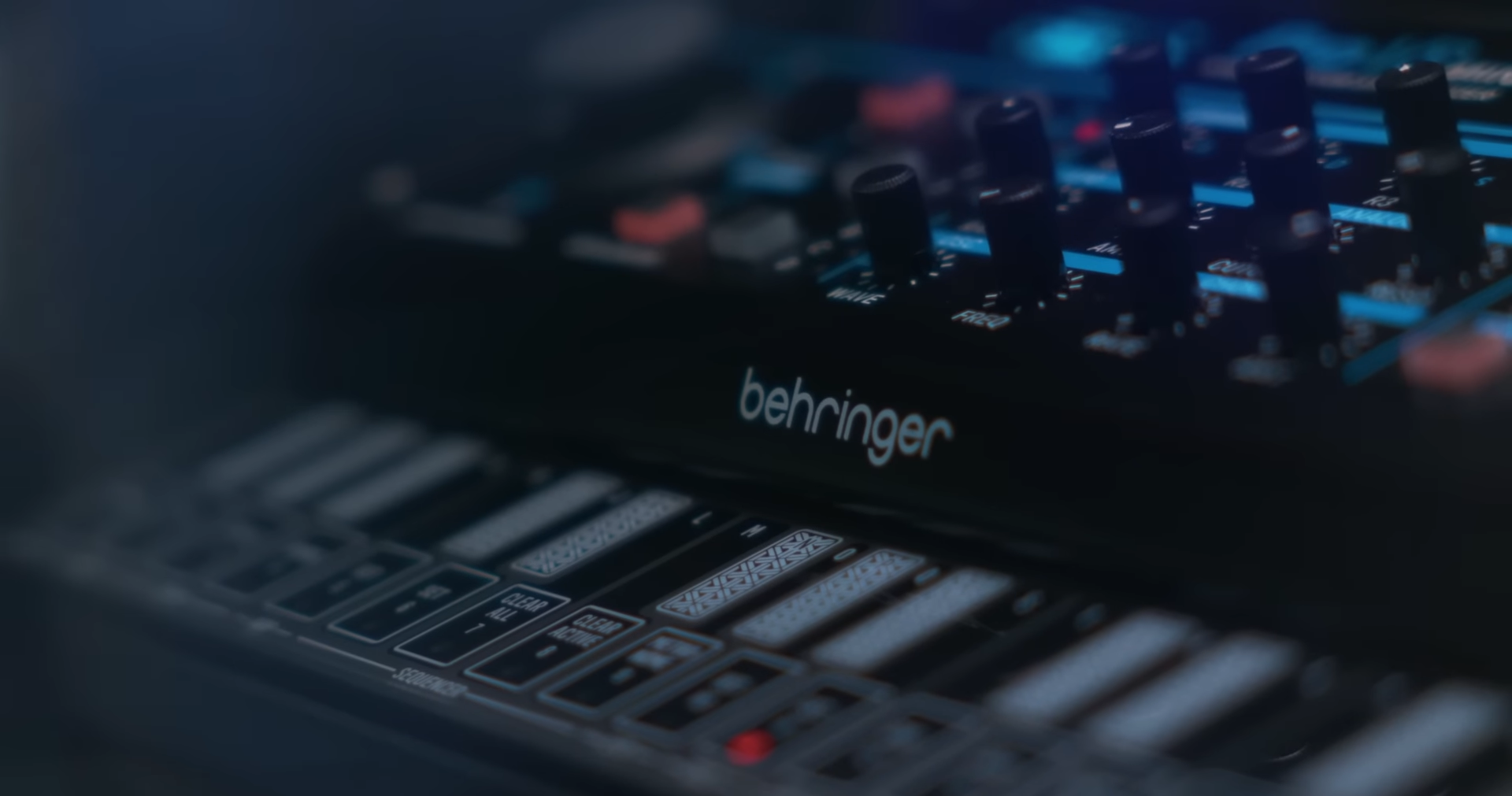
Physically, the Pro-VS Mini feels in line with what its size and price suggest, but without crossing into toy-like territory. The chassis is lightweight yet sturdy enough for desktop use, and the controls hold up well under regular tweaking. The joystick, in particular, feels reassuringly solid, which matters given how central it is to the instrument’s identity. Buttons and knobs are responsive, even if they don’t invite aggressive performance gestures the way larger hardware might.
In daily use, the synth encourages short, focused sessions rather than deep, hours-long programming marathons. It’s easy to power up, sketch an idea, and capture something interesting quickly, especially when treating it as a sound module rather than a full performance keyboard. Over time, its limitations become familiar rather than frustrating, and the workflow settles into a rhythm that suits exploration and texture-building. As a compact, always-within-reach instrument, it fits naturally into a setup where it can be grabbed for character and movement rather than relied on as a main polysynth.
Alternatives to Consider
If you like the idea of a compact, hands-on synth but want to explore a few other playful options, Korg’s Volca Series is a natural first stop. Whether it’s the punchy bass of the Volca Bass, the rich polysynth vibes of the Volca Keys, or the digital flavor of the Volca FM2, these little machines are affordable, tactile, and great for layering into a setup. Another really fun alternative is Teenage Engineering’s Pocket Operators — ultra-minimalist, battery-powered grooveboxes that blend synth voices with sequenced patterns and quirky sonic personalities. Their simplicity and low cost make them perfect for quick ideas, live jamming, or building a hardware collection that doesn’t break the bank.
For someone who wants something a bit more feature-rich but still compact, Roland’s S-1 Tweak Synth is a cool pick: tiny yet surprisingly deep, with intuitive controls that make shaping sound feel playful and expressive. Another option in that same performance-oriented pocket format is the Roland AIRA J-6 Chord Synth, which brings lush chordal synth sounds and hands-on tweaking into a compact form factor that’s great for jams and studio work alike. All three of these alternatives — Volcas, Pocket Operators, and the S-1/AIRA J-6 pair — offer distinct flavors of small-format synthesis, so whether you’re after groove-driven fun, experimental textures, or performance-ready tweaking, there’s a mini synth here that can spark inspiration alongside or instead of the Pro-VS.
Pros
Affordable and accessible entry into vector synthesis
Expressive joystick makes sound shaping feel immediate and performative
Hybrid design balances digital character with analog filtering
Compact footprint works well in small or mobile setups
Cons
Limited polyphony restricts dense chord work
Touch keyboard won’t suit players who prefer traditional keys
Deeper edits require menu navigation, which can slow down workflow
Sound palette is focused rather than versatile
Who Is the Pro-VS Mini For?
The Pro-VS Mini makes the most sense for producers and sound designers who are drawn to movement, texture, and evolving timbres rather than traditional keyboard performance. If you enjoy shaping sounds in real time, letting patches drift and change, and using a synth as a character piece within a larger setup, this instrument fits naturally into that workflow. It’s especially well suited to electronic, ambient, experimental, and synth-driven styles where motion is part of the musical language.
On the other hand, players looking for a main polysynth, realistic analog emulation, or a full-sized performance keyboard will likely find its limitations quickly. The compact controls, limited polyphony, and focused sound engine mean it’s not designed to cover every role in a studio or live rig. Seen on its own terms, though, the Pro-VS Mini succeeds by staying true to a specific idea—bringing vector synthesis back into a hands-on, affordable form that prioritizes expression over breadth.
Ready to adopt a Pro-VS Mini? Check price and availability here
Disclosure: This site contains affiliate links. If you purchase through these links, I may earn a commission at no extra cost to you.