
Casio Is Back! Meet the SX-C1 Portable Sampler
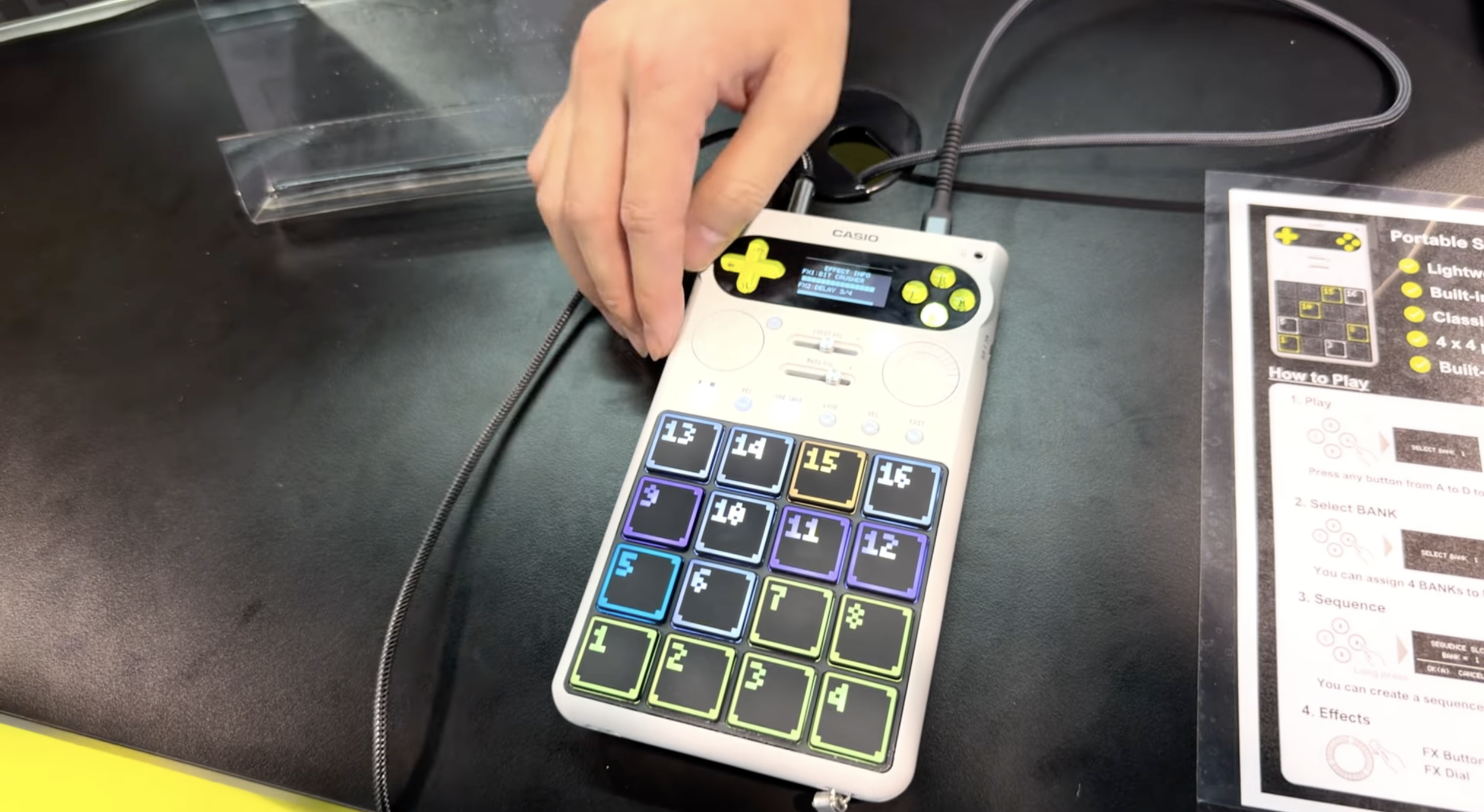
Casio has unveiled a new portable standalone sampler, tentatively referred to as the SX-C1. The device channels a compact, handheld format with a grid of 4×4 playable pads, a built-in microphone and options for external sampling, positioning it as a fresh entry in the wave of accessible grooveboxes and sampling tools. Unlike traditional keyboard-style offerings from the brand, this sampler leans into tactile beat-making with a sequencer, 64GB of internal memory and a 1.3-inch OLED display for menu navigation. Connectivity includes headphone and main outputs, analog input for sampling, and USB-C for power and data — plus a built-in speaker and rechargeable battery for up to around two hours of untethered use.
TL;DR
Casio previews a new portable standalone sampler, tentatively called the SX-C1.
4×4 pad grid with built-in microphone and external inputs for sampling.
16-bit/48kHz WAV sampling and 64GB internal storage.
Sequencer, OLED display, headphone/main outs, USB-C power/data.Rechargeable internal battery and built-in speaker for portable use.
What’s the Casio SX-C1
Casio’s new portable standalone sampler, currently identified as the SX-C1 or simply the Casio “Sampler,” represents the company’s first major move into handheld sampling in decades. The unit combines a 16-pad 4×4 grid with a distinctly retro aesthetic — complete with directional pad and game controller-style buttons flanking a 1.3-inch OLED display — that evokes handheld gaming gear while serving as the primary performance interface for triggering and editing samples.
Under the surface, the sampler supports 16-bit/48kHz WAV sampling from a built-in microphone, line input or USB-C, and offers 16 voices of polyphony along with a sequencer for pattern creation. Users can organize sounds into multiple banks (around 10 banks of up to 16 samples each, as shown on early show signage) stored on 64GB of internal memory — enough for a substantial set of one-shots and loops. Factory preset sounds appear onboard as well, some reportedly drawn from classic Casio instruments.
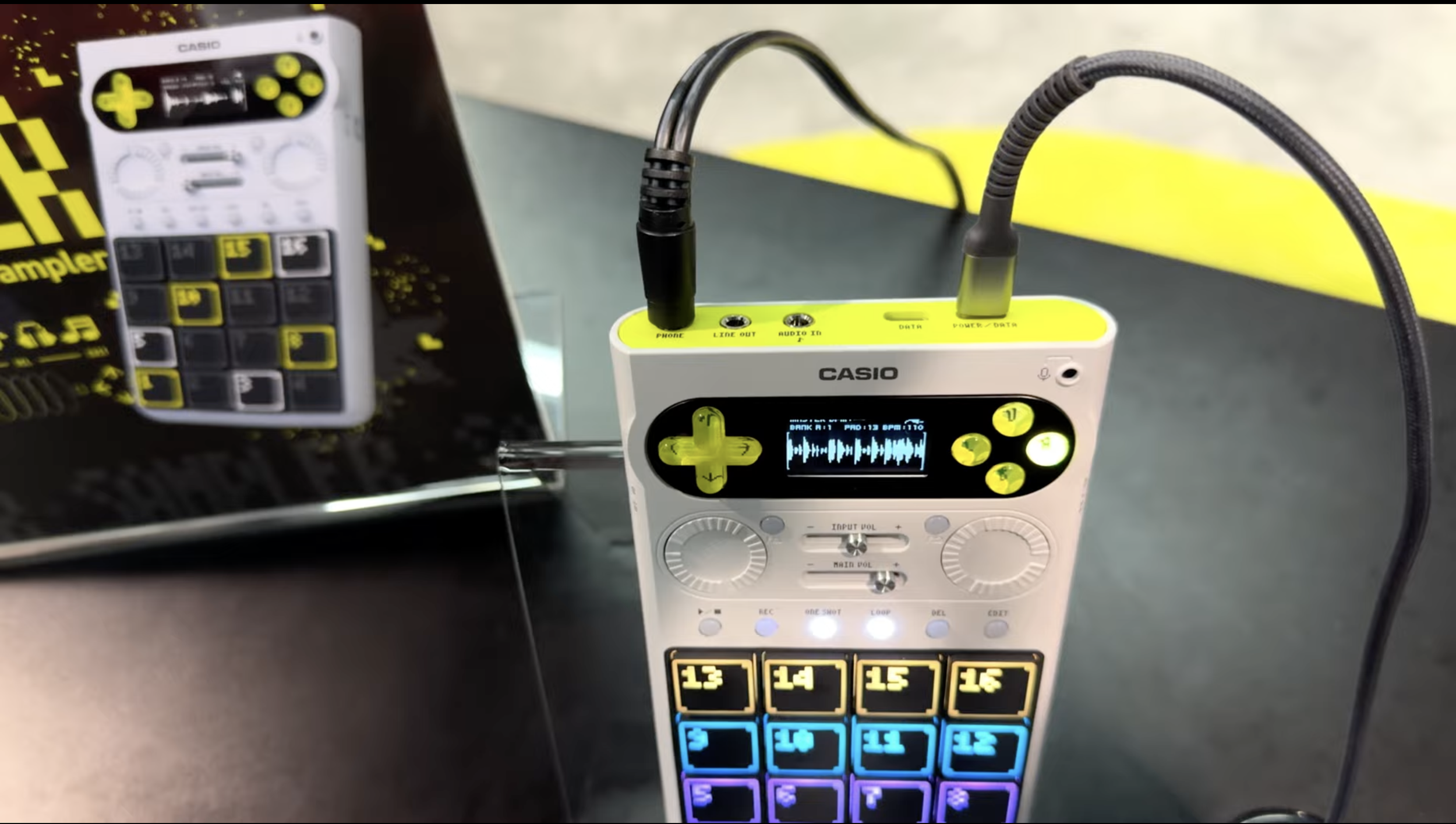
The physical layout also includes rotary dials and sliders for navigating menus and adjusting parameters, a built-in speaker for standalone use, headphone and main outputs, and USB-C connectivity for power and data transfer. The unit runs off its internal rechargeable battery (with around two hours of life projected) or replaceable batteries, emphasizing mobile sampling without a computer.
Workflow and Real-World Use
In practice, Casio’s sampler looks built for the “hear it → grab it → flip it” loop. You can capture a sound straight into the device using the built-in microphone, then immediately map it to the 4×4 pad grid and start treating it like an instrument. That could be anything from voice clips and room textures to quick percussion hits — the kind of sampling you do when you’re not trying to be precious, you just want raw material to mess with. The built-in speaker also matters here: it’s not about perfect monitoring, it’s about being able to audition ideas instantly without plugging anything in.
From there, the sequencer and screen-based workflow suggest it’s meant for building short patterns fast, more like sketching than full production. The OLED display and gamepad-style controls point toward a menu-driven system for chopping, assigning, and organizing sounds, while the physical size and USB-C power/data setup make it feel like something you could keep on a desk, throw in a bag, or use on a couch without setting up a whole rig. And once you do want to plug in, having both headphone and main outputs means it can move from “tiny standalone sampler” to “real signal source” in a studio or DJ-style setup pretty easily.
Alternatives to Consider
If you like the idea of a portable sampler with a pad grid, Teenage Engineering EP-133 K.O. II is an obvious alternative for punchy beat-making and quick sequencing, especially if you want something that leans into performance and fast idea capture. Roland SP-404MKII is a bigger, more established option for sample-based music and live-oriented workflows, with a reputation for hands-on resampling and FX-driven creativity—more “performance instrument” than pocket sketchpad.
For a more classic groovebox approach, Elektron Digitakt II sits in a different tier, but it’s a serious pick if you want deep sequencing and a more structured production workflow around samples. And if you want an ultra-portable sampler that’s simple, fun, and cheap by design, Teenage Engineering PO-33 K.O! still holds up as the minimalist “get ideas down anywhere” choice.
Pros
Portable standalone design with built-in mic and built-in speaker for immediate sampling anywhere
16-bit/48kHz WAV sampling and 64GB internal storage for a serious amount of sample space
4×4 pad grid makes it feel performance-friendly, not just a menu device
Practical connections including USB-C, headphone out, main outs, and external sampling input
Cons
The handheld format and 1.3-inch OLED display suggest a more compact, menu-based workflow than a large-screen sampler
Battery-powered portability (rated around two hours) points toward short sessions rather than all-day use
A pad-focused layout is great for one-shots and quick flips, but may feel limiting if you prefer keyboard-style sampling instruments
Final Words
Casio stepping back into sampling with a modern, pad-based portable device feels like a smart move at a time when beat-making tools are getting smaller, faster, and more personality-driven again. If the final product stays close to what’s been previewed so far, this looks like it’s aiming for immediacy and fun without treating portability like a gimmick.
This feels best suited for producers who want a standalone sampler for quick ideas, casual sound capture, and sketching beats without a laptop. If you need long sessions away from power, or you prefer deeper “full workstation” sampling workflows, this might not be the one you build your whole setup around.
Disclosure: This site contains affiliate links. If you purchase through these links, I may earn a commission at no extra cost to you.